In Celebration of the Human Voice - The Essential Musical Instrument
Home | Doo Wop | Barbershop | World | Contemporary | Christian | Vocal Jazz | Choral | Christmas | Instructional | Arrangements

Born: 1540 Died: 1623
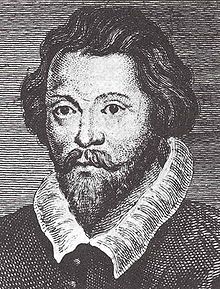
William Byrd (1540? - July 4, 1623) was the most celebrated of early English composers. His entire life was marked by contradictions; as a true Renaissance man, he did not fit easily into categories. He lived well into the seventeenth century without writing songs in the new Baroque fashion, but his superbly constructed keyboard works marked the beginning of the Baroque organ and harpsichord style. Although he was nominally an Anglican court composer for much of his life, he spent his last years composing for the Roman liturgy, and died in relative obscurity. In the anti-Catholic frenzy following the 1605 Gunpowder Plot, some of his music was banned in England under penalty of imprisonment; some of it-such as the Short Service-has been sung in English cathedrals uninterrupted for the past four centuries.
Like most promising young musicians in Renaissance Europe, Byrd began his career at an early age. A recently discovered legal document claims that he was born in 1540 (or perhaps late in 1539), not in 1543 as some biographers had thought and some still do believe. He almost certainly sang in the Chapel Royal during Mary Tudor's reign (1553-1558), "bred up to music under Thomas Tallis." This places him in the best choir in England during his impressionable teenage years, alongside the finest musicians of his day, who were brought in from all over the British Isles, from the Netherlands, even from Spain. "Bloody Mary" spent her brief reign overreacting to the excesses of Protestant austerity under her predecessor Edward VI. One of the more pleasant aspects of this was her taste for elaborate Latin church music. Byrd seems to have thrived on the exuberant, creative atmosphere: one manuscript from Queen Mary's chapel includes a musical setting of a long psalm for Vespers, with eight verses each by leading court composers Mundy and Sheppard, and four verses by the young Byrd. They must have recognized his talent and invited him to work with them as an equal.
He was eighteen years old when Mary died and the staunchly Protestant Queen Elizabeth succeeded her. The sudden change may well have driven him away from court. He shows up again in his mid-twenties as organist and choirmaster of Lincoln Cathedral, where the clergy apparently had to reprimand him for playing at excessive length during services. After being named a Gentleman of the Chapel Royal in 1572, a well-paying job with considerable privileges attached to it, he moved back to London. He worked there as a singer, composer and organist for more than two decades. Just after his appointment, he and Tallis obtained a joint printing license from Queen Elizabeth. He published three collections of Latin motets or Cantiones Sacrae, one (in 1575) with the collaboration of his teacher and two (in 1589 and 1591) by himself after the older man had died. Alongside these, he brought out two substantial anthologies of music in English, Psalmes, Sonets and Songs in 1588 and Songs of Sundrie Natures in 1589. He also wrote a large amount of Anglican church music for the Chapel Royal, including such masterpieces as the ten-voice Great Service and well-known anthems such as Sing joyfully. In 1593 he moved with his family to the small village of Stondon Massey in Essex, and spent the remaining thirty years of his life there, devoting himself more and more to music for the Roman liturgy. He published his three famous settings of the Mass Ordinary between 1592 and 1595, and followed them in 1605 and 1607 with his two books of Gradualia, an elaborate year-long musical cycle. He died on July 4, 1623, and is buried in an unmarked grave in the Stondon churchyard.
Every stage of Byrd's musical career was affected by the political and religious controversies of his day. When a law was passed in 1534 establishing Henry VIII as "the only Supreme Head in earth of the Church of England," liturgy and church music took on new importance. In such volatile times, the outward practices of worship were often the only touchstone for inward loyalty-and in the new English church, disloyalty to the established religion was also disloyalty to the state. This point was not lost on the obsessively political Tudor regime. Lex orandi, lex credendi-how people worship reflects, even determines, what they believe-was a theological commonplace of the era, and public prayer was, as it had been for centuries in pre-Reformation England, inextricably linked with music-making. One of the first steps taken by the Reformers was the revision of all books of worship and the establishment of a new, simplified musical style. By the time Byrd joined the Chapel Royal in the 1570s, the rules had relaxed somewhat, and he could produce elaborate works for what was still the best-funded and most famous choir in the country. Even as he won fame for his Anglican music, though, he was writing bitter Latin motets, many of them publicly printed in his books of Cantiones, about the plight of the English Catholic community. At some point, he tired of compromise and left the court, keeping his position at the Chapel in absentia. He never returned to live in London. He continued to write secular songs, madrigals, and keyboard pieces until the end of his life, but his later church music, composed during the years in Essex, is exclusively Latin.
The three Masses and the two books of Gradualia, published over fifteen years, were Byrd's major contribution to the Roman rite. It was written for the intimate, even secretive, atmosphere of domestic worship, to be performed for a small group of skilled amateurs (which included women, according to contemporary accounts) and heard by a small congregation. Although such worship could be dangerous-even a capital offense in some cases-Byrd went further than merely providing music. There are many records of his participation in illegal services. A Jesuit missionary describes a country house in Berkshire in 1586:
The gentleman was also a skilled musician, and had an organ and other musical instruments and choristers, male and female, members of his household. During these days it was just as if we were celebrating an uninterrupted Octave of some great feast. Mr. Byrd, the very famous English musician and organist, was among the company.
In view of such events, it is astonishing that he was allowed to live as a free man, much less keep his office in the Chapel Royal and the benefices associated with it. Shortly after the Gunpowder Plot was uncovered in November 1605, an unfortunate traveller was arrested in a London pub in possession of 'certain papistical books written by William Byrd, and dedicated to Lord Henry Howard, earl of Northampton'-an unmistakable reference to the first set of Gradualia. The man was thrown into Newgate prison, one of the most notorious prisons in England. Byrd and his family suffered no such treatment, but court records show him involved in endless lawsuits, mostly over his right to own property, and paying heavy fines. The reputation he had built as a young man in London, and the patronage of the Queen, must have helped him through his later years.
Artists often claimed a sort of vocational immunity to the controversies of their age - John Taverner, implicated in the radical Oxford Protestant movement of the late 1520s, escaped a heresy trial with the plea that he was "but a musician"-but the simple act of creating religious art put them in the center of the fray. Byrd was talented and fortunate enough to continue his work, and to gain the esteem of nearly all his contemporaries. Henry Peacham reflected the public opinion when he wrote, just a few months before the composer's death, in his Compleat Gentleman:
Displaying 1-50 of 255 items.
| Song Name | Arranger | Composer | Artist | Recording Title | Format | |
|---|---|---|---|---|---|---|
| Agnes Dei from Mass for Four Voices | William Byrd | Voces8 | A Choral Tapestry | 1 CD | MORE DETAILS | |
| Kyrie from Mass for Four Voices | William Byrd | Voces8 | A Choral Tapestry | 1 CD | MORE DETAILS | |
| Vigilate | William Byrd | Voces8 | A Choral Tapestry | 1 CD | MORE DETAILS | |
| -Agnus Dei | William Byrd | Oxford Camerata | William Byrd | 1 CD | MORE DETAILS | |
| -Agnus Dei | William Byrd | Oxford Camerata | William Byrd | 1 CD | MORE DETAILS | |
| -Credo | William Byrd | Oxford Camerata | William Byrd | 1 CD | MORE DETAILS | |
| -Credo | William Byrd | Oxford Camerata | William Byrd | 1 CD | MORE DETAILS | |
| -Gloria | William Byrd | Oxford Camerata | William Byrd | 1 CD | MORE DETAILS | |
| -Gloria | William Byrd | Oxford Camerata | William Byrd | 1 CD | MORE DETAILS | |
| -Kyrie | William Byrd | Oxford Camerata | William Byrd | 1 CD | MORE DETAILS | |
| -Kyrie | William Byrd | Oxford Camerata | William Byrd | 1 CD | MORE DETAILS | |
| -Sanctus | William Byrd | Oxford Camerata | William Byrd | 1 CD | MORE DETAILS | |
| -Sanctus | William Byrd | Oxford Camerata | William Byrd | 1 CD | MORE DETAILS | |
| - Kyrie (from the Mass for Four Voices) | William Byrd | University of Miami Chorale | Love Of My Soul | 1 CD | MORE DETAILS | |
| A Fancie | William Byrd | King's Singers | Treason & Discord | 1 CD | MORE DETAILS | |
| Agnes Dei | William Byrd | Dunedin Consort | In Chains of Gold - Byrd, Tallis | 1 CD | MORE DETAILS | |
| Agnes Dei | William Byrd | Quink Vocal Ensemble | William Byrd Choral Music | 1 CD | MORE DETAILS | |
| Agnus Dei | William Byrd | St. Olaf Choir | A Choral Tapestry | 1 CD | MORE DETAILS | |
| Agnus Dei (from the Mass for Four Voices) | William Byrd | University of Miami Chorale | Love Of My Soul | 1 CD | MORE DETAILS | |
| Agnus Dei (from the Mass of Four Voices) | Cantabile | William Byrd | Cantabile The London Quartet | Madrigal to McCartney | 1 CD | MORE DETAILS |
| Agnus Dei from Mass for 4 voices | William Byrd | King's Singers | Treason & Discord | 1 CD | MORE DETAILS | |
| Agnus Dei from Mass For Four Voices | William Byrd | Sixteen | An Easter Celebration | DVD | MORE DETAILS | |
| Alma Redemptoris Mater | William Byrd | Cardinall's Musick | The Byrd Edition Vol 1 | 1 CD | MORE DETAILS | |
| Attollite portas | William Byrd | Cambridge Singers | Byrd: Motets and Anthems | 1 CD | MORE DETAILS | |
| Audivi Vocem de Caelo | William Byrd | Cardinall's Musick | The Byrd Edition Vol 1 | 1 CD | MORE DETAILS | |
| Ave Maria (Gradualia I) | William Byrd | Stile Antico | Puer Natus Est - Tudor Music for Advent and Christmas | SACD | MORE DETAILS | |
| Ave Regina Caelorum | William Byrd | Chanticleer | Music For A Hidden Chapel | 1 CD | MORE DETAILS | |
| Ave Verum | William Byrd | St John's College Choir, Cambridge | Album of 19 Favourites | 1 CD | MORE DETAILS | |
| Ave verum | William Byrd | St John's College Choir, Cambridge | Ave Verum - Popular Choral Classics | DVD | MORE DETAILS | |
| Ave Verum | William Byrd | St. Olaf Choir | Choral Masterworks Series Vol 2 (2CD) | 1 CD | MORE DETAILS | |
| Ave verum Corpus | William Byrd | Gents | 16th Century English Choral Music | 1 CD | MORE DETAILS | |
| Ave Verum Corpus | William Byrd | Voices of Ascension | Beyond Chant: Mysteries of the Renaissance | 1 CD | MORE DETAILS | |
| Ave verum corpus | William Byrd | Tallis Scholars | Byrd - Playing Elizabeth's Tune | DVD | MORE DETAILS | |
| Ave Verum Corpus | William Byrd | Cambridge Singers | Byrd: Motets and Anthems | 1 CD | MORE DETAILS | |
| Ave Verum Corpus | Morehen, John | William Byrd | William Byrd | Collection Vol 2 | Sheet Music | MORE DETAILS |
| Ave Verum Corpus | William Byrd | King's Singers | English Renaissance | 1 CD | MORE DETAILS | |
| Ave Verum Corpus | William Byrd | Cambridge Singers | Faire Is The Heaven | 1 CD | MORE DETAILS | |
| Ave Verum Corpus | William Byrd | Various Composers | Five Centuries of Choral Music Vol 2 | Songbook | MORE DETAILS | |
| Ave verum corpus | William Byrd | Choir of King's College, Cambridge | Great Choral Classics | 2 CDs | MORE DETAILS | |
| Ave verum corpus | William Byrd | Choir of Clare College | Reflection | 1 CD | MORE DETAILS | |
| Ave Verum Corpus | William Byrd | St. Olaf Choir | Repertoire for Mixed Voices Vol. II | 2 CDs | MORE DETAILS | |
| Ave verum corpus | William Byrd | Trinity Choir | Sounds of Light | 1 CD | MORE DETAILS | |
| Ave Verum Corpus | William Byrd | New York Polyphony | Tudor City | 1 CD | MORE DETAILS | |
| Ave verum corpus | William Byrd | Quink Vocal Ensemble | William Byrd Choral Music | 1 CD | MORE DETAILS | |
| Ave Verum Corpus - Byrd | William Byrd | Ensemble Amarcord | Hear The Voices | 1 CD | MORE DETAILS | |
| Beata Viscera Mariae Virginis | William Byrd | King's Singers | English Renaissance | 1 CD | MORE DETAILS | |
| Beati mundo corde | William Byrd | Malcome Archer (Editor) | Epiphany To All Saints | Songbook | MORE DETAILS | |
| Benediction and Choral Amen | William Byrd | Harvard University Choir | Carols From The Yards | 1 CD | MORE DETAILS | |
| Benedictus | William Byrd | Dunedin Consort | In Chains of Gold - Byrd, Tallis | 1 CD | MORE DETAILS | |
| Benedictus | William Byrd | Quink Vocal Ensemble | William Byrd Choral Music | 1 CD | MORE DETAILS |