
In Celebration of the Human Voice - The Essential Musical Instrument
Home | Doo Wop | Barbershop | World | Contemporary | Christian | Vocal Jazz | Choral | Christmas | Instructional | Arrangements
Classical | Opera | Musicals | Personality | Young Singers | Disney | Videos | Songs | The Artists

Ear Training for Singers
There's more to singing than the voice - the ear plays almost as important, if not as important, a role. So while you're training your voice, make sure you don't neglect the ear. These books, book/CD sets and DVDs are from renowned instructors and directors from the Berklee School of Music, the Musicians' Institute, The Westminster Vocal Institute and other prestigious organizations dedicated to making beautiful sounds. You can't go wrong with anything you find here, and you'll hear the difference in your work quickly. |
Songbooks, Arrangements and/or Media
Displaying 1-18 of 18 items.
Adam Perlmuter : Perfect Pitch Method - A Musician's Guide to Recognizing Pitches by Ear Perfect pitch - also called absolute pitch - has been a source of endless fascination for hundreds of years. The ability to recognize musical tones with no reference is often viewed as a kind of magical power, a gift that only a select few musicians are born with, a skill that cannot be learned. But perfect pitch is largely a misunderstood phenomenon. The Hal Leonard Perfect Pitch Method is designed to help you develop a sense of perfect pitch. In the process, your overall musicianship will benefit and you'll start listening to music on a deeper level and getting more satisfaction from it. At the heart of this book is a series of 49 ear-training sessions, one per day for seven weeks, using the included CDs or the online audio. Many of the lessons include three separate drills. You can do just one and save the others for later, or all three at the same time. Take your time, advancing to the next session only when you're satisfied with your results on the previous session. Pretty soon, you'll notice a marked improvement in your pitch acuity! Songlist: What Is Perfect Pitch?, What Is Relative Pitch?, Other Frequently Asked Questions, How To Use This Book, Notes and Color, Starting Off On The Right Foot, Audiation, Session Prep, Listening Sessions, Answer Keys For Questions 
Arnold Fish and Norman Lloyd : Fundamentals of Sight Singing and Ear Training An essential part of musicianship! This realistic first-year program of sight singing and ear training presents a broadly based approach to music reading as an essential and integral part of musicianship and exhibits a sharp focus on essential skills. The authors developed and tested the materials in their classes at the Juilliard School of Music, refining them to enhance accessibility and improve learning. Special features include: arranges specific concepts and problems in a carefully graded order based upon performance difficulty; isolates specific rhythmic and pitch problems and then drills them in a concentrated form but in a variety of music contexts; includes copious examples of each problem in actual music; stimulates readers' creative imagination through the consistent employment of assignments that require original work. Songlist: Some Basic Elements of Rhythm, Basic Pitch Relationships; Stepwise Melodies in the Major Scale, Major and Minor Thirds in the Major Scale; Plainsong, Meter; Elementary Conducting; Rhythmic Ratios of Three to One and Four to One; Melodies Beginning on Tones Other Than the Tonic; the Alto Clef, Simple Subdivisions of the Beat; Melodies Beginning on Upbeats; Perfect Fourths and Fifths in the Major Scale; The Major Triad; Chorale Melodies, Melodies Based on Primary Harmonies; the Dominant Seventh; Rhythmic Canons; Rests; Excerpts from Music Literature, Dotted Notes and Tied Notes; the Minor Triad; the Diminished Triad; Leaps in All Diatonic Triads; Further Drills on Perfect Fourths and Perfect Fifths; Excerpts from Music Literature, Forms of the Minor Scale; Further Subdivisions of the Beat; Excerpts from Music Literature, Large Melodic Leaps; Triplets; Compound Meter; the Tenor Clef; Excerpts from Music Literature, Chromatic Tones; Melodies in Mixed Forms of the Minor Scales; Syncopation; Excerpts from Music Literature, Accents and Cross-Accents; Leaps in Triads in Minor Keys; Tritones; Chromaticism; Excerpts from Music Literature, Changing Meters; Modal Music; Excerpts from Music Literature
Emily Crocker : Patterns Of Sound Vol 1 Don't read notes, read patterns of sound! This unique sight reading course for treble voices in elementary and early middle school does just that! PATTERNS OF SOUND uses excellent voice leading, careful sequencing and musically interesting exercises that can be combined to strengthen part singing, pitch relationships and to develop rhythmic independence. Volume 1 starts from square one, assuming no previous training, with exercises that are so carefully sequenced that the students are quickly singing four-measure phrases and eight measure songs in two parts and finding it easy! Students are introduced to notes, rests, meter, pitch and unison/2-part songs in Vol. 1, and continue in Vol. 2 with dotted rhythms & syncopation, keys & key changes and more 2-part songs. Use it every day and watch your students' confidence level grow! Songlist: Rhythm - Let's Begin!, Adding Pitch to Rhythm, Let's Harmonize, Finding Your Starting Pitch, New Patterns, New Notes, New Combinations, Bigger Jumps (Intervals), Songs In Two Parts
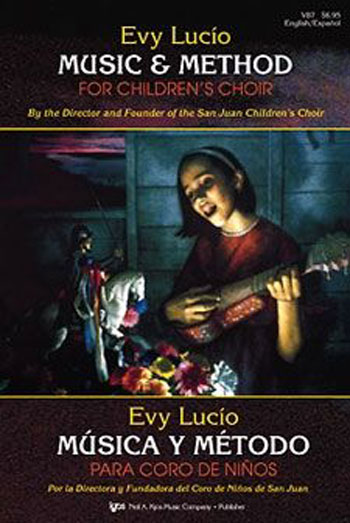
Evy Lucio : Music & Method for Children's Choir This songbook, featuring arrangments by the Director and Founder of the San Juan Children's Choir, comes complete with performance notes in both English and Spanish, and is perfect for any Children's Choir director looking to incorporate ear training exercises into the rehearsal of repertoire. Songlist: Prologue, Foreword, Introduction, The Preliminary Exercises, Let It Rain, Saint Sereni, La Parguera, Sugar Cane, Tecolote, Oh, Shenandoah!, I'm a Poor Lad, O Come Away Ye Shepherds, Bells On Bells, Tonight Is Christmas Eve, Song of the Shephers, The Little Tiny Babe, Oh, Come, All Ye Faithful, Silent Night, Arrangement A, Arrangement B
Gilson Schachnik : Beginning Ear Training These time-tested exercises will help you to play by ear. This Berklee School of Music Press book introduces the core skills of ear training. Step by step, you will learn to use solfege to help you internalize the music you hear and then easily transpose melodies to different keys. Learn to hear melody and then write it down. Develop your memory for melodies and rhythms. Transcribe live performances and recordings. Listening is the most important skill in music, and this book will help you to listen better Songlist: How To Use This Book, Do, Re, Mi, Do, Re, Mi, Fa, Do, Re, Mi, Fa, Sol, Do, Re, Mi, Fa, Sol, La, Do, Re, Mi, Fa, Sol, La, Ti, Scales, Dictation Answers
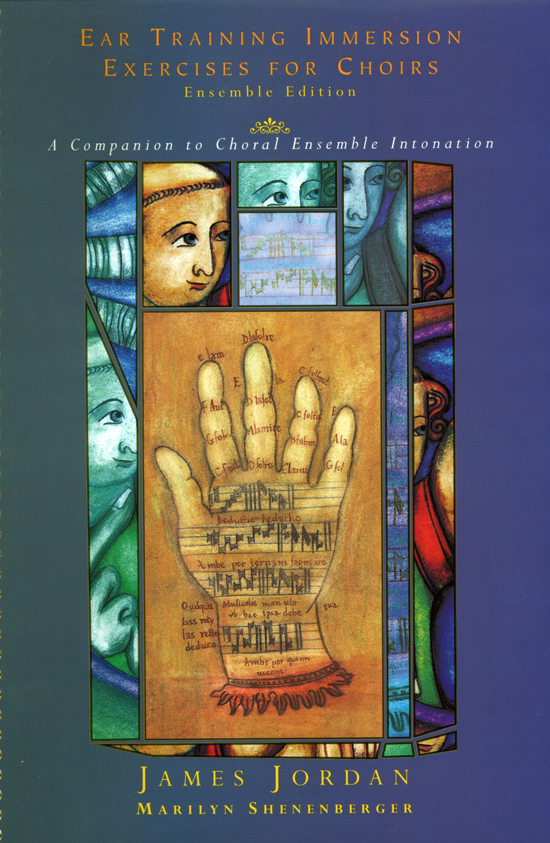
James Jordan : Ear Training Immersion for Choirs Created by Dr. James Jordan and accompanist/composer Marilyn Shenenberger, the exercises in this book are part of an innovative new ensemble solfege method that helps choirs improve intonation through improving aural skills. Each exercise provides a rich harmonic syntax for singers to hear, while singing in different modes. The book contains intonations in all modes, singing difficult intervals within each mode, modal tuning exercises, and a modal choral example. These exercises may be integrated into the choral warm-up. Using this unique method of choral solfege, your choir's hearing ability will improve exponentially as will their intonation and reading abilities. These exercises are appropriate for all ages and for singers at all levels of development. Songlist: Major Ionian Mode, Harmonic Minor, Mixolydian Mode, Dorian Mode, Lydian Mode, Phrygian Mode, Aeolian Mode, Melodic Minor Mode, Locrian Mode, Octatonic Modes
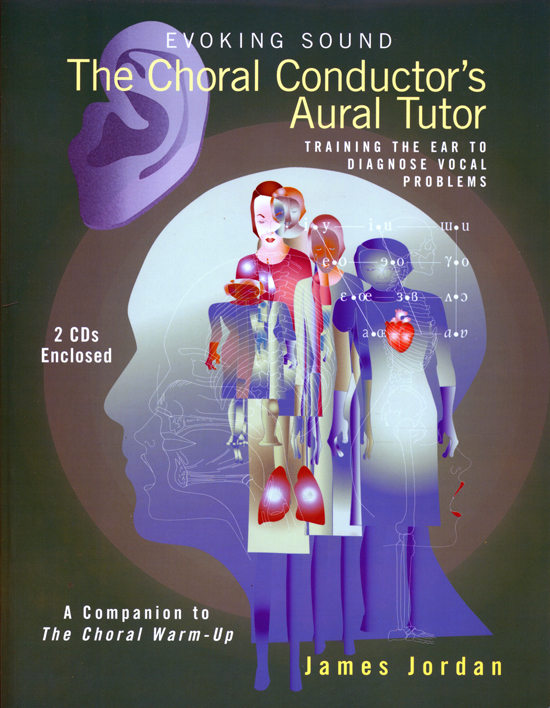
James Jordan : The Choral Conductor's Aural Tutor In The Choral Conductor's Aural Tutor, James Jordan leads directors on a quest for aural mastery of vocal technique "error" detection through a program of guided listening using recorded examples from both a high school and a college choir. The included pretests and posttests encourage forward progress by testing the conductor's ability to hear and label problems, including too little head tone, off-the-breath singing, jowly placement, sluggish vowel movement, and more. The Core Vocal Exercises on the two CDs demonstrate good ensemble sound by showing both correct and incorrect examples-we learn what a desirable sound is by hearing what it is not. This book and two-CD resource, rooted in the principles of The Choral Warm-Up, is an essential resource for conductors of all experience levels, regardless of what age group they teach. Songlist: Section I - Introduction And Purpose, Section 2 - Developing Analytical Listening Skills, Section 3 - How Do You Hear?, Section Four - Identifying Aspects Of Timbre, Section 5 - The Conductor's Aural Workbook, Section 6 - Pretests And Posttests, Section 7 - Snakes and Barrels
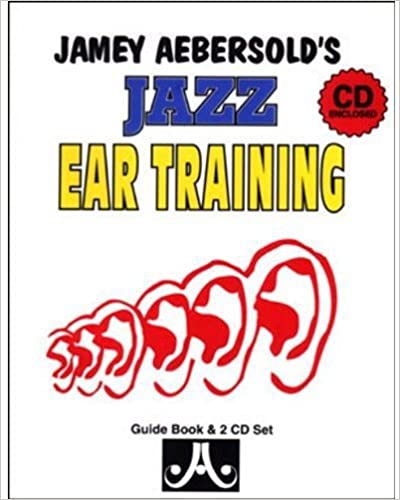
Jamey Aebersold : Jazz Ear Training Finally, here is the instruction everyone's been waiting for! This nearly two-hour long presentation features Jamey explaining and demonstrating the fundamental techniques used by all great jazz improvisers. Topics covered chord/scale relationships, keeping your place, patterns, the blues and pentatonic scales and their applications, what and how to practice, articulation, memorizing songs, and much more. This presentation not only provides the technical information essential to getting started in improvisation, but also serves as an overview of the entire creative process in a way that even non-musicians can understand. A no-nonsense approach consisting of two hours of recorded ear training exercises with aural instructions before each. Beginning to advanced. Starts very simply, with intervals gradually increases in difficulty until you are hearing chord changes and progressions. All answers are listed in book. Songlist: Chromatic Scale Exrecises, Major And Minor 2nd Intervals, Major And Minor 3rd Intervals, Perfect 4ths, Augmented 4ths, And Perfect 5th Intervals, Major And Minor 6th Intervals, Major And Minor 7ths And The Octave, Chord Qualities And Arpeggios, Short Musical Phrases, Major Triads, Root Postion, Minor Triads, Root Position, Major And Minor Triads - Mixed 3 Bars Each, Major And Minor Triads - Mixed One Bar Each, Major And Minor 7th And 9th Chords - Modern Voicings - 4 Bars Each, Major 7t Chords - Root Position - Random Movement, Minor 7th Chords - Root Position - Random Movement, Dominant 7th Chords - Root Position - Random Root Movement, Mixed Major 7th, Minor 7th, And Dominant 7th - Random Movement - 3 Bars, Mixed Major 7th, Minor 7th, And Dominant 7th - Varied Voicings - 2 Bars, Walking Bass Line - Major, Minor, Dominant - 4 Bars, Major To Minor Or Vice Versa - 2 Bars Each, Half Diminished 7th Chords - 2 Bars Each, Diminished 7th Chords - 4 Bars Each, Whole Tone Chords And Scales, II/V7/I/I, Random Qualities - 2 Bars Each (Final Exercise)
Judy Niemack : Hear It And Sing It! - Exploring Modal Jazz This great book/CD pack is an effective and fun way to improve your vocal technique and internalize the basic scales used in jazz. Designed for jazz singers, students of improvisation or ear training, choir directors and teachers of vocal jazz, it's an enjoyable way to learn the modes thoroughly and discover their possibilities. The CD includes vocal warm-ups suitable for all levels, exercises in each mode of the major scale, rhythm section tracks without vocals for improvisation, and more. The book includes transcriptions of the warm-ups, a brief history of modal jazz, theory basics, the modes of the major scale, scat syllables, transcriptions of the modal workouts, and more. Songlist: Warm-Ups, -"Mmm" - relaxing the jaw, -"Ooh" - developing resonance, -"Mmm-mee-ooh" - correct placement of the tone, -Rolled "R's" - bringing the tone forward, adding "ringing overtones", -Staccato arpeggios and legato sclaes - focusing on breathing and attack, -"La"-"lay"-"loo" - increasing the flexibilty and speed of tongue, -"Si-ah" - ear training, flexibility and range extension, The Creators of Modal Jazz, Theory Basics, -Intervals, -Building Chords, The Modes, Scat Syllables, -Pronunciation Guide for Scat Syllables, The Modal Workouts, -Ionian Tracks 8-14, -Dorian Tracks 15-21, -Phrygian Tracks 22-28, -Lydian Tracks 29-35, -Mixolydian Tracks 36-42, -Aeolian Tracks 43-49, -Locrian Tracks 50-56, Hear It and Sing It! In The Classroom
Keith Wyatt / Carl Schroeder / Joe Elliott : Ear Training For The Contemporary Musician This book and double CD pack takes you step by step through MI's well-known Ear Training course. Complete lessons and analysis include: basic pitch matching - singing major and minor scales - identifying intervals - transcribing melodies and rhythm - identifying chords and progressions - seventh chords and the blues - modal interchange, chromaticism, modulation - and more! Learn to hear and to visualize on your instrument. Take your playing from good to great! Over 2 hours of practice exercises - with complete answers in the back. Songlist: Major Tonality, Pitch and Tonality, The Major Scale, Major Melodies, Melodic Skips, Intervals, Meter and Rhythm, Transcribing Melody and Rhythm, Sightsinging, Interval Quality, Melodic Intervals, Harmonic Intervals, Major and Minor Triads, Triad Progression, Chord Charts, Melody and Harmony, Transcribing Melody, Harmony, and Rhythm, Minor Tonality, The Natural Minor Scale, Minor Melodies, Sixteenth-Note Rhythms, Minor Melodies with Sixteenth-Note Rhythms, Minor-Key Triad Progression, Minor-Key Progression with Rhythm, Minor-Key Melodies with Harmony and Rhythm, Seventh Chords and Blues, Seventh Intervals and Seventh Chords, Diatonic Seventh Chord Progressions, Triplet Rhythms, Triplet Feel, and more
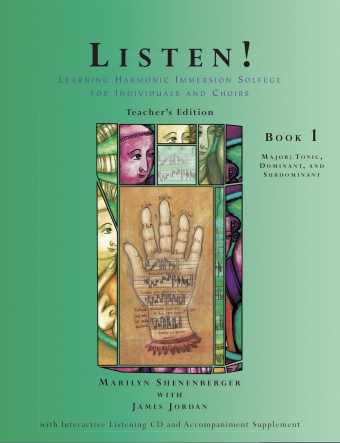
Marylyn Shenenberger & James Jordan : Listen! Introductory Harmonic Immersion Solfege Gain improved listening skills, ease in improvisation, and increased facility with notation with this foundational aural training method designed for individual and ensemble use. Repetition of these exercises lays the groundwork for the use of solfege in the choral ensemble rehearsal. Take the next step-sharpen your aural skills with Listen! Songlist: Tonic Chord Inversions And Patterns, Dominant Chord Inversions And Patterns, SubDominant Chord Inversions And Patterns, Chord Progressions With Tonic, Dominant, Subdominant, Accompianiment Supplement For Use In The Choral Ensemble Setting
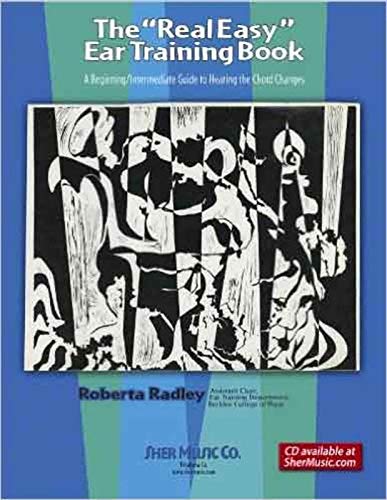
Roberta Radley : The Real Easy Ear Training Book All great singers have one thing in common - to a great extent, they know what the harmony is as the chords of songs go by. Do you? If not, here's a practical guide to get you up to speed! For all musicians, regardless of instrument or experience, this is the most comprehensive book on hearing the changes ever published! Using musical examples that reflect all contemporary genres (pop, rock, Latin, fusion, jazz, etc.), emphasis is placed on making ear training real, as Prof. Radley shows how to apply the harmonic ear training studies in the book to your own musical needs. Covers both beginning and intermediate ear training exercises. Trusting your ear can be challenging. However, doing so provides great personal satisfaction and self-confidence. So what steps does this book take toward trusting your ear? Music Teachers! You will find this book invaluable in teaching ear training to your students - as a stand-alone course, or in conjunction with your current ear training methods. Songlist: Singing The Major Sale With Numbers and Solfege Syllables, Building Other Major Triads, Building Major Triads, Identify The Minor and Diminished Triads, Sing Root Position Arpeggios with the Cycle 5 Progression, Transcribe The Voice-Led Chord Lines, Hearing Inversions of the I Chord, Identify the Chord Tones In The Melody, Write Out The Imaj7 and IVmaj7 Chords, Rewind...Harmonize The Melody, Building Natural Minor Scales, Sing The Chromatic Scale Using Solfege Syllables, Explore Minor Key Harmony, Hear the Bass Line in the Major Key
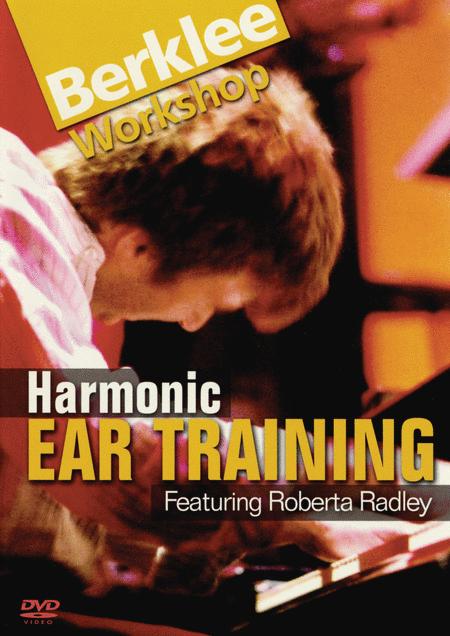
Roberta Radley : Harmonic Ear Training An excellent workshop from the assistant chair of the Ear Training Department at the prestigious Berklee College of Music, this DVD is a vital intro to the topic for songwriters and performers looking to improve their listening skills and become better musicians. You'll learn to: recognize chord progressions quickly and confidently, and incorporate them into your writing and performing, listen to music more analytically, and apply this knowledge to all of your projects. Starting with the bass line, you'll learn a step-by-step aproach to help you break down the hearing process, internalize the music, and then identify the elements of the progression. 73 minutes. Songlist: Lessons include:, Recognize chord progessions quickly, Incorporate chord progessions into your performance, Listen to music more analytically, Apply this to your projects
Roger Emerson : Pop Intervals and Ear Training for Choir See it! Hear it! Sing it! Using familiar popular song phrases, POP INTERVALS FOR CHOIR teaches and reinforces the 10 most common intervals a singer will need to effectively sight-read choral literature. In addition, singing by step and establishing a key center are taught with popular songs that every singer will know. The importance of audiation (inner hearing) is reinforced with each interval as well as easy-to-follow instructions for preparation and extension. You will also receive digital access to a professionally-produced audio recording of the accompaniment for each exercise and PDFs of singer parts and theory practice pages for projection and reproducible options. Build your choir's musicianship the easy way with this motivational resource! Exercises are based on the following songs: Lean on Me (step), Ob-la-di Ob-la-da (skip), Isn't She Lovely (minor 2nd), Hallelujah (minor 3rd up), Count on Me (major 3rd up), Brave (perfect 4th up), Skyfall (perfect 5th up), My Way (major 6th up), Let It Snow (octave), Hey Jude (minor 3rd down), Happy Together (perfect 4th down), It Don't Mean a Thing (perfect 5th down). Suggested for grades 6 and up. Songlist: Count On Me, My Way, Lean On Me, Hallelujah, Brave, Skyfall, Happy Together, Hey Jude, It Don't Mean A Thing (If It Ain't Got That Swing), Let It Snow! Let It Snow! Let It Snow!, Ob-La-Di, Ob-La-Da, Isn't She Lovely
Steve Prosser : Essential Ear Training The Ear Training curriculum of Berklee College of Music is known and respected throughout the world. Now, for the first time, this unique method has been captured in one comprehensive book by the chair of the Ear Training Department. This method teaches musicians to hear the music they are seeing, notate the music they have composed or arranged, develop their music vocabulary, and understand the music they are hearing. The book features a complete course with text and musical examples, and studies in rhythm, sight recognition, sol-fa, and melody. Songlist: Lesson One: Conducting Patterns, Lesson Two: Rhythmic Studies, Lesson Three: Sight Recognition Studies, Lesson Four: Sol-fa Studies, Lesson Five: Melodic Studies, Lesson Six: Supplemental Lessons: Visualization-Improvisation, Workshop One, Workshop Two, Workshop Three, Workshop Four, Workshop Five, Workshop Six, Workshop Seven, Workshop Eight, Workshop Nine, Workshop Ten, About The Author
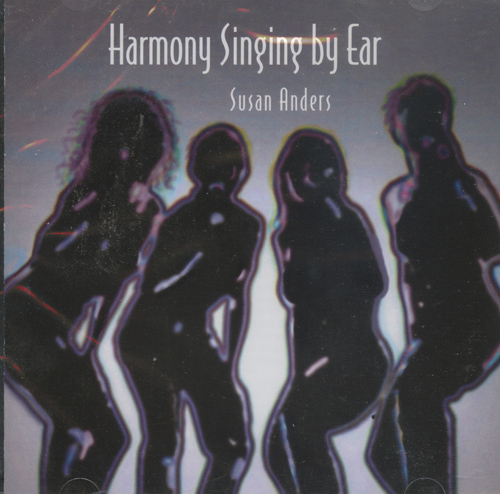
Susan Anders : Harmony Singing by Ear A step by step approach to learn how to find and sing harmonies above and below a melody. Three CDs of instructional narratives and fully produced music tracks with and without guide vocals. The instructional sections walk you through how to find the upper and lower harmony parts for eight songs. Those same harmonies are sung on music tracks. Vocal coach Susan Anders has successfully used this how to harmonize method for over twenty years with pop, R&B, folk, jazz, rock and country singers. Skill Level: Beginning to Intermediate. The parts range from baritone to soprano range, but all parts can be sung an octave above or below what is on the CD to allow lower and higher singers to join in. Songlist: Harmonizing Theory, Parallel 2 and 3-Part Harmonies, Finding the Upper Harmony, Finding the Upper Upper Harmony, Finding the Lower Harmony, Call-response Harmonies, Blue Note Harmonies, Block Chord Harmonies, Chromatic Harmonies, Polishing Your Harmony Part, Supplementary Exercises, Songs: Chapel of Love, Sweet Dreams, I Can See Clearly Now, Angel From Montgomery, Centerpiece, Bring It On Home To Me, One of Us, Walk Away Renee
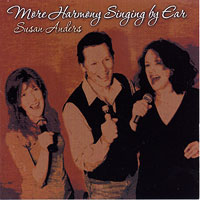
Susan Anders : More Harmony Singing By Ear The follow-up to Susan Anders' popular Harmony Singing by Ear uses the same effective method with seven new harmony songs and accompanying teaching segments. Singers who have used Harmony Singing by Ear as well as singers with beginning harmonizing skills can deepen their harmonizing ability with this new set of songs and harmony instruction. One, two or more singers can learn two and three-part harmony singing above and below a melody. More Harmony Singing by Ear includes:Three CDs with nearly four hours of instructional narration and fully produced music tracks. Music tracks with and without guide vocals. The music-only tracks can be used for rehearsal and performances. Seven pop, rock, and jazz songs; six songs arranged for 3 part harmony, one for 2 part harmony. Songlist: Lean On Me, Proud Mary, It Doesn't Matter Anymore, Teach Your Children, Gone Gone Gone (Done Moved On), Baby, Baby All the Time, Drive My Car
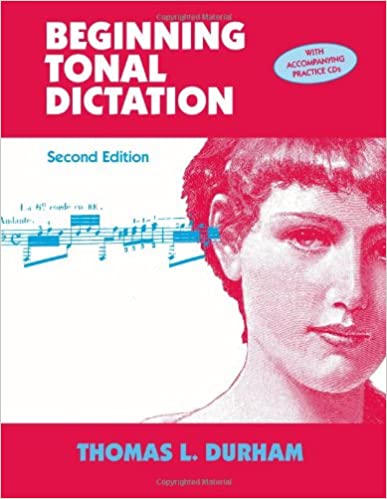
Thomas L. Durham : Beginning Tonal Dictation Designed for first-year college music ear training programs, this workbook, now in a widely improved Second Edition, contains hundreds of dictation exercises that will help students practice hearing with more accuracy and to become more competent musicians. Special features include: versatile-includes two accompanying CDs that contain all odd-numbered exercises so that students may practice at their convenience outside of class; interactive-allows students to correct their own work immediately because the answers are only inches away!; adaptable-covers the basic ear training objectives common among university music theory programs; innovative-offers a unique pedagogical approach to teaching and learning of melodic dictation; pragmatic-deals with the basics of rhythm, melody, and harmony, leaving aside less-essential concepts; self-contained-no need for separate student and instructor manuals since CD's are included and exercises and answers appear opposite each other. The particular sequencing of the materials makes this a strong pedagogical tool because there are no frustrating "quantum leaps" from one concept to another. The fact that students can use this book outside of class for supplemental help and practice further attests to its versatility. The easy-to-use practice CDs contain hundreds of recorded exercises coordinated with exercise numbers in the text. |







 Vocal Harmony Arrangements - Home
Christian | Gospel | Standards | Musicals | Specialty | World | Barbershop | Contemporary | Vocal Jazz | Choral | Christmas
Mixed Voices | Female | Male | 8 Parts | 6 Parts | 5 Parts | 3 Parts | 2 Parts | Medleys | Solo | Folio Series | New Releases
Select a Category |
Want to Sing? - Find a Chorus Near You
List of Choruses by State | List of Choruses by City