
In Celebration of the Human Voice - The Essential Musical Instrument
Home | Doo Wop | Barbershop | World | Contemporary | Christian | Vocal Jazz | Choral | Christmas | Instructional | Arrangements
Classical | Opera | Musicals | Personality | Young Singers | Disney | Videos | Songs | The Artists

Choral Arrangements of Madrigals
| A wide selection of madrigal sheet music and songbooks. |
Songbooks, Arrangements and/or Media
Displaying 1-44 of 44 items.
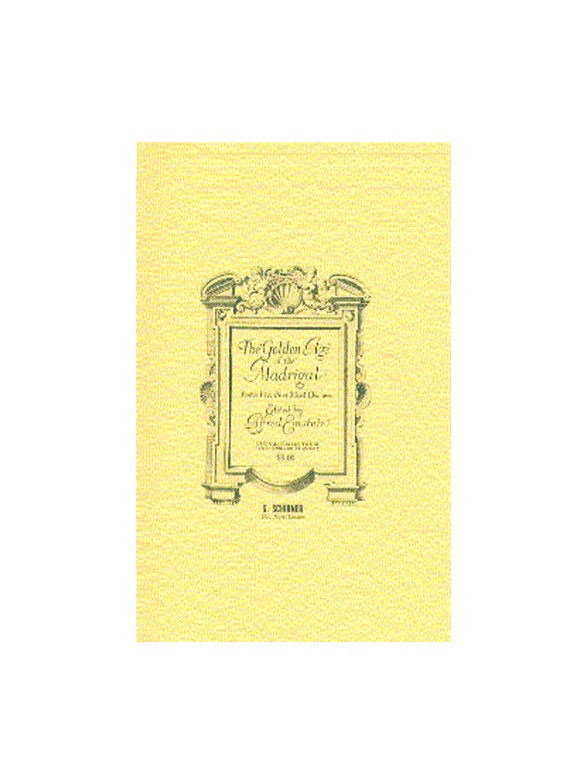
Alfred Einstein (Edited by) : The Golden Age of Madrigals A selection of classic Italian madrigals, mostly a cappella and all with English lyrics. Songlist: Fortune Once Made Us Happy, Last Slumber Eternal End, Lo How Aurora W/Gold, Love In Truth To A Lover, My Queenly Sun Before, Of Marble you are Fashioned, Since Beauty That Is Boundless, Therein Deep Sighing, This Parting Will Slay Me, When I Think How I Languish, When I Was Merry Stripling, Wild Silvan Creatures 
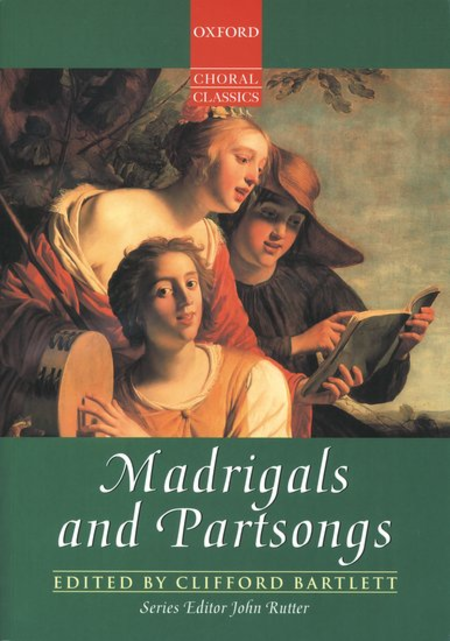
Clifford Bartlett : Madrigals and Partsongs This collection gathers together nearly sixty of the finest examples of the secular choral repertoire into one volume. Due space is given to the magnificent sixteenth century madrigals of England and Italy, with favorite works by Gibbons and Morley placed alongside less familiar selections by Lassus, Marenzio, and Weelkes. German and French pieces are also represented, for example, with Passereau's ever-popular Il est bel est bon. Works by Haydn and Schubert lead to the nineteenth century repertoire, which includes Brahms's lovely Nachtwache, from Five Songs, Op. 104, and Pearsall's exquisite Lay a Garland. The survey is completed by Debussy's Trois Chansons de Charles D'Orleans and examples of the glorious outpouring of English Romantic partsongs, with works by Elgar, Parry, Stanford, Britten, Finzi, and Vaughan Williams. Ranging from the late fifteenth to the twentieth century, and spanning all major European countries, this is a masterly survey suitable for all choirs. Clifford Bartlett has prepared completely new editions of all pre-twentieth century pieces, going back to the earliest and most reliable manuscript or printed sources. English translations are provided to aid understanding, with playable keyboard reductions in every case. Songlist: Dindirin, dindirin, Il bianco e dolce cigno, Of all the birds that I do know, All creatures now, Nachtwache No. 1, The Evening Primrose, Never weather-beaten sail, So weich und warm, Trois chansons de Charles d'Orleans, To be sung of a summer night on the water, Come, heavy sleep, Can she excuse my wrongs, Weep You No More, Sad Fountains, As torrents in summer, My love dwelt in a Northern land, There is sweet music, Fair Phyllis I saw sitting all alone, My spirit sang all day, Since first I saw your face, Lieto godea, Amor vittorioso, Ah, dear heart, The silver swan, What is our life?, Tanzen und springen, Ach, Weh des Leiden, Die Harmonie in der Ehe, Innsbruck, ich muss dich lassen, Farewell, dear love, Mille regrets, and more
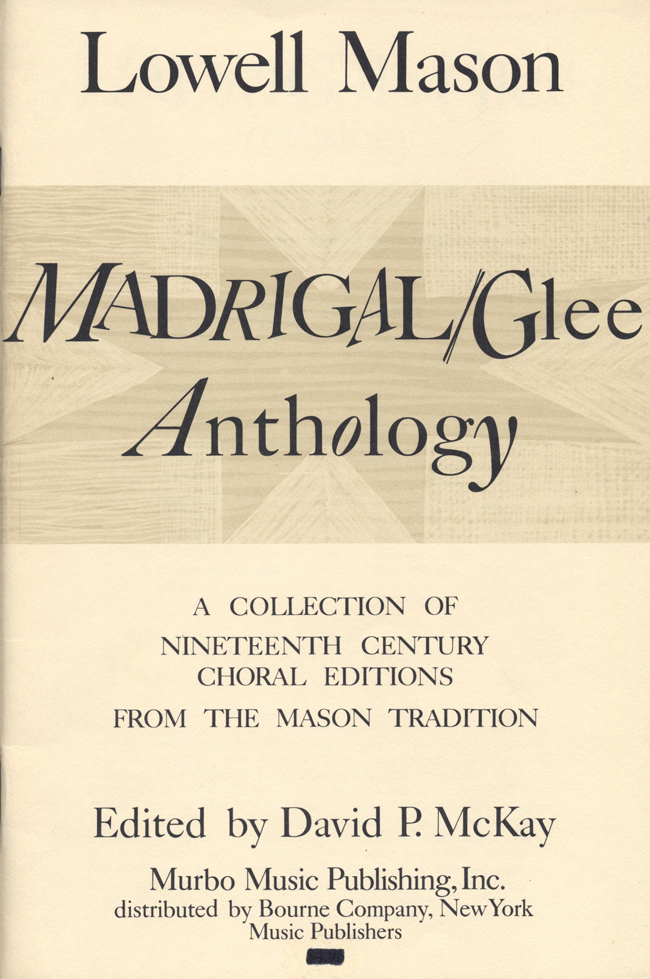
David McKay (edited and arranged) : Madrigal/Glee Anthology A classic collection for three part treble voices Songlist: Invitation To The Singing School, The Singing Lesson, Come Sing This Round With Me, Serene And Mild, Good Morning, We Are Noddin', Ye Spotted Snakes, Flow, O My Tears, Come Again Sweet Love, Yes! To The Work, See, The Conquering Hero Comes, O'er The Waters
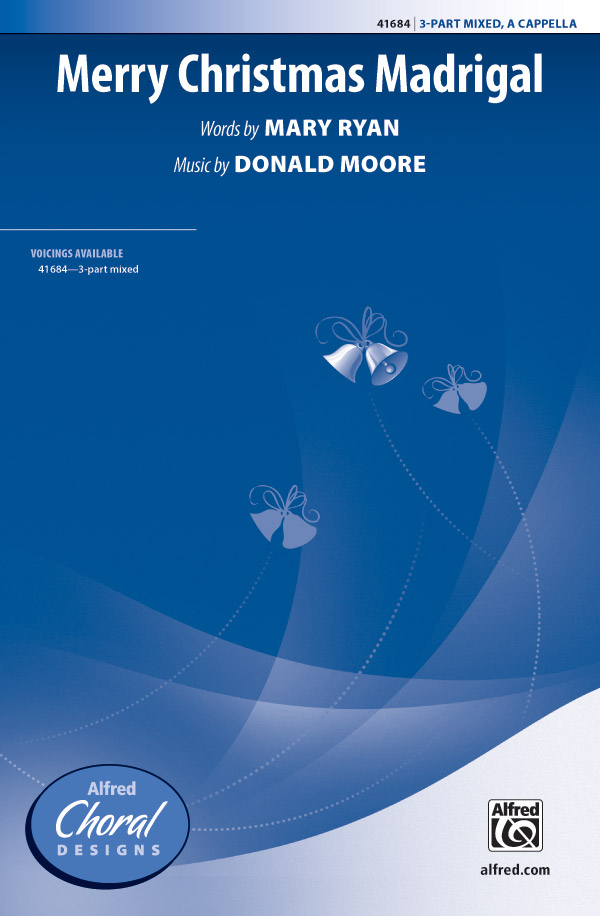
Donald Moore : Merry Christmas Madrigals A merry madrigal will be a nice addition to your 3-part choir's a cappella seasonal repertoire. Characteristic counterpoint makes this original Donald Moore piece a familiar form but, unlike many Renaissance chorals, the vocal ranges, subject matter, and number of voice parts have been specifically designed for developing choirs. A festive feature for holiday concerts and Madrigal feasts, with just enough optional bass notes in the 3-part mixed/SAB for your developing men's section. A "fa la la" section in the joyful number "A Merry Madrigal" makes it appropriate for both Christmas and general use. It's a fine learning piece in the madrigal style, yet the singable melodies make the independent vocal lines easy to learn. Don Moore is a master at creating works that develop choral singing, teach a classic choral style and, most importantly, sound great. Use it in concerts and at festivals and adjudications. Welcomed repetition and smart voice leading pave the way to success for developing 3-part choirs. The guys sing in their easiest range; the sopranos, a mostly step-wise melody; and the altos, intuitive harmonies. Add the optional sleighbells and it's ready to go for Christmas. Songlist: Merry Christmas Madrigal, A Merry Madrigal, A Holiday Madrigal, A Joyful Madrigal
Donald Moore : Christmas Madrigals for SSA "A Holiday Madrigal" - This merry madrigal will be a nice addition to your women's choir's a cappella seasonal repertoire. Characteristic counterpoint makes this original Donald Moore piece a familiar form but, unlike many Renaissance chorals, the vocal ranges, subject matter, and number of voice parts have been specifically designed for developing choirs. A festive feature for holiday concerts and Madrigal feasts. "A Joyful Madrigal" - Here's a new work by Donald Moore in madrigal style that's appropriate for general or Christmas use. Dynamic changes create interest; repetition makes for quick learning. Perfect when you need just one more piece for your Christmas or Spring concert. Lots of optional notes and is an outstanding learning piece for young and developing choirs. "A Merry Madrigal" - A "fa la la" section in this joyful number makes it appropriate for both Christmas and general use. It's a fine learning piece in the madrigal style, yet the singable melodies make the independent vocal lines easy to learn. Don Moore is a master at creating works that develop choral singing, teach a classic choral style and, most importantly, sound great. Use it in concerts and at festivals and adjudications. Develop your choir's a cappella skills with the straightforward original madrigal "Alleluia Madrigal" by Donald Moore. Traditional harmonies, modest ranges, and lots of repetition make it a quick-learn piece. Contrasting dynamics and a lilting three-four meter create a joyful song that is good for Christmas or general use. Songlist: A Holiday Madrigal, A Joyful Madrigal, A Merry Madrigal, Alleluia Madrigal
Egon Kraus (Editor) : More European Madrigals For Mixed Voices A second collection of madrigals from the greatest European composers. Songlist: Dear love, you may believe me, Ah, the sighs that come from my heart, Come, ye shepherds, Fair maiden, you have captured, Come, pretty maiden, Oh, my heart is sad and sore, The cricket, Better do not get married, Gabriel, the other day, grace, my love one, fair beauties, Hard by a fountain, I know a young lady, In bitter woe and anguish, Beneath a laurel's branches, Go forth, my sighs, Oh, I have been forsaken, Far better to feel, Oh, nightingale, Spring has arrived, Sing we and chant it, To the hills and the vales, When I'm drinking good red wine, A sweet new song, My love, I'm filled with sorrow
Egon Kraus (Editor) : European Madrigals A fine collection of madrigals from across Europe. Songlist: All Lust Und Freud (Joy & Mirth), All Riva Del Tebro (Bank Of Tiber), Amor Vittorioso (Come W/Weapons), Bon Jour Mon Coeur (Di Lasso), Ce Moys De May (This Mo.Of May), Es Ist Ein Schnee Gefallen, Fire, Fire (Morley), Hark All Ye Lovely Saints, In Pride Of May, Innsbruck, I Now Must Leave Thee (Innsbruck, Ich Muss Dich Lassen), Io Piango (Weep,I Weep) Marenzio, It Was A Lover And His Lass, Kuckuck Hat Sich Zu Tod Gefalln, Lasciate Mi Morire (Leave Me,Love), Mignonne (Fair Maid,Consider Rose), Mit Lust Tret Ich An Diesen Tanz, Now, O Now I Needs Must Part, Petite Nymphe Folastre (Nymphette, so Dashing and Appealing), Quand Mon Mary Vient De Dehors, Rest, Sweet Nymphs (Pilkington), Vezzosette Ninfe (Sweet&Ch Nymph), Weep, O Mine Eyes (J.Bennet), Wohlauf,Ihr Gaste(Good Health)
Gavin Bryars : First Book of Madrigals - For Unaccompanied Male Voices These Madrigals were written especially for the Hilliard Ensemble with who Gavin Bryars has worked for many years. The texts are by the poet and writer Blake Morrison. Songlist: Web, Stormy, Almond Tree, Just As The Ash-Glow`, Within Minutes, Our Bodies In The Shower, She'd Buy Things, All The Homely Arts And Crafts, In April, Who's The More To Blame, The Print Of Soles, My Pomegranate, Against Dieting
Gilbert & Sullivan : Madrigals, Glees and Part Songs Hidden within the marvelous operas of William Gilbert and Arthur Sullivan are wonderful madrigals, glees and part songs. They are masterpieces in themselves and can stand on their own. Because they are seldom heard, unless one attends a complete performance of an opera, they have been extracted so they may be accessible to everyone. These treasures are ideal for a variety of occasions and will complement any choral concert. For mixed voices with keyboard. Songlist: A British Tar, Let's Give Three Cheers, I Hear The Soft Note, Brightly Dawns Our Wedding Day, When The Buds are Blosoming, A Strange Adventure, When a Wooer goes a-wooing, Thank You Gallant Gondolieri, Try We life-long
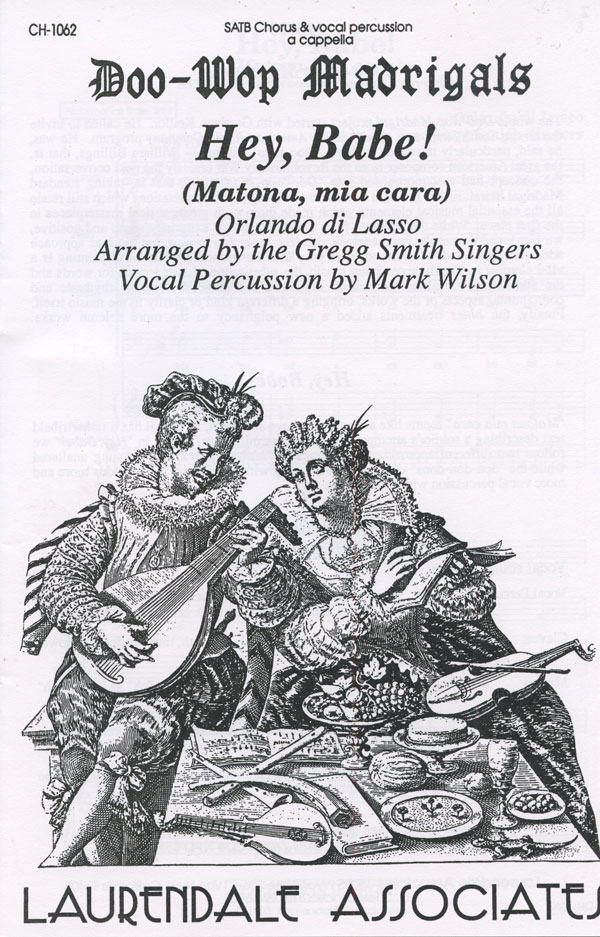
Gregg Smith : Doo-Wop Madrigals The whole Doo-Wop Madrigal project started with Garrison Keillor who called to invite the Gregg Smith Singers to appear on his American Radio Company program. He was, he said, particularly interested in some "Doo-Wop" Billings -- William Billings, that is, the great American composer from the Revolutionary War era. By the next conversation, the concept had metamorphosed into "Doo-Wop Madrigals", that is, taking standard Madrigal literature and giving it new life by creating jazz interpreations which still retain all the essential musical elements which made them such great musical masterpieces in the first place. Madrigals are fun to sing, but the Jazz approach adds entirely new dimensions to some very familiar ground. While word painting is a vital element in Renaissance choral music, the substitution of scat sounds for words and the addition of vocalized percussion highlights the sometimes subtle rhythmic and contrapuntal aspects of the works, bringing a different kind of clarity to the music itself. Finally, the blues treatments added a new poignancy to the more solemn works. Songlist: Cool April (April is in my Mistress' face), Billings in Blue (When Jesus Wept), He's Awesome (Il est bel et bon), The Revecy Band (Revecy venir du printans), Oh! That Love and Beauty (When Love and Beauty), Multiple Echoes (Echo Song), My heart is longing for your love (mon coeur se recommande a vous), Hey, Babe! (Matona, mia cara)
Gyorgy Ligeti : Nonsense Madrigals First premiered by the King's Singers in Queen Elizabeth Hall these compositions are a delight and will be a welcome addition to your repertoire. English text by William Rands and Lewis Carroll. Difficult. Songlist: Two Dreams and Little Bat, Cuckoo in the Pear-Tree, The Alphabet, Flying Robert, The Lobster Quadrille, A Long, Sad Tale
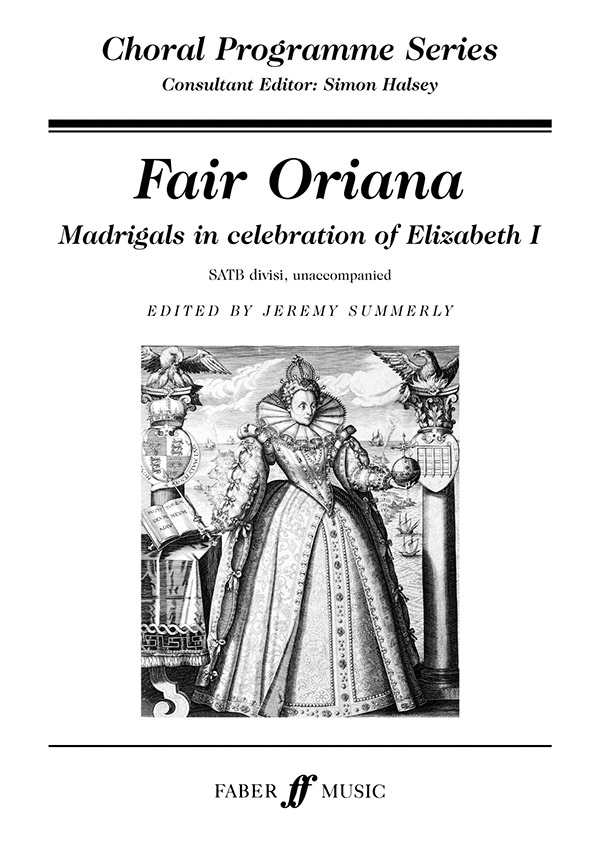
Jeremy Summerly : Fair Oriana - Madrigals in Celebration of Elizabeth 1 Elizabeth I, Fair Oriana, was one of the most remarkable monarchs in English history: she was well educated, strong, fearless and wise. Towards the end of her reign a musical anthology entitled The Triumphs of Oriana was assembled in order to flatter and divert her. Four superb works from this anthology - plus a fifth, Oriana's Farewell - provide a delightful sequence of madrigals in celebration of the Virgin Queen. This collection of masterpieces from England's Golden Age was published to celebrate the golden jubilee of her namesake, Elizabeth II. Songlist: Long Live Fair Oriana, Hark, Did Ye Evere Hear?, Fair Oriana, Come, Blessed Bird, Oriana Farewell
John Leavitt : The Madrigal Singer John Leavitt has established a reputation for carefully selecting important and historic repertoire, editing it in ways to make singers successful, all while staying true to the stylistic period. This new collection includes Fair Phyllis I Saw (John Farmer), Weep, O Mine Eyes (John Bennet), All Lust und Freud, Tanzen und Springen (Hans Leo Hassler), Il est bel et bon (Pierre Passereau), Tant que vivray (Claudin de Sermisy), Fa una canzona (Orazio Vecchi) and Bonzorno madonna (Antonio Scandello). A value-priced collection of important and standard works. Purchase the Performance Kit and get access to audio tracks online through My Library. Songlist: Weep, O Mine Eyes, Bonzorno Madonna (Good Day Dear), Il Est Bel Et Bon, All Lust Und Freud (All Desire And Joy), Tanzen Und Springen, Fair Phyllis, Fa Una Canzona, Tant Que Vivray
John Rutter : Birthday Madrigals Birthday Madrigals was written at the invitation of Brian Kay, conductor of the Cheltenham Bach Choir, to celebrate the seventy-fifth birthday of the great jazz pianist George Shearing. The first performance was given, in his presence, in Cheltenham Town Hall on June 3, 1995 by the Cheltenham Bach Choir with Neil Swainson (double bass), John Rutter conducting. The seed of the composition was 'It was a lover and his lass,' witten in 1975. The other four movements, their texts also drawn from the madrigal era (hence the work's title), were added in 1995 to make the present choral suite. Songlist: It Was A Lover And His Lass, Draw On, Sweet Night, Come Live With Me, My True Love Hath My Heart, When Daisies Pied
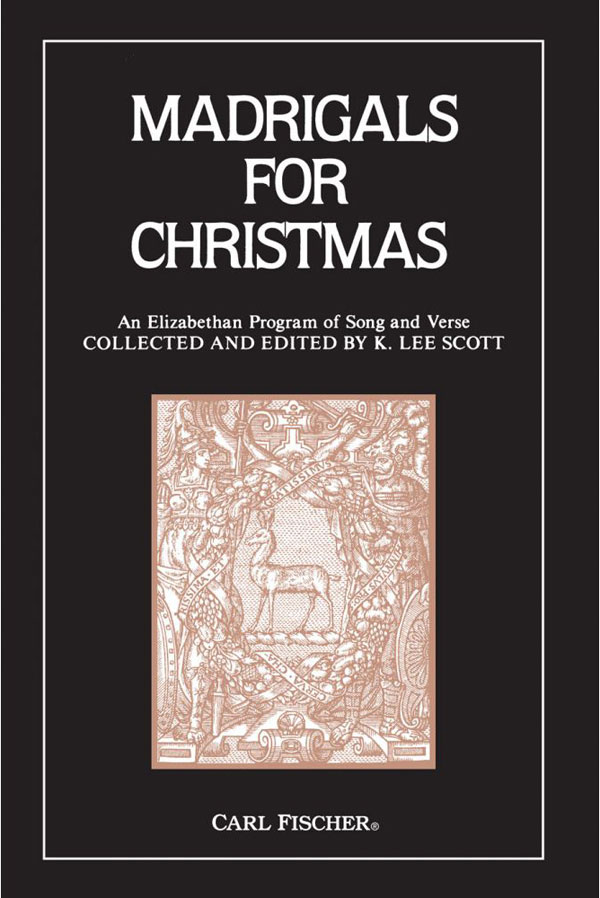
K. Lee Scott : Madrigals For Christmas This collection is designed to be flexible and versatile. It can be used as a set for concert or a madrigal dinner with or without the readings which appear between pieces. It can also be used as a source of new pieces to be inserted into pre-existing madrigal dinner programs. Churches may also find it appropriate in which case Now Winter Nights Enlarge and Green Grow'th the Holly may be omitted. Audience participation is encouraged on the last piece, While Shepherds Watched Their Flocks. A separate audience part is provoked at the back of this edition and may be copied for use in the program or as a separate flyer. Songlist: From Virgin's Womb, What Child Is This?, Now Let Us All With One Accord, His Rest, Now Winter's Nights Enlarge, While Shepherds Watched Their Flocks
King's Singers : Madrigals This collection of four-part pieces has been drawn from the King's Singers Madrigal History Tour. Included are pieces intended to illustrate the enormous range of styles within the title madrigal. The introduction has performance notes and translations, with a pronunciation guide in the back. This is an excellent way to introduce madrigals to your group. Songlist: Dindirin, Dindirin, Fatal La Parte, Cucu, Cucu!, De Los Alamos Vengo, Ach Elslein, Liebes Elselein, Vitrum Nostrum Gloriosum, Wir Zogen In Das Feld, Lirum Bililirum, Alla Cazza, Il Bianco E Dolce Cigno, Matona, Mia Cara, Au Joli Jeu, La La La, Je Ne L'ose Dire, Margot Labourez Les Vignes, Un Gentil Amoureux, Il Est Bel Et Bon, Fair Phyllis I Saw Sitting, Heigh Ho! 'Chill Go To Plough No More, Of All The Birds That I Do Know, Adieu, Sweet Amaryllis
King's Singers : Madrigals Volume 2 This collection of four-part pieces has been drawn from the King's Singers Madrigal History Tour. Included are pieces intended to illustrate the enormous range of styles within the title madrigal. The introduction has performance notes and translations, with a pronunciation guide in the back. This is an excellent way to introduce madrigals to your group. Songlist: Gentil Senora Mia, So Trinken Wir Alle, Ach, Weh Des Leiden, Tanzen Und Springen, Or Si Rallegri Il Cielo, Valle, Che de'Lamenti Miei Se' Piena, Amor Vittorioso, Contrapunto Bestiale Alla Mente, Zefiro Torna E'l Bel Tempo Rimena (Monteverdi), Triste Depart, Bon Jour: Et Puis, Quelles Nouvelles?, Now Is The Month Of Maying, O Grief ev'n On The Bud, The Silver Swan, Too Much I Once Lamented
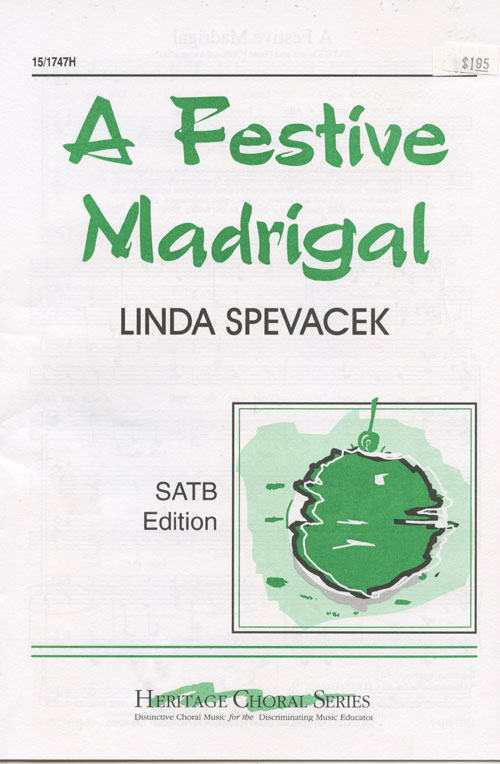
Linda Spevacek : Christmas Madrigals 'Christmas Madrigal Roundezvous' is a sparkling, festive, and extremely clever original madrigal, sung in a round, with a contrasting, lilting middle section. The uplifting lyrics of 'A Festive Madrigal' begin that bright, jovial original madrigal, which 'sings in' the holiday season. A marvelous, accessible choice which also works well for smaller ensembles. The refreshing, new, secular Christmas madrigal 'Come, Sing! Come, Dance!' will definitely capture the spirit of the season. Designed for small or large groups, this a cappella gem is easy and accessible, yet sophisticated and challenging. Delightfully creative and absolutely charming! Songlist: Christmas Madrigal Roundezvous, Come Sing, Come Dance
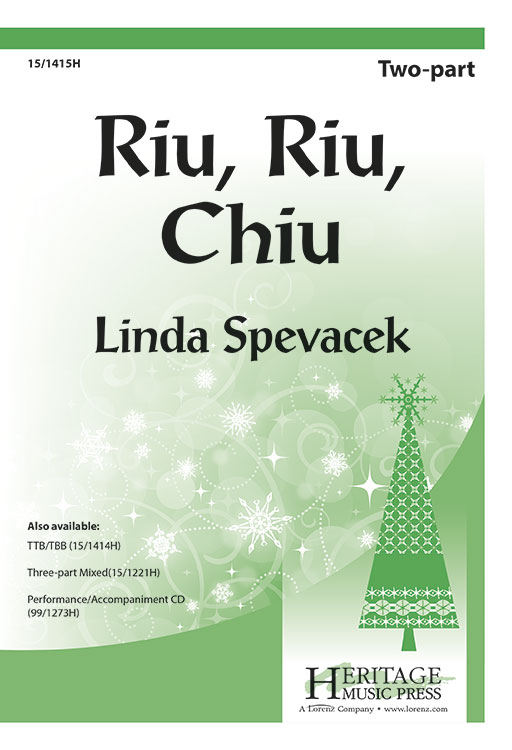
Linda Spevacek : Accompanied Christmas Gems for 2 Part Treble Choirs The new voicings of this best-selling arrangement of the Spanish Carol, 'Riu, Riu, Chiu,' include text options for English or Spanish. Tambourine and hand claps lend a festive, colorful flair. Whether performed with or without piano accompaniment, the limited ranges, repetitious form, and opportunities for solos yield built-in success for holiday programs. The vibrant, festive original, 'Merrily Sing Noel!' is a marvelous opener or change-of-pace selection. Its fanfare-like style and bright mood also offer nice, effective dynamic contrasts. Superb treble writing! 'Christmas Madrigal Roundezvous' is a sparkling, festive, and extremely clever original madrigal, sung in a round, with a contrasting, lilting middle section. The uplifting lyrics of 'A Festive Madrigal' begin that bright, jovial original madrigal, which 'sings in' the holiday season. A marvelous, accessible choice which also works well for smaller ensembles. Songlist: Christmas Madrigal Roundezvous, A Festive Madrigal, Merrily Sing Noel!, Riu, Riu, Chiu
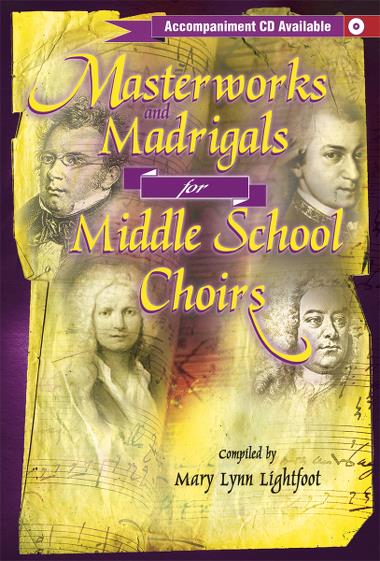
Mary Lynn Lightfoot (editor) : Masterworks and Madrigals for Middle School Choirs These eleven masterwork and madrigal selections have been carefully selected to meet the needs of developing choirs and the changing voice. Encompassing a broad spectrum of composers, styles and periods, and in a variety of voicings, this exciting new offering is a practical and versatile resource for the middle school/junior high choral classroom. Also featured, where applicable, are both English and original language text options, as well as interesting composer/performance notes. All available in this outstanding collection for less than half the cost than if purchased separately - a welcome budget stretcher! Songlist: Sing For Joy!, Today We Shall Be Merry, Cantate Domino, The Sound of Pipe and Drum, Jubilate Deo, Sing Joyfully, Gloria in Excelsis, O Bella Fusa, Life's Joy, Gloria In Excelsis Deo, Music, Most Beauteous Art, Masterworks and Madrigals: A Brief History
Morten Schuldt-Jensen : English Madrigals 1 This collection features five of the most popular choral works from the English Madrigal School, a brief period from the 1580s to the 1620s that followed the arrival of Italian secular polyphony on English shores. The name SAM-Klang takes the three voice parts from the arrangements -- Soprano, Alto and Men -- and combines it with the Scandinavian and German words for sound to create the portmanteau word sound together or harmony. The series offers basic and advanced choral repertoire. In addition to new repertoire and new arrangements, you will also find essential parts of the classical German, Scandinavian, French and English SATB repertoire, carefully and considerately reworked for SAM. The arrangements retain the characteristic features of the original movements and have almost the same richness of timbre, resulting in works which sound nearly unchanged to an audience. Piano reductions of all choral movements facilitate rehearsal preparation. The arrangements offer development opportunities for all voice sections, bringing new life and new quality to SAM choir work. SAM-Klang enables youth choirs to gain access to classical choral literature and ensures that mixed choirs who face challenges in finding singers for all male voice parts continue to have access to well-loved repertoire. Songlist: Since First I Saw Your Face, Weep, O Mine Eyes, April Is In My Mistress' Face, My Bonny Lass She Smileth, Come Again, Sweet Love
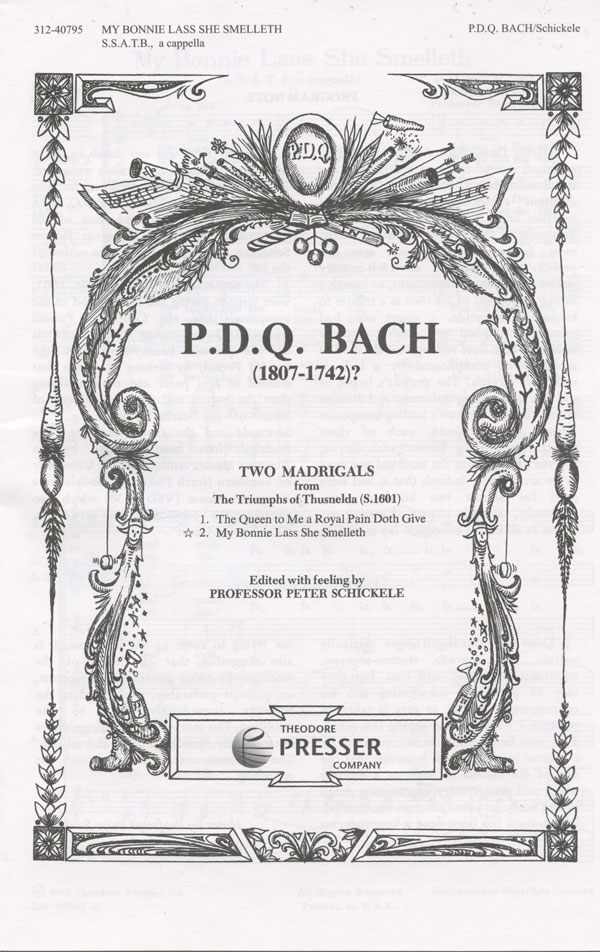
P.D.Q. Bach - Peter Schickele : Madcap Madrigals A whimsical collection of original madrigals written by the maestro of classical mirth. Your ensemble will have as much fun singing them as the audience does listening. Songlist: My Bonnie Lass She Smelleth, Four Curmudgeonly Canons, The Queen to Me a Royal Pain Doth Give, O Little Town of Hackensack, Throw The Yule Log On, Uncle John, Good King Kong Looked Out, Two Hearts, Four Lips, Three Little Words
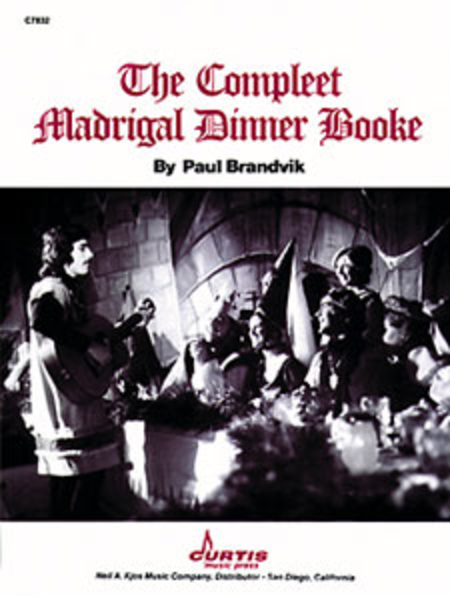
Paul Brandvik : Complete Madrigal Dinner Booke This very informative Madrigal Dinner kit includes a teacher's manual covering "everything" you ever wanted to know about a Madrigal Dinner. Includes organization, publicity, costuming, music, scripts, make up, staging, lighting, food service, etc. etc. Nineteen pages of repertoire and music sources are divided into categories and form perhaps the finest Madrigal Dinner list ever compiled. The kit also includes two separate and different dinner scripts, plus 24 pages of hitherto unpublished Madrigal Dinner music. A great fundraiser! Songlist: Definition, Goals, Food Service, Dates, Place, Division of Duties, Publicity, Tickets, Seating and Programs, Script, Dramatic Direction, Make-Up, Lighting, Staging, Costumes, Types and Styles of Music, Ceremonial Music for the Royal Court, The Concert by the Royal Court, Rehearsals and Style, Repertoire Lists and Sources
Paul Mealor : Now Sleeps the Crimson Petal Four madrigals on rose texts for unaccompanied SATB (with divisi). Commissioned by John Armitage Memorial and first performed by the joint choirs of the University of St. Andrews Chapel Choir, University of Aberdeen Chamber Choir and the Edinburgh University Chamber Choir, conducted by Michael Bawtree. Songlist: Now Sleeps The Crimson Petal, Lady, When I Behold The Roses Sprouting, Upon A Bank With Roses About, A Spotless Rose
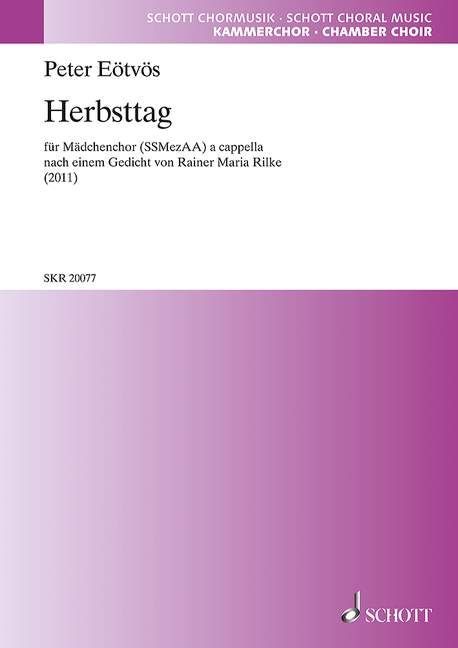
Peter Eotvos : Herbsttag This six-minute madrigal setting was commissioned by the renowned Hanover Girls' Choir and composed on the basis of one of Rainer Maria Rilke's profound poems. It begins as a thanksgiving prayer: for the summer, for the autumn fruits. But the first winds bring along the fear of the cold and loneliness of winter: 'Whoever is alone now will remain so for a long time, will stay up, read, write long letters". Eotvos lets the poem unfold twice, each time in a different way, thus intensifying the reflection. The tonality is treated freely, and the choral setting extends the underlying five-part texture, in which the choir's soloists create striking echoes, up to eight-part passages.
Philip Lawson : Five Italian Madrigals Orlando di Lasso was a Franco-Flemish composer of the late Renaissance known for his mature polyphonic style. Equally adept in many languages and both sacred and secular forms, his compositions remain a staple of the modern choral repertoire. This collection of Italian madrigals includes five representative works and is an excellent value! Songlist: Ardo, Si, Ma Non T'Amo, Cantai; Hor Piango, Come La Notte, Matona Mia Cara, Musica Dei Donum
Philip Lawson : Five French Madrigals Orlando di Lasso was a Franco-Flemish composer of the late Renaissance known for his mature polyphonic style. Equally adept in many languages and both sacred and secular forms, his compositions remain a staple of the modern choral repertoire. This collection of French chansons includes five representative works and is an excellent value! Songlist: Bonjour Mon Coeur, Dessus Le Marche, Paisible Domaine, Toutes Le Nuits, Vignon, Vignette
Philip Lawson : The Birds and the Bees Mixed choruses and chamber ensembles will frequently use and enjoy this collection of English madrigals, selected and edited by former King's Singer Philip Lawson. Songlist: The Nightingale, The Organ Of Delight, Of All The Birds, Sweet Honey-Sucking Bees, Sweet Suffolk Owl, The Silver Swan
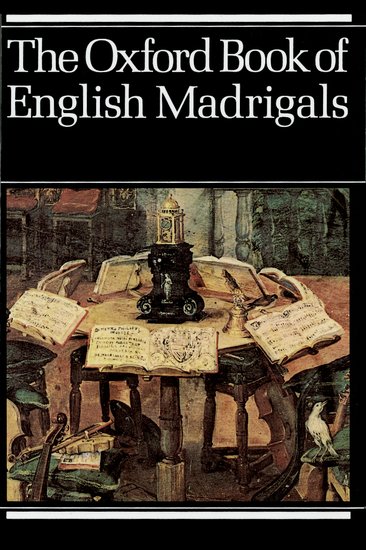
Philip Ledger (editor) : Oxford Book of English Madrigals The madrigal composed in England during the late sixteenth century and early seventeenth centuries include some of the finest music of the period and are possibly superior in truth and expressiveness even to the madrigals composed in Italy, where the form was invented and flourished over a long period. Faced with many hundreds of possible candidates for inclusion in the edition, the editor worked on the principal that the major composers would each be represented by several madrigals, and the lesser figures by one or more. But no madrigal would be included if it fell below the high standard set by the collection as a whole. Over 60 madrigals are included. Songlist: Those Sweet Delightful Lilies, All Creatures Now, Weep O Mine Eyes, Lullaby My Sweet Little Baby, This Sweet and Merry Month of May, Though Amaryllis Dance, Come Gentle Swains, Poor is the Life, Quick Quick Away Dispatch!, No Haste But Good!, Fair Nymphs I Heard One Telling, Fair Phyllis I Saw, Consture my Meaning, Ah Dear Heart, Dainty Fine Bird, O that the Learned Poets, The Silver Swan, Trust Not to Much Fair Youth, What is our Life?, Come Away Sweet Love, See What a Maze of Terror, April is in my Mistress' Face, Fyer Fyer!, Hard by a Crystal Fountain, I Love Alas this Tormenting, My Bonnie Lass She Smileth, Now Is The Month Of Maying, Sing We and Chant it, Through Philomela Lost Her Love, Whither Away so Fast?, and more
Robin Holloway : Five Madrigals for Unaccompanied Mixed Voices Ranging between 4 and 6 parts, these 5 delightful madrigals were composed by noted arranger Robin Holloway and were set to the poems of T.S. Elliot and one of James Joyce. Fun! Songlist: Ecce Puer, Children's Voices, Eyes That Last I Saw In Tears, Voices Of Birds, Red River
Russell Robinson : English Madrigals A sumptuous edition of an the cappella standard "April Is In My Mistress' Face" from the madrigal repertoire by Thomas Morley. Available for 3-part mixed voices, Russell Robinson's new adaptation features flowing contrapuntal lines, appropriate vocal ranges, and tasteful editor's marks for a truly authentic performance. Enjoyable to sing, valuable to teach, and splendid to hear. "Fair Phyllis" is another well-edited arrangement by Russell Robinson from the madrigal repertoire. Sung a cappella, or with the piano, the men's part spans only six notes in an easy range for changing voices. Charming secular text, light polyphonic texture, changing meters, and contrasting dynamics. Fair Phyllis is perfect as a first madrigal or as a Renaissance feature on any program. "Sing We And Chant It" - Introduce your 3-part choir to madrigal singing with this wonderful new edition of the Thomas Morley classic designed especially for young singers by Russell Robinson. Reduced to three voice parts, this edition still sounds full and captures all the spirit and joy of madrigal singing. Suitable for large choirs as well as small groups. Add this work to your choral library and use it year after year. An excellent teaching piece...but perform it at concert and festival time, too. Songlist: Now Is The Month Of Maying, How Merrily We live, Fair Phyllis, Sing We And Chant It, April Is In My Mistress' Face, Fair Phyllis, Now Is The Month Of Maying, How Merrily We live
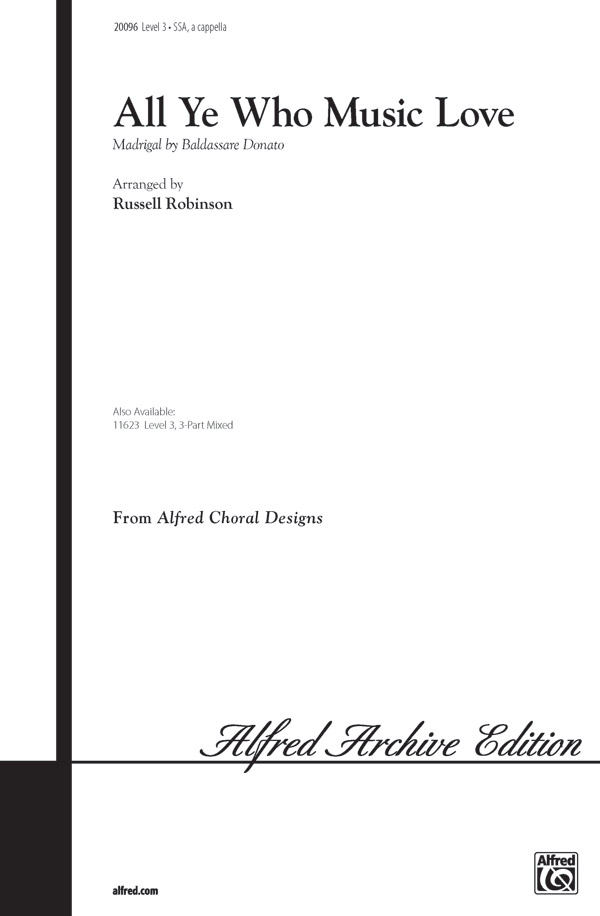
Russell Robinson : All Ye Who Music Love Six accessible a cappella arrangements especially for 3-Part Mixed choirs. Songlist: All Ye Who Music Love, April Is In My Mistress' Face, How Merrily We Live, In These Delightful Pleasant Groves, My Bonnie Lass, Sing We and Chant It.
Russell Robinson : Madrigals for 3-Part Mixed Vol 2 "Now is the Month of Maying" - Morley's famous madrigal is arranged perfectly for 3-part mixed voices. Excellent for developing choirs and small vocal ensembles. Limited range male part. "How Merrily We Live" - Another well-edited arrangement by Russell Robinson of a light and spirited work from the madrigal repertoire. It's the perfect choice for any SSA or 3-part mixed choir, with or without experience in madrigal singing. May be performed a cappella or with piano doubling the voices. Perfect for developing part singing in today's treble and mixed choirs. "Fair Phyllis" - Another well-edited arrangement by Russell Robinson from the madrigal repertoire. Sung a cappella, or with the piano, the men's part spans only six notes in an easy range for changing voices. Charming secular text, light polyphonic texture, changing meters, and contrasting dynamics. Fair Phyllis is perfect as a first madrigal or as a Renaissance feature on any program. "Counterpoint of the Animal" - Sixteenth century Italian composer Adriano Banchieri must have had quite the sense of humor. This classic light-hearted concert work has been a staple in choral repertoire for decades. Now Russell Robinson brings us a new setting that will add a touch of classy fun to any serious concert. "My Bonnie Lass" - This arrangement of a favorite Thomas Morley madrigal, a popular choice in the 3-part voicing, is now available for SATB and TBB choirs. Bright tonalities and buoyant contrapuntal textures display the sound of Renaissance choral music. Another fine Robinson edition. Songlist: My Bonnie Lass, Now is the Month of Maying, How Merrily We Live, Fair Phyllis, Counterpoint of the Animal
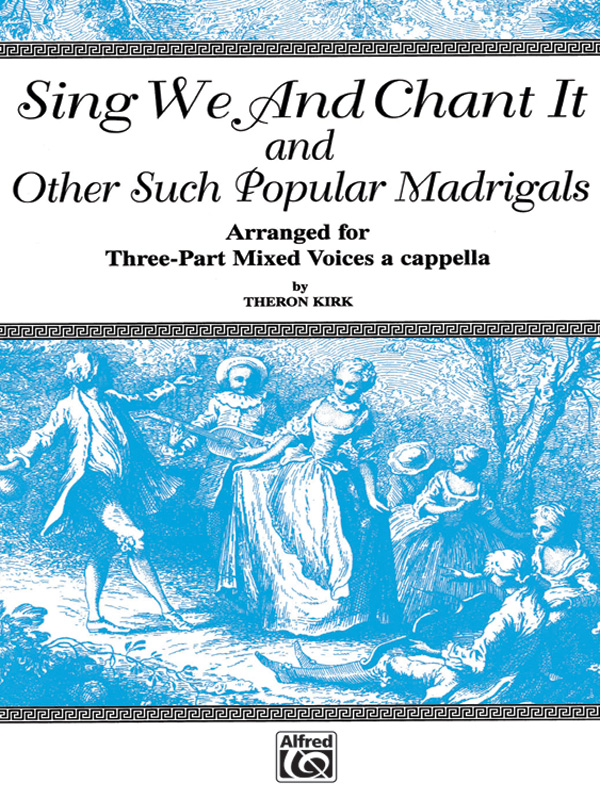
Theron Kirk : Sing We and Chant It Introduce junior high and middle school students to the joys of madrigal singing with this outstanding collection. Perfect for young , developing voices, this collection features some of the best known madrigals skillfully arranged for three part mixed voices by Theron Kirk. From the "fa la la" madrigals of Morley to the German part song of Hassler, each is carefully set to compliment the voice ranges and qualities of the developing male singer. An excellent addition to the repertoire of the changing voice. Songlist: Sing We And Chant It, Now Is The Month Of Maying, In These Delightful, Pleasant Groves, My Bonnie Lass She Smileth, Matona, Lovely Maiden, Fair Phyllis I Saw, Since Robin Hood, Dancing And Springing
Various Arrangers : Madrigals for Three Voices "With The Sound of Singing" - Let music fill your heart with joy in this delightful madrigal style piece. Easily learned and a great concert change of pace! "This Day Of Joyful Pleasure" is a perfect piece to introduce madrigal style. Easy ranges; voices may be doubled by instruments. "Sweeter Than The King's Wine" is a fun original madrigal by the talented Stephen Hatfield that mixes light, dancing textures of the madrigal with a soulful singing style. Here's a 3-part a cappella arrangement of a Thomas Morley madrigal "Spring-Time" that is ideal for young ensembles at concert and contest performances. Excellent for developing style, phrasing, intonation and dynamic contrast. New English lyrics highlight the bright madrigal style of "Come Make Merry And Sing" by the Italian composer Thomaso Cimello. An excellent and accessible way for young singers to develop madrigal technique. A delightful setting of "While Joyful Springtime Lasteth" is lively and colorful. An excellent contest or ensemble selection. Songlist: With The Sound of Singing, This Day Of Joyful Pleasure, Sweeter Than The King's Wine, Come Make Merry And Sing
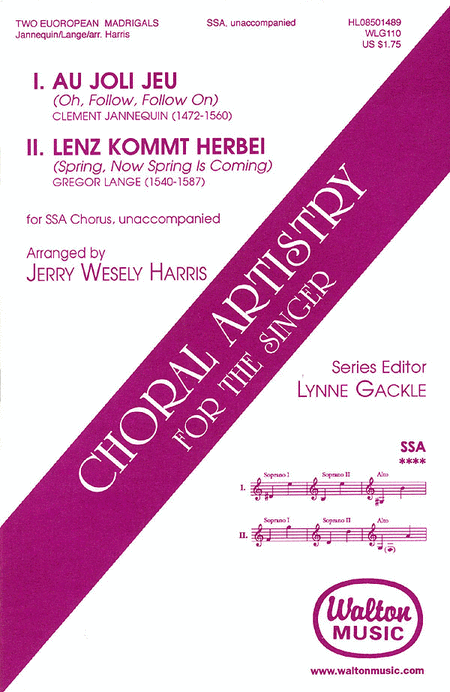
Various Arrangers : Madrigals for Treble Voices "Oh, Follow, Follow On" (France) & "Spring, Now Spring" (Germany) add lightness to any women's choir repertoire - one of new love, the other of Spring's new birth. In French and German respectively with English translations. In three sections, "O Lovely Dove" employs overlapping legato entries marked by mild dissonance. This piece is a model of expressive writing and sung sensitively, will be moving both to audiences and performers. Let music fill your heart with joy in this delightful madrigal style piece of "With The Sound Of Singing". Easily learned and a great concert change of pace! The short piece "Kikkehihi" was written early in Schein's life and is typical of the Italian madrigal. The polyphonic writing offers each voice a melodic line to shape, and imitation to listen for the other voices. Kikkehihi is a rousing way to begin a program and to introduce the choir and audience to the charm of madrigals. Songlist: O Lovely Dove, Two European Madrigals, Now Is The Month Of Maying, Kikkehihif
Various Arrangers : Madrigals for SSA New for SSA! Russell Robinson has now adapted this widely performed madrigal "Sing We and Chant It" for treble choirs. It's superbly reduced to preserve the harmonic and melodic structure of the original 5-part work. The quintessential madrigal, it features dynamic variations, much repetition for quick learning, and an open score for easy reading. Russell Robinson has adapted "Fire, Fire", one of Thomas Morley's most enduring madrigals, for 3-part voices, just right for today's young and developing choirs. The male part has a limited, 5-note range...great for changing voices. The independent vocal lines make it an excellent learning piece and a perfect "first madrigal" for any choir. Carefully tailored to the needs of middle school and junior high singers. "All Ye Who Love Music" was given its English text by Thomas Oliphant in 1837. This arrangement has been lowered one step from the original key of G major to F major. The soprano (Part 1) melody is basically the same; however, Parts II and III have been arranged iin such a way as to limit the range and for ease of singing, while retaining the sound and flavor of the original. As will all Renaissance madrigals, this piece should be sung lightly and lyrically. This trio of fresh, new, madrigals from Jay Althouse is a valuable addition to the choral repertoire SSA choirs. The first is in a traditional madrigal style, with a "fa la la" section and features and echo chorus. The second is lush and lovely, homophonic in nature, with a thought-provoking text. The third is up-tempo and includes an optional hand drum: it could be used as a processional or at a madrigal dinner. Use any or all of the three for concerts, contests, and adjudications. Songlist: Sing We and Chant It, Fire, Fire, All Ye Who Music Love, Come Celebrate this Festive Day, How Fair a Rose, All Ye, the Music Makers
Various Arrangers : Madrigals for 3-Part Mixed Vol 1 Russell Robinson has now adapted this widely performed madrigal "Sing We and Chant It" for treble choirs. It's superbly reduced to preserve the harmonic and melodic structure of the original 5-part work. The quintessential madrigal, it features dynamic variations, much repetition for quick learning, and an open score for easy reading. Russell Robinson has adapted "Fire, Fire", one of Thomas Morley's most enduring madrigals, for 3-part voices, just right for today's young and developing choirs. The male part has a limited, 5-note range...great for changing voices. The independent vocal lines make it an excellent learning piece and a perfect "first madrigal" for any choir. Carefully tailored to the needs of middle school and junior high singers. "All Ye Who Love Music" was given its English text by Thomas Oliphant in 1837. This arrangement has been lowered one step from the original key of G major to F major. The soprano (Part 1) melody is basically the same; however, Parts II and III have been arranged iin such a way as to limit the range and for ease of singing, while retaining the sound and flavor of the original. As will all Renaissance madrigals, this piece should be sung lightly and lyrically. This trio of fresh, new, madrigals from Jay Althouse is a valuable addition to the choral repertoire mixed choirs. The first is in a traditional madrigal style, with a "fa la la" section and features and echo chorus. The second is lush and lovely, homophonic in nature, with a thought-provoking text. The third is up-tempo and includes an optional hand drum: it could be used as a processional or at a madrigal dinner. Use any or all of the three for concerts, contests, and adjudications. Songlist: Fire, Fire, Come Celebrate This Festive Day, How Fair a Rose?, All Ye, the Music Makers, Sing We And Chant It
Various Composers : Twelve Madrigals for SSA(A) A collection of classic madrigals from the masters of the genre. Songlist: In Going to My Lonely Bed, The Cricket, Fair Phyllis, Those Dainty Daffadillies, Ah, Look Upon These Eyes, Tell me, What Master Hand, He's a Pretty Cuckoo, Lo! Country Sports, Thus Sings My Dearest Jewel, Flora Gave Me Fairest Flowers, Sweet Honey-Sucking Bees, Rounds Based on the Cries of London
Various Composers : Eight Elizabethan Madrigals Eight Madrigals arranged for SSA or SSAA Choir. Songlist: The Nightingale, Seek sweet content, Now Is The Month Of Maying, Come again, sweet love, What saith my dainty darling, All creatures now are merry minded, The Silver Swan, My bonnie lass, she smileth
Various Composers : Madrigals for Treble Voices This collection attempts to provide repertoire for treble-voice groups who desire to sing madrigals. Although a great wealth of madrigal literature exists for mixed voices, some attention has therefore been given to the text of each selection in order to make it more appropriate for feminine choruses. Songlist: It Was a Lover and His Lass, Let All Who Sing Be Merry, Maidens Fair of Mantua's City, The Messenger of Love, Now Is the Month of Maying, The Silver Swan
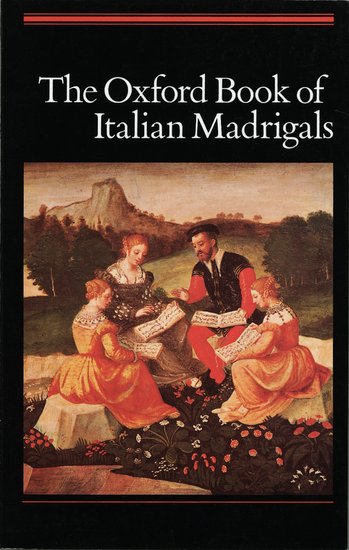
Various Composers : Oxford Book of Italian Madrigals During the eighty years from approx. 1535 many thousands of Italian madrigals were composed. Here are 55 for mixed voices covering the whole range of types,and the whole period. All have been chosen for their musical value - they are small masterpieces. Songlist: Dormend' un Giorno, Amor Mi Fa Morire, Italia Mia, Quanto Piu M'arde, Cosi Soav' e'l Foco, Il Bianco e Dolce Cigno, Chi la Gagliarda, Donna, Vo Imparare, Dormendo un Giorno, Lo Mi Son Giovinetta, Strane Rupi, Tutte le Vecchie Son Maleciose, Quest' io Tesseva e Quelle, Ancor Che Col Partire, Ingiustissimo Amor, Mia Benigna Fortuna, Cantai, or Piango, O Morte, Eterno Fin, O Sonno, L'alto Signor, Mia Benigna Fortuna, Chi Salira Per Me, Cantai, or Piango, Lo Son Ferito, Ahi Lasso, Quest' Affannato Mio Doglioso Core, Vestiva i Colli, Due Rose Fresche, Ne L'aria In Questi Di, La Ver L'Aurora, Leggiadre Ninfe, Ahi, Chi Mi Rompe il Sonno, and more
William Belan : A Handbook for the Performance of English Madrigals Madrigals are a valued body of literature and when an English madrigal is being prepared for a performance, one strives to inform the experience with the best information available - thinking through important performance issues of a madrigal builds perspective. This handbook will be useful immediately for teachers and students or anyone who studies and performs the madrigal. It is supported by primary and secondary historical sources for the purpose of providing information that will assist readers to sort valid information from personal opinion. Readers will receive a unique perspective on the madrigal, the marriage of music and text, and its unique place in the stylistic timeline. Songlist: Acknowledgments, Preface, Introduction, What is a Madrigal?, History of the Madrigal, Tactus and Rhythm: Guides for Conducting, Stylistic Expression, Reading Texts and Hearing the Poet's Music, Samples of English Prosody, Selecting an Edition, Selected Example #1: Fair Phyllis (John Farmer), Overview of the Poem, Voicing, Tempo, Phrasing and Stress, Articulation, Tone Quality, Dynamics, Selected Example #2: The Silver Swan (Orlando Gibbons), Overview of the Poem, Voicing, Tempo, Phrasing and Stress, Articulation, Tone Quality, Dynamics, Conclusion, Glossary of Terms, Bibliography
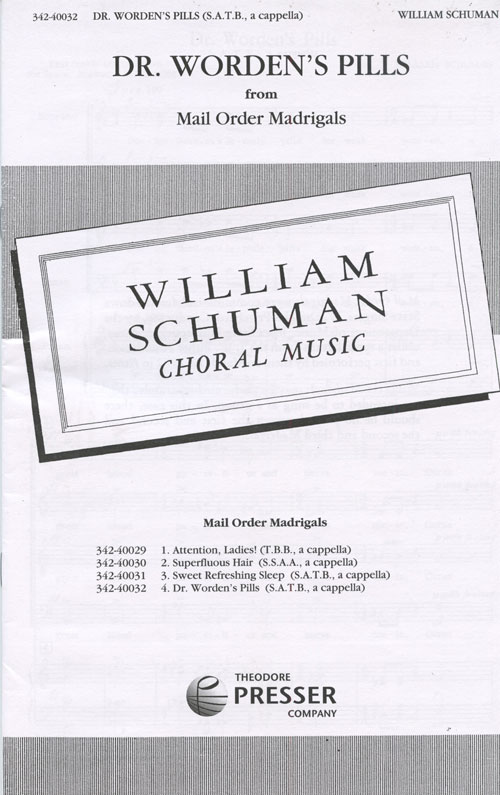
William Schuman : Mail Order Madrigals William Schuman's hilariously entertaining Mail-Order Madrigals, the words taken straight out of an 1897 Sears Roebuck catalog. Songlist: Superfluous Hair, Dr. Worden's Pills, Sweet Refreshing Sleep, Attention, Ladies |













Displaying 1-50 of 136 items.


Edited and arranged by John Leavitt, this well-known Italian madrigal is offered in two voicings, enabling singers to be successful, while staying true to the stylistic period.
Arranger: John Leavitt | Composer: Orazio Vecchi | Country: Italy
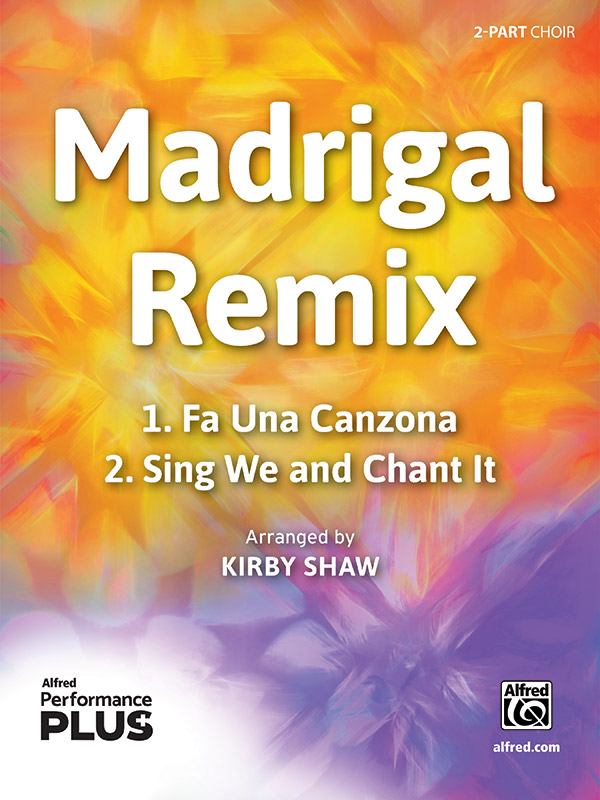
A fresh take on standard rep! Two brief mainstream madrigals are re-imagined with piano, bass, and drums accompaniment.The PerformancePlus+ series is an innovative addition to the ever-expanding MakeMusic Cloud interactive library. These engaging selections are presented with educational resources designed to enrich the rehearsal process and create outstanding performances.
Arranger: Kirby Shaw

This lively madrigal is a dandy and upbeat addition to your Christmas program. Perfect for a high school or adult choir. Difficulty Level: Medium Adult. Duration - 00:03:20.
Arranger: Christopher Boodle
Rejoice in the Savior's birth with dancing and pipes! This spirited Christmas anthem from the team of Williams and Paige will make both singers and congregation want to move with the spirit and shout for joy! A lively, exciting invitation to celebrate, A Christmas Madrigal will make a great processional or festive call to worship.
Composer: Jon Paige
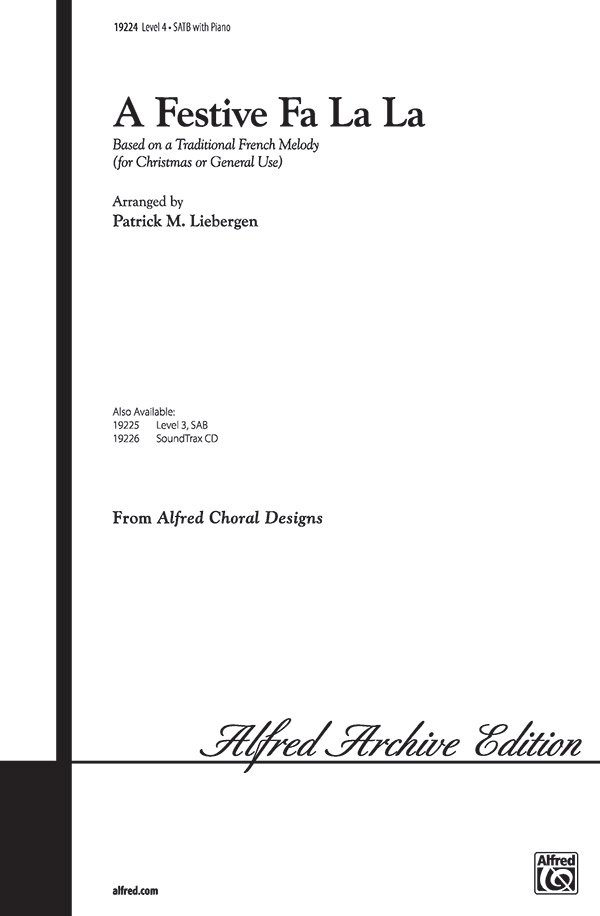
Based on a French melody, this multi-purpose Christmas piece includes an optional springtime text. Learn it in December, then use it again at year-end concerts or adjudications. It's a madrigal-like number featuring an optional hand drum and flute (both included in the publication) that give it a medieval feel. Yet it's accompanied by a lilting piano. Good for mixed choirs of any age.
Composer: Patrick Liebergen
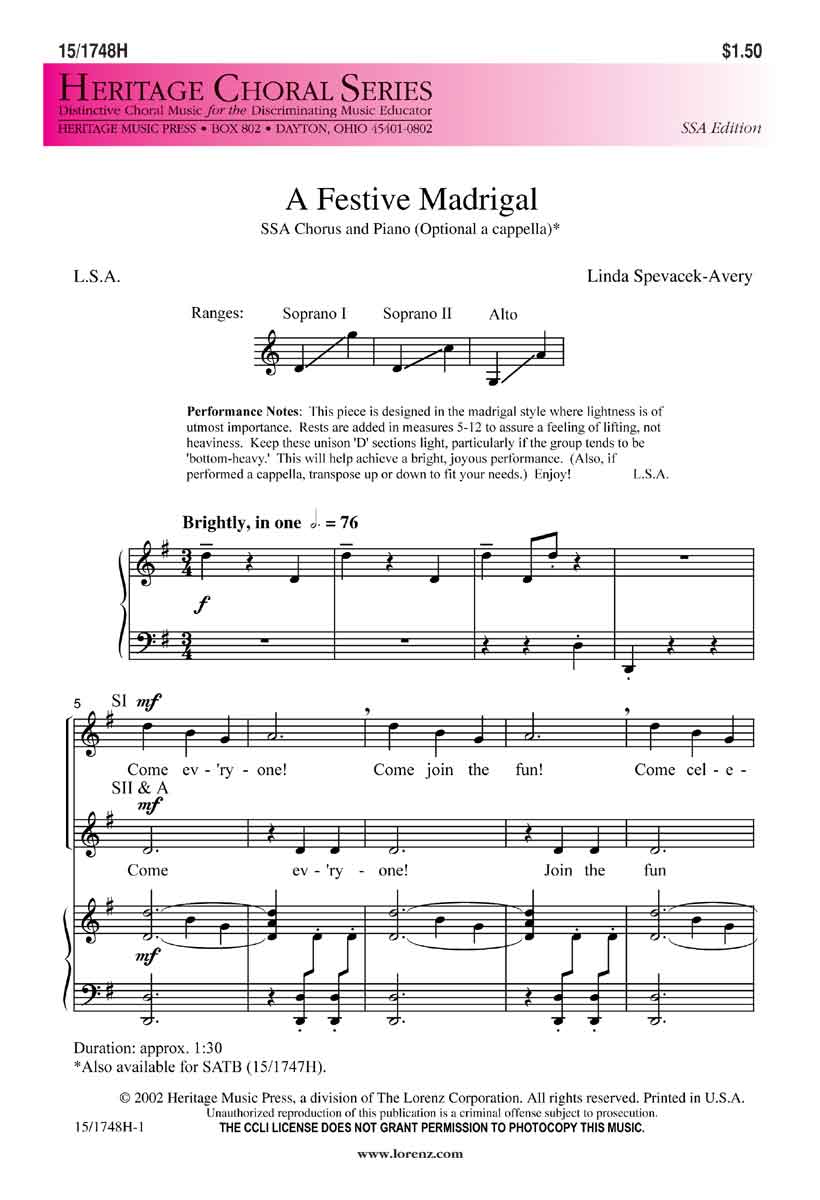
"Come everyone! Come join the fun! Come celebrate for a happy new year!o These uplifting lyrics begin this bright, jovial original madrigal, which 'sing in' the holiday season. A marvelous, accessible choice which also works well for smaller ensembles. Also available: SATB (15/1747H).
Arranger: Linda Spevacek
Developing 3-part mixed and SSA choirs will achieve their finest a cappella sound with this light choral inspired by traditional madrigals. Conservative vocal ranges and practical part-writing ensure quick learning at any time of year.
Arranger: Donald Moore | Composer: William Gooch
This merry madrigal will be a nice addition to your 3-part choir's a cappella seasonal repertoire. Characteristic counterpoint makes this original Donald Moore piece a familiar form but, unlike many Renaissance chorals, the vocal ranges, subject matter, and number of voice parts have been specifically designed for developing choirs. A festive feature for holiday concerts and Madrigal feasts, with just enough optional bass notes in the 3-part mixed/SAB for your developing men's section.
Arranger: Donald Moore
Here's a new work by Donald Moore in madrigal style that's appropriate for general or Christmas use. Dynamic changes create interest; repetition makes for quick learning. Perfect when you need just one more piece for your Christmas or Spring concert. Lots of optional notes in the boys' part of the mixed voice edition. An outstanding learning piece for young and developing choirs.
Arranger: Donald Moore | Composer: Donald Moore

It's a mad, mad, mad, mad, madrigal indeed where the fa-la-la's get mixed up with the shoo-bee-doo-bee-doo's and the rama-lama-ding-dong's! This novelty song for madrigal groups, concert choirs or jazz groups will bring smiles to the crowd!
Arranger: Kirby Shaw
Here's a marvelous music history lesson! This clever a cappella choral features snippets of well-known madrigal texts and music, mixed in with an original contrapuntal theme.
Composer: Sally K. Albrecht
A "fa la la" section in this joyful number makes it appropriate for both Christmas and general use. It's a fine learning piece in the madrigal style, yet the singable melodies make the independent vocal lines easy to learn. Don Moore is a master at creating works that develop choral singing, teach a classic choral style and, most importantly, sound great. Use it in concerts and at festivals and adjudications.
Arranger: Donald Moore

16th-Century harmony meets 21st-Century technology in this novel take on the madrigal style. It sings the story of a couple falling in love with some help from Google, Facebook, and Twitter. Their relationship is torn apart by Friendster, a failed social networking site. Lyric fun with solid musical writing in the madrigal style.
Composer: Nathan Howe
Developing 3-part mixed choirs will enjoy learning and performing the independent "fa la la" melodies in this joyous original a cappella madrigal. Each voice part gets a chance to lead the add-on refrain. Offers an optional baritone part, too!
Arranger: Sally K. Albrecht | Composer: Sally K. Albrecht
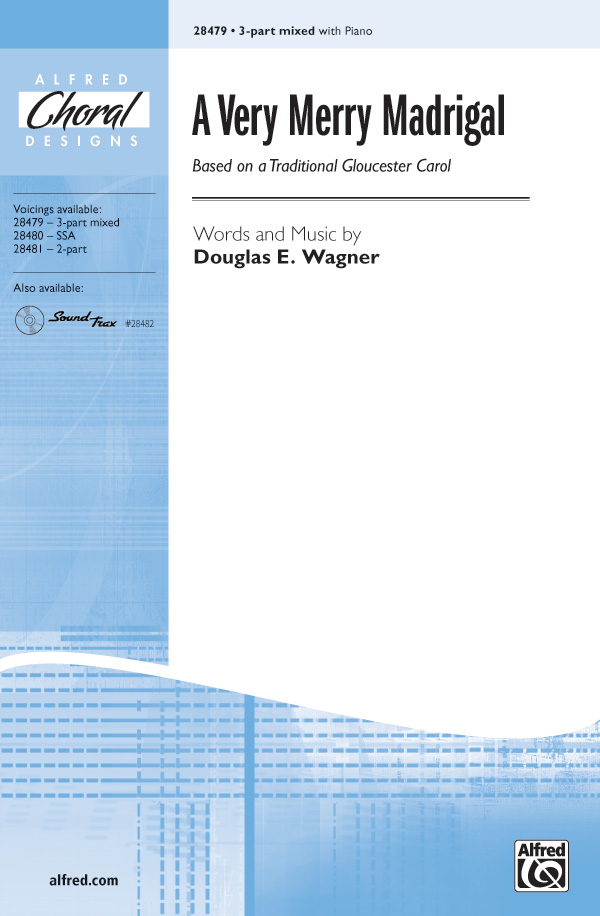
Greet seasonal concertgoers with this festive original sung in the madrigal style. Joyful (and mostly step wise) "fa la la" refrains are sung following each of two welcoming verses, arranged with slightly different choral colors the second time. A wonderful Renaissance inspired SoundTrax sets the early music tone, or consider playing the keyboard part on a harpsichord synthesizer.
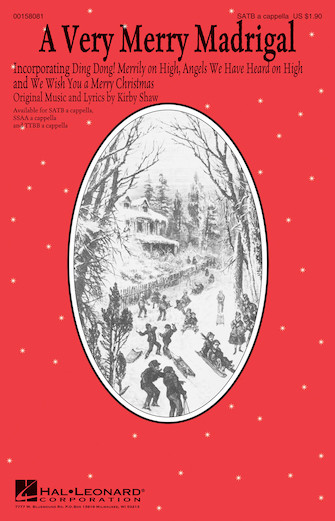
Music and merriment abound in this original madrigal-style work for a cappella voices. Includes choruses of Ding Dong! Merrily on High and We Wish You a Merry Christmas and a good measure of fa-la-la's to create a cheerful holiday showcase!
Composer: Traditional

This a cappella madrigal from the high Renaissance is now available as a stand alone choral. It features opportunities for dynamic contrasts and development of musical line. John Leavitt has edited the piece with optional cue notes to make the tenor range more accessible to a larger group of singers. This madrigal is stunningly beautiful.
Arranger: John Leavitt

Hans Leo Hassler (1562-1612) was a prolific German composer who studied in Italy with Andrea Gabrieli. All Lust und Freud is a splendid example of secular German part-song fashioned after the Italian madrigal of the High Renaissance. Ideal for contest and festival! Duration: ca. 3:00
Composer: Hans Leo Hassler | Country: Germany

Here is an accessible and appealing madrigal arranged for male voices. Excellent for contest and festival. Available: TTB a cappella. Performance Time: Approx. 1:50.
Arranger: Sherri Porterfield

This delightful madrigal is offered here in an accompanied version for young voices. Perfect for contest or festival, the music theme makes it appropriate for concerts at any time of year!
Arranger: Carol Kelley
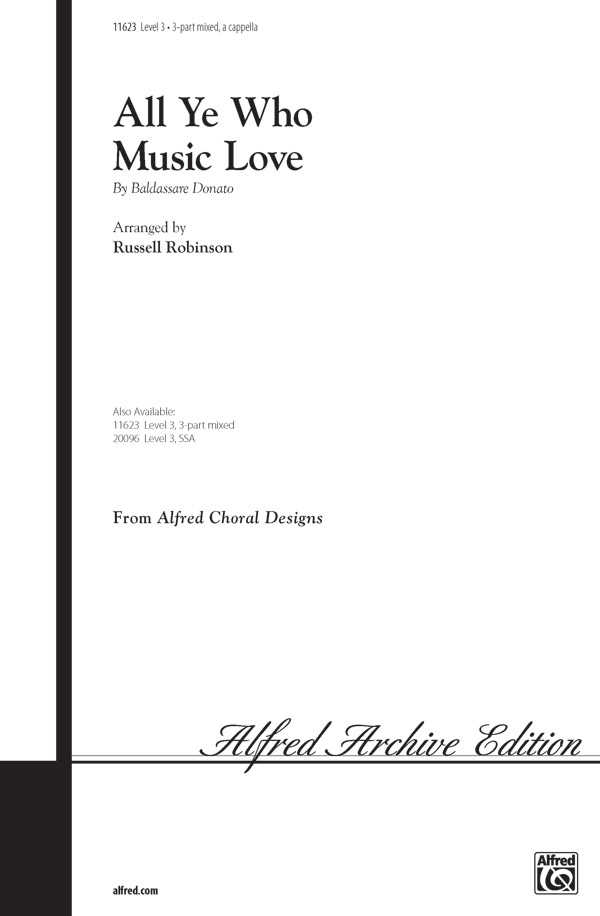
All Ye Who Love Music was given its English text by Thomas Oliphant in 1837. This arrangement has been lowered one step from the original key of G major to F major. The soprano (Part 1) melody is basically the same; however, Parts II and III have been arranged iin such a way as to limit the range and for ease of singing, while retaining the sound and flavor of the original. As will all Renaissance madrigals, this piece should be sung lightly and lyrically.
Arranger: Russell Robinson
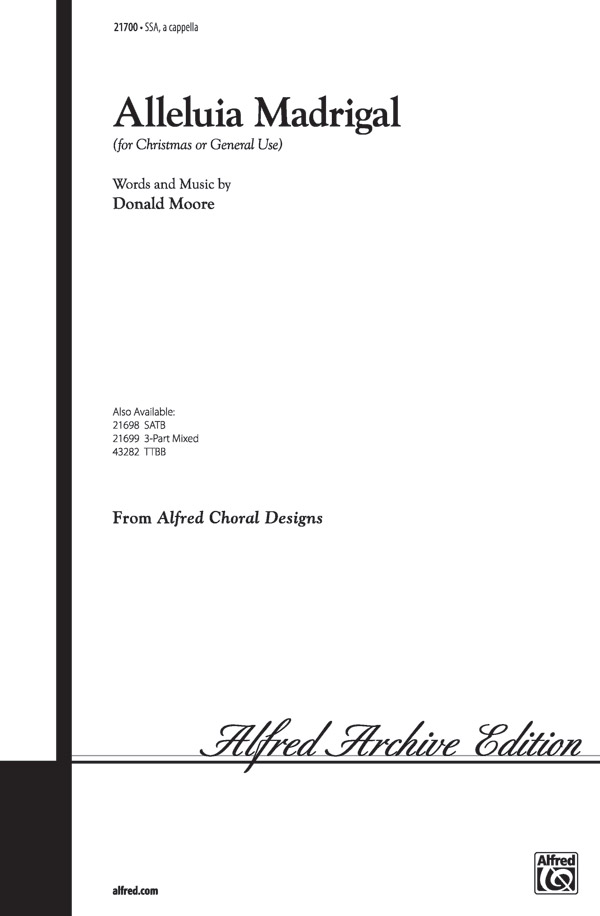
Develop your choir's a cappella skills with this straightforward original madrigal by Donald Moore. Traditional harmonies, modest ranges, and lots of repetition make it a quick-learn piece. Contrasting dynamics and a lilting three-four meter create a joyful song that is good for Christmas or general use.
Composer: Donald Moore

Here is the famous madrigal by Thomas Morley in a new performing edition. Ideal for chamber, madrigal and concert choirs, this gentle work offers superb opportunities for developing style, intonation and blend.Available separately: SATB a cappella. Performance Time: Approx. 1:30.
Arranger: John Leavitt | Composer: Thomas Morley
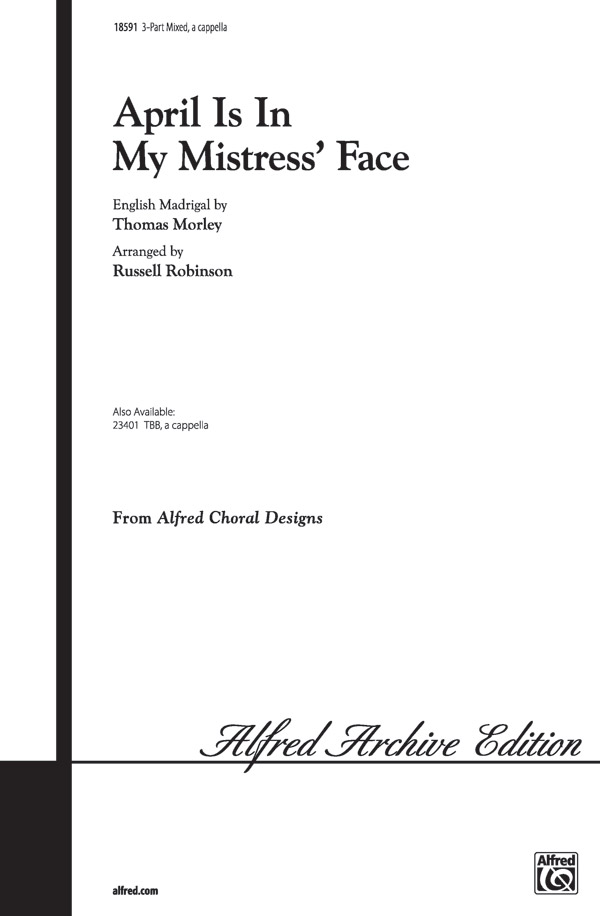
A sumptuous edition of an a cappella standard from the madrigal repertoire by Thomas Morley. Available for 3-part mixed voices, Russell Robinson's new adaptation features flowing contrapuntal lines, appropriate vocal ranges, and tasteful editor's marks for a truly authentic performance. Enjoyable to sing, valuable to teach, and splendid to hear.
Arranger: Russell Robinson | Composer: Thomas Morley

This famous Christina Rossetti poem has been set to music by many. Donald Bailey, choral chair at Baylor University and director of the Chamber Singers, has created a contemporary madrigal setting that is superb. In the tradition of his predecessor, Robert Young, Dr. Bailey uses the colors of the vocal ensemble to give new hues to this time-honored text.
Composer: Donald Bailey

This delightful Italian madrigal will be a charming addition to any concert with imitative vocal phrases alternating with homophonic sections and culminating in a dancelike ton dari don ton ton refrain. Duration: ca. 1:20.
Composer: Antonio Scandello | Country: Italy
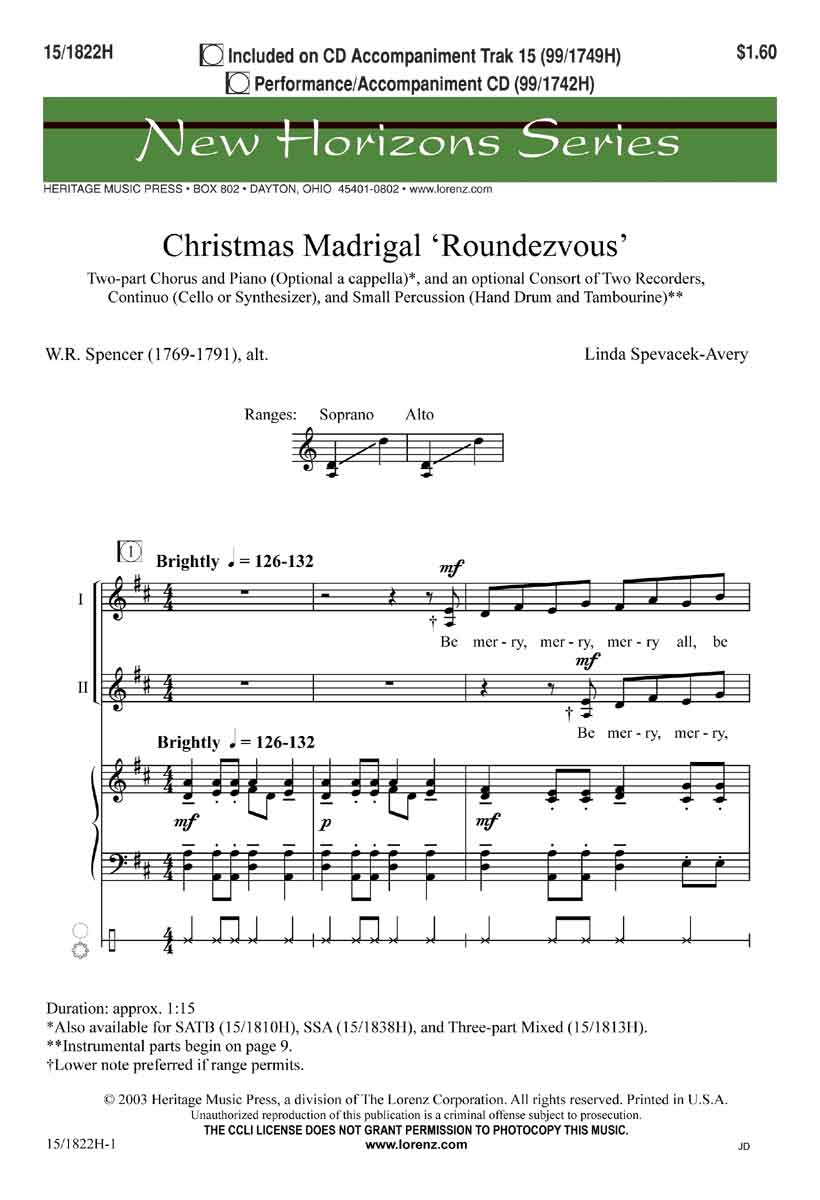
Sparkling, festive, and extremely clever original madrigal, sung in a round, with a contrasting, lilting middle section.
Arranger: Linda Spevacek
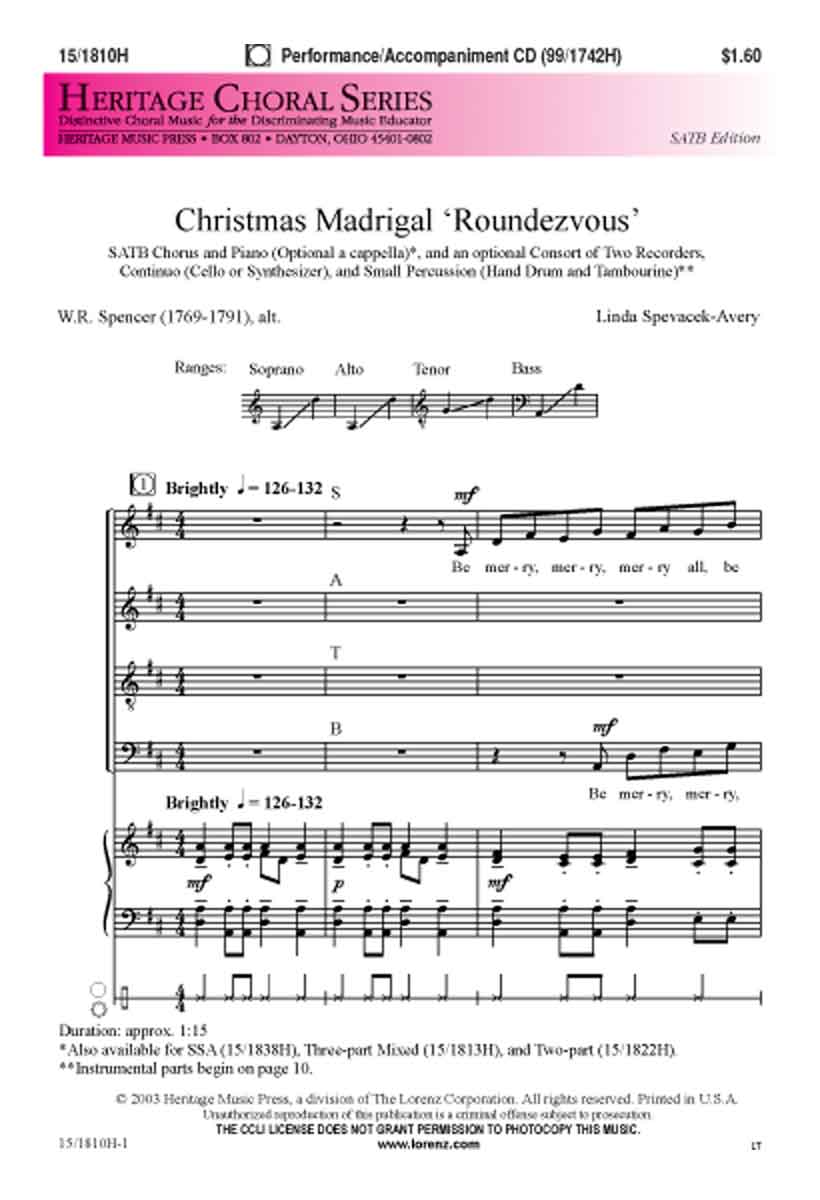
Sparkling, festive, and extremely clever original madrigal, sung in a round, with a contrasting, lilting middle section.
Arranger: Linda Spevacek

From a 1604 publication, this delightful five-voice madrigal offers challenges and rewards. Echo effects and musical imagery of running in and out make this especially fun to rehearse and perform! Duration: ca. 1:35
Composer: Thomas Greaves
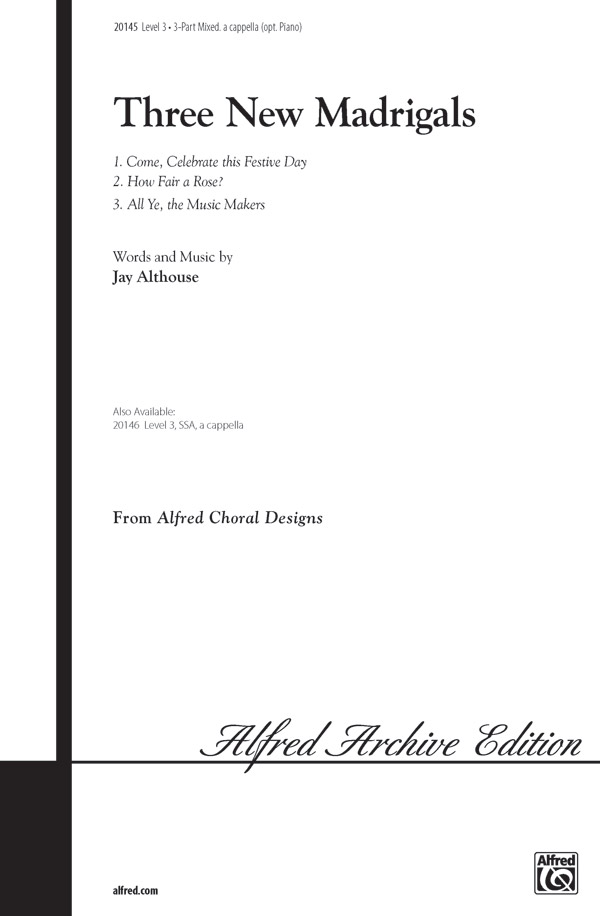
This trio of fresh, new, madrigals from Jay Althouse is a valuable addition to the choral repertoire of 3-part and SSA choirs. And at $1.85, it's quite a value. The first is in a traditional madrigal style, with a "fa la la" section and features and echo chorus. The second is lush and lovely, homophonic in nature, with a thought-provoking text. The third is up-tempo and includes an optional hand drum: it could be used as a processional or at a madrigal dinner. Use any or all of the three for concerts, contests, and adjudications.
Arranger: Jay Althouse
Patrick Liebergen has taken a delightful chanson by Jacques Arcadelt and adapted it for contemporary singers while retaining the essential Renaissance feel of the work. Moderate ranges. An optional piano part which doubles the vocal lines, and an optional hand drum provide a lively accompaniment. Editor's note, including historical information and performance notes, is included. English text.
Arranger: Patrick Liebergen

This madrigal-style piece is a wonderful teaching tool and a perfect selection for opening your holiday concert. Processing or standing, a cappella or accompanied, the sensible vocal ranges and repetitive lines are tempting and entertaining for mixed choirs in middle school and high school. David Giardiniere has combined the familiar 19th-century text with the light and compelling music of Gastoldi's Il Bel Humore making a fine performance piece. Available: SATB, unaccompanied.
Arranger: David Giardiniere

A delightful setting of this appealing dance carol! Ed has developed a wonderful madrigal-style extension to the traditional melody, and counterpoints it all with "Good King Wenceslas". Excellent for all ages!
Arranger: Ed Lojeski
The most famous of all 15th Century Italian madrigals is brought to life in this new Russell Robinson edition from our Developing SATB Repertoire series. Both English and Italian texts are included.
Arranger: Russell Robinson | Composer: Orazio Vecchi | Country: Italy
Arranger: Russell Robinson
Another well-edited arrangement by Russell Robinson from the madrigal repertoire. Sung a cappella, or with the piano, the men's part spans only six notes in an easy range for changing voices. Charming secular text, light polyphonic texture, changing meters, and contrasting dynamics. Fair Phyllis is perfect as a first madrigal or as a Renaissance feature on any program.
Arranger: Russell Robinson | Composer: John Farmer

Men's choruses will enjoy the bright joy and rhythmic precision of this 16th century madrigal by John Farmer arranged for TTBB voices. Duration: ca. 1:30.
Composer: John Farmer

The English composer and lutenist was a prolific writer of songs and madrigals. This work expresses sadness at the loss of a love, and gives your singers a chance to develop important ensemble skills. Duration: ca. 1:15
Arranger: John Leavitt
Russell Robinson has adapted one of Thomas Morley's most enduring madrigals for 3-part voices, just right for today's young and developing choirs. The male part has a limited, 5-note range...great for changing voices. The independent vocal lines make it an excellent learning piece and a perfect "first madrigal" for any choir. Carefully tailored to the needs of middle school and junior high singers.
Arranger: Russell Robinson | Composer: Thomas Morley

Four Madrigals was commissioned by the Dale Warland Singers and includes the following Madrigals: Lo! I Touch You - Parted Lips - When I Am Near to You - Therefore I Say, Stay.
Composer: Paul Siskind Performed By: Dale Warland Singers

You'll raise a toast of jubilation for this holiday tour de force that combines the traditional Catalonian carol Fum Fum Fum and the Welsh carol Deck the Hall along with a few clever lyrical and musical additions. Ideal for madrigal groups, pop/jazz groups and concert choirs, your singers will welcome the challenge! With piano or opt. a cappella. Duration: ca. 1:45.
Arranger: Audrey Snyder

A new edition of a famous Thomas Morley madrigal that attempts to be highly faithful to 16th- century performance practice. Serious repertoire in a serious edition for high school and college choirs.
Composer: Thomas Morley

This secular English madrigal dances with rhythmic energy and fiery passion! The two soprano parts create an echo effect if separated spatially. Fun!
Arranger: John Leavitt | Composer: Thomas Morley

The light and dance-like madrigal of the Tudor composer Thomas Weelkes is offered here in a fine edition for modern choirs. The delightful fa la la refrain connects the verses for an excellent choral showcase!
Arranger: John Leavitt
The definitive a cappella Christmas spiritual of the year! A descending bass line is a firm foundation in the A section, B features the girls vs. the guys, a vocal stack builds in the middle, followed by a soaring descant that takes the final refrain up a notch! Appropriate for school and church use.
Arranger: Ruth Morris Gray | Composer: Ruth Morris Gray

Uses: Christmas, Board's Head Feasts Alive with a lightness and cheer of an old English Christmas madrigal, this pleasing seasonal offering would be a great selection for Boar's Head gatherings or Madrigal dinners. The SAB voicing makes this selection particularly useful in many situations. Add an improvised hand drum for an authentic touch. Duration: ca. 2:15.
Arranger: John S. Dixon

This medieval-style original is perfect for opening your next concert or madrigal dinner. Add optional percussion to complete the festivities.
Arranger: Kirby Shaw

The traditional Latin Hodie text is set in a madrigalian fashion, but with a fresh contemporary flare. An excellent choice for church or concert performances. Includes optional English text.
Composer: Joseph Testa
Another well-edited arrangement by Russell Robinson of a light and spirited work from the madrigal repertoire. It's the perfect choice for any SSA or 3-part mixed choir, with or without experience in madrigal singing. May be performed a cappella or with piano doubling the voices. Perfect for developing part singing in today's treble and mixed choirs.
Arranger: Russell Robinson
 |  | |||
| Page: | 1 | 2 | 3 |
 Vocal Harmony Arrangements - Home
Christian | Gospel | Standards | Musicals | Specialty | World | Barbershop | Contemporary | Vocal Jazz | Choral | Christmas
Mixed Voices | Female | Male | 8 Parts | 6 Parts | 5 Parts | 3 Parts | 2 Parts | Medleys | Solo | Folio Series | New Releases
Select a Category |
Want to Sing? - Find a Chorus Near You
List of Choruses by State | List of Choruses by City