
In Celebration of the Human Voice - The Essential Musical Instrument
Home | Doo Wop | Barbershop | World | Contemporary | Christian | Vocal Jazz | Choral | Christmas | Instructional | Arrangements
Classical | Opera | Musicals | Personality | Young Singers | Disney | Videos | Songs | The Artists

The Swingle Singers
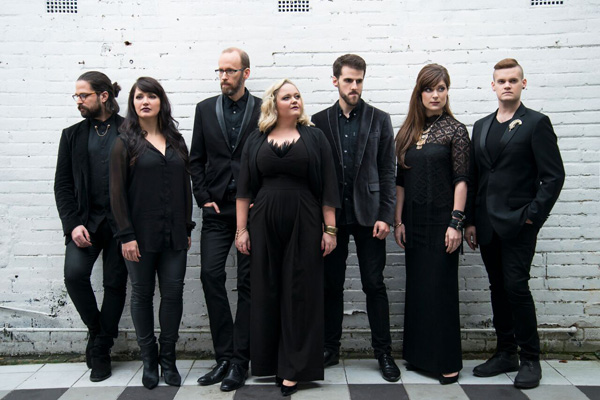
Members: Joanna Goldsmith-Eteson Obituary, Washington Post, Ward Swingle, musician who made Bach swing, dies at 87 Obituary, The Guardian, Ward Swingle Obituary, New York Times, Ward Swingle, Who Made Classical Music Jazzy, Dies at 87 Awards |
Songbooks, Arrangements and/or Media
Displaying 1-37 of 37 items.
Ben Parry : Ciao Bella, Cia The Kikapust Choral Series offers choirs an extensive choice of close-harmony a cappella arrangements. All of our arrangers / composers - Jonathan Rathbone, Ben Parry & Mark Williams - were long-standing members of the Swingle Singers. 
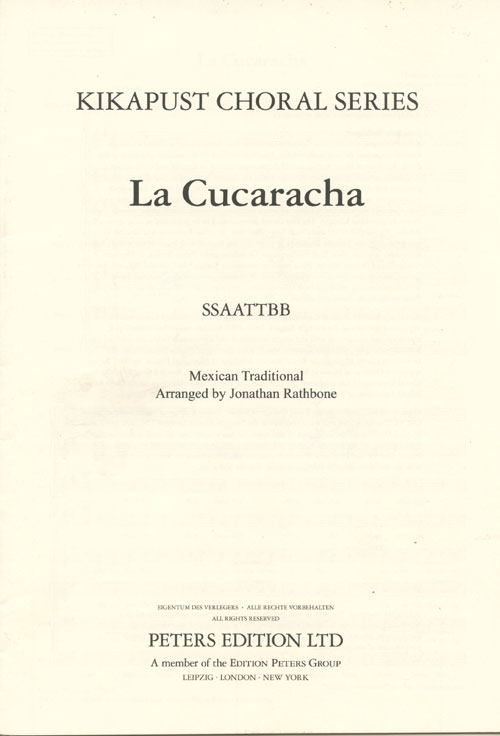
Jonathan Rathbone : La Cucaracha Former Swingle Singers Jonathan Rathbone has developed a reputation for creating challenging but highly rewarding arrangements for more experienced singers and here is a great example. Fun to learn, fun to sing!
The Swingle Singers : Around The World Folk Songs Vol. 1 All Three charts are featured on The Swingle Singer's album 'Around The World Folk Songs.' Songlist: The Ash Grove, Bushes and Briars, Charlie is My Darling
The Swingle Singers : Around The World Folk Songs Vol. 2 All Three charts are featured on The Swingle Singer's album 'Around The World Folk Songs.'
The Swingle Singers : Story of Christmas Vol. 4 Charts from the Swingle Singers' stellar christmas album, 'The Story of Christmas. These four, eight part arrangements are fun for the singers and the listeners. Especially exciting is Ben Parry's arrangement of Jingle Bells! Songlist: And is it True?, Boar's Head Carol, Jingle Bells, Un Flambeau, Jeannette, Isabelle
The Swingle Singers : Ticket To Ride Since the release of Ticket to Ride, the Swingle Singers have received many requests from choirs and a cappella groups for their Beatles' arrangements. Finally, they have published a companion songbook to the popular album. The book contains the seventeen songs from the CD arranged for four to eight voices and features a bonus arrangement of "Here, There and Everywhere" for AATTBB. These wonderful arrangements include the original scat syllables used on the recording as well as alternated endings for the songs that fade out. Another great addition to the Swingle publications, this book will have your group creating a new wave of Beatle mania at your next concert. Songlist: Penny Lane, Revolution, Day Tripper, Norwegian Wood, Birthday, Lady Madona, Yesterday, Strawberry Fields Forever, Drive My Car, Blackbird / I Will, When I'm Sixty-Four, The Fool On The Hill, All My Loving, I Am The Walrus, Goodnight, Here, There And Everywhere, Ticket To Ride
Ward Swingle : A Cappella Jazz for SSAA Here's a collection of arrangements by Ward for unaccompanied women's voices. This arrangement of the old Irving Berlin standard "I Got Rhythm" evokes a Dixieland combo while Ellington's "Don't Get Around Much Anymore" swings with a fun opportunity for some voices to scat. "It Was a Lover and His Lass" also has a lot of scat-like syllables (e.g. "hey-ding-a-ding") while "Reeds of Innocence" has a strong rhythmic element in the writing, with vocal imitations of flute sounds. It goes along at rather a moderate pace and is not difficult to sing. This is a fun collection for singers and for audiences alike. Songlist: Don't Get Around Much Anymore, I Got Rhythm, It Was a Lover and His Lass, Reeds of Innocence
Ward Swingle : Eine Kleine Nachtmusik - Mozart Here are the four movements of Mozart's "Eine Kleine Nacthmusik," which Ward Swingle has arranged for voices with the hopes that groups will perform the piece in its entirety. For the Swingle Singers this offered a change from the succession of 2- or 3-minutes pieces typical of many of their programs. Rondo is a good exercise in fast, intricate scat singing and Menuetto is often used in Ward's seminars to introduce the whole "vocal-instrumental" concept. Songlist: Menuetto, Rondo, Allegro, Romance
Ward Swingle : Johann Sebastian Bach Vol 1 "Gigue (Suite in C Major)" is a movement from one of Bach's unaccompanied Cello sonatas, arranged here for tenor and bass. It has a fast 3/4 jazz feeling, with some tricky dove-tailing between the voices, the object being to make it sound like on instrument. The Swingle Singers have often used this "Organ Fugue BMV 578" as a concert opener. The challenge in singing without a rhythm section is to make the piece swing without the help of the instruments.The "Bourree" has probably been the most widely performed of all Ward Swingle arrangements. This is an a cappella version using three different styles: child-like "la-la-la's," gently swinging "oo" sounds and rather brassy "ah" sounds. Songlist: Organ Fugue, Bourree, Gigue, Gavotte
Ward Swingle : Johann Sebastian Bach Vol II These various Bach tunes are some of the finest of Ward Swingle's arrangements. The rich flowing harmonies, and clever voice leading provide a nice challenge for an intermediate jazz choir. A must have in your Ward Swingle Collection! Songlist: Fugue in D Minor (Art of the Fugue), Aria Suite in D Major, Largo, Prelude No. 22
Ward Swingle : Schubert - Moment Musical Leonard Bernstein once said of Beethoven that when he had a choice of notes, he always picked the right one. The same can be said of Franz Schubert. His unerring choice of notes produced some of music's greatest melodies. A must for your medium jazz ensemble! Songlist: Moment Musical Op.94 No. 2, Moment Musical Op. 94 No. 3, Moment Musical Op. 94 No. 6
Ward Swingle : Suite Quebecoise Canada has a rich lore of folk music. The three melodies in this Suite come from the province of Quebec. These arrangements were commissioned by the McGill Univeristy Chamber Choir in Montreal. Songlist: Tout garcon qui sert, Le Roi Boit, Rossignolet
Ward Swingle : Swingle Bells Set 1 A collection of Christmas medleys. From the arranger: This medley has a strong jazz feeling with "Jingle Bells" in a fast tempo, "Il est ne" half that fast and Es ist ein Ros' entsprungen" half as fast again. As with my Bach arrangements, this medley contains a fusion of jazz and classical styles. "God Rest You Merry Gentlemen" is treated here in a medium-tempo jazz style including some scat singing. "The First Noel" is in a more traditional choral style whereas "Go Tell It On the Mountain" has a strong Dixieland feeling. "El Noi de la Mare" is one of my all-time favorite melodies. It comes from the Catalan region near Barcelona. I've given the Czech carol "Hanej, nynej, Jeziski" ("Rocking Carol") a Mozart-like accompaniment, and Canzone d'i Zampagnari" some rhythms suggesting Italian folk music. The Norwegian carol "O Jul med din Glede" has "bouree" rhythms contrasted with a light, jazz feeling. "Komt, Verwondert u hier Menson" (Dutch) has a "pop" style with even 8th notes. "Away in a Manger" is done as a bass solo with string-like accompaniment. Songlist: Swingle Bells I, Swingle Bells II, Swingle Bells III, Swingle Bells IV, Swingle Bells V
Ward Swingle : Swingle Bells Set 2 "Les anges dans nos campagnes" should have a careful "fusion" of classical and jazz styles. I've arranged "O Tannenbaum" as a duet for baritone and soprano combining the German text with some scat singing. "Bel Astre que j'adore" is a simple arrangement with a soprano solo. Silent Night, the most famous of all Christmas melodies, doesn't require a lot of comment. The voices accompanying the alto solo simulate muted brass sounds in the first verse and become woodwinds in the second. "Deck the Halls" starts out in a fast, Mozart-like style then transforms into medium-tempo, big band feeling. "What Child is This?" has a soprano solo with some improvisational scat singing and an accompaniment in 3/4 jazz tempo. Includes "O Come, O Come Emmanuel," "Twas in the Moon of Wintertime," and "Bring a Torch, Jeanette Isabella." "Swingle Bells X" was commissioned by the Mid-America Singers and I have added it to the already existing "Swingle Bells" medleys. This one mixes Latin, Huron and French carols. I was surprised by how easily they fit together! Songlist: Swingle Bells VI, Swingle Bells VII, Swingle Bells VIII, Swingle Bells IX, Swingle Bells X
Ward Swingle : Swingle Classics The Swingle Singers often use "Flight Of The Bumble-Bee"as an encore piece. It has to go as fast as possible using a great variety of scat syllables in order to avoid lock-jaw. It also includes a fairly literal vocal transcription of Debussy's famous piano piece, "Claire de Lune." The tessituras are quite wide ranging from low D-flats for the basses to high B-flats for the sopranos. It is probably best sung with the help of microphones. This transciption of a Chopin "Etude Op. 25 No.9" is probably easier to sing than it is to play! It should be performed at a brisk pace, with the main melody alternating between the Tenors and the First Sopranos. "Overture to Marriage of Figaro" - It was an interesting challenge to arrange this wonderful overture for eight voices. My group has often used it to open a concert. Of course it is very difficult but quite a few choirs have managed to master it. I think it works equally well on or off mikes, as long as a proper balance is maintained among the voices. Ward Swingle Songlist: Flight of the Bumble-Bee, Clair de Lune, Etude 25 No. 9, Overture to Marriage of Figaro
Ward Swingle : Swingle Folk 'Pastime With Good Company' is an evocation of Renaissance vocal and instrumental styles in which some of the singers are asked to imitate recorders, tabors and shaums. 'The Agincourt Song' recounts the victory of Henry V over the French at Agincourt. As in 'Pastime with Good Company,' the singers must imitate the sounds of Renaissance instruments. 'Country Dances' is a fast-moving potpourri of traditional country tunes. One theme that recurs is that of the Arkansas Traveler. The accompanying sounds evoke various country-music instruments: fiddles, banjos, jugs, etc. 'Music History 101 is a trip through Music History to the tune of "Twinkle, Twinkle, Little Star," treated as a Gregorian Chant, a Medieval Round, a Madrigal, a Bach Chorale, a Schubert Lied and many other styles including jazz and rap. El paisanito features an alto duet with an accompaniment that imitates strumming Spanish guitars. In the men's version, the duet is sung by two male altos. 'L'amour de moi' features a soprano solo with a string-like accompaniment along with vocalized bass and drums. The three melodies in 'Tour garcon qui sert bien son maitre' come from the province of Quebec. These arrangements were commissioned by the McGill Univeristy Chamber Choir in Montreal. Songlist: Pastime with Good Company, The Agincourt Song, L'amour de moi, Country Dances, El paisanito, Music History 101
Ward Swingle : Swingle Jazz This version of "Oh, Johnny, Oh" is an evocation of the Andrews Sisters' recording. Three soloists become the Andrews Sisters, while the other singers scat the accompaniment (brass, rhythm and bass guitar). Here the singers have to keep things swinging without the help of bass and drums. Al Jarreau wrote some wonderefully "onomatopaeic" words for Brubeck's fine piano piece, "Blue Rondo a' la Turk.". Ward Swingle transcribed the piano part as faithfully as possible for voices.Perhaps Kurt Weill's most famous song, Mack the Knife was written during his Berlin period, first sung by his wife Lotte Lenya; and later, in a very popular jazz version, by the great Bobby Darin. "Saints Fugue" was first written for the French Swingle group in the early 70's using only scat syllables. Ward Swingle revised it later adding the traditional words. Songlist: Oh, Johnny, Oh!, Saints Fugue, Blue Rondo a la Turk, Mack The Knife
Ward Swingle : Swingle Jazz 2 Cole Porter's "Miss Otis Regrets" is an ironic tale of betrayal, revenge and punishment in the form of a minidrama compressed into some 48 measures. It's surely one of the most startlingly original standards in the repetoire. Arranged for 19 voices, "Chatanooga Choo-Choo" was made famous by Tex Benecke, the Modernaires and the Glenn Miller Band. Ward Swingle has attempted a faithful, entirely vocal, adaptation. Also included in this package is "You're The Top." Songlist: Chatanooga Choo Choo, Fascinating Rhythm, You're the Top, Miss Otis Regrets
Ward Swingle : Swingle Originals 'How Do I Love Thee' is a a traditional choral setting of Elizabeth Barrett Browning's wonderful poem. 'Tre Karleksdikter' means 'Three love-poems.' These are settings of well-known Swedish poets, and would present a good challenge for a choir wanting to explore the Swedish language. 'It Was A Lover And His Lass' is a setting of Shakepeare's famous sonnet. The text has a lot of scat-like syllables (e.g. "hey-ding-a-ding") which Ward Swingle was able to adapt and use as part of the guitar-like accompaniment. Songlist: It was a lover and his lass, How do I love thee?, Tre Karleksdikter
Ward Swingle : Swingle Standards This wonderful Neal Hefti composition, "Li'l Darlin," was written for the Count Basie band. Master word-spinner Jon Hendricks has added some lovely, romantic lyrics. This 8-voice SSAATTBB a cappella treatment of "I Get A Kick Out You" is one of Cole Porter's best loved songs. Some of the scat is in homage to the Double Six of Paris. "Love Walks In" lies in the great pantheon of Gershwin songs. Ward Swingle made a rather easy SATB arrangement dedicated to Cole Tyrell and his fine South Haven (Michigan) High School Choir. This is an 8-voice SSAATTBB a cappella version of the well-known Cole Porter standard. Songlist: Love Walked In, I Get A Kick Out of You, Li'l Darlin
The Swingle Singers : Loop Songs - Warm-Ups and Performance Studies Originally conceived as warm-ups or to break up the routine of repertoire rehearsals, many loop songs are also suitable as concert songs. Divided into four levels of difficulty. Contains two and a half hours of music, including: Swing, Latin, Afro, Gospel, R&B, Funk, Pop, Rock and World music. CD includes performances by The Swingle Singers. Songlist: Diggeching Samba, Lah-lah on H-Day, Basses First, African Call
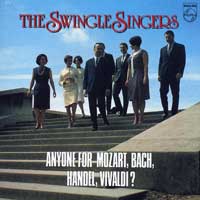
The Swingle Singers : Anyone For Mozart, Bach, Handel, Vivaldi?  This is the second CD which, along with Jazz Sebastian Bach, are the rereleases of the early Les Swingle Singers who were a world renown phenomena. Ward Swingle's original intent had been to sing exact vocal versions of big band classics. All of the original octet had been classically trained musicians, most with perfect pitch. They sang Bach merely for practice to improve their sight reading and musicianship.The idea of 'swinging it' (jazzing it up) came later after the bass and drums were added. This fortuitous evolution leaves us with a wonderful compilation of "Swingleized" works by Mozart, Handel, Vivaldi and Bach, mostly Mozart's and Bach's work. Songlist: Sonata No. 15 (Mozart), Ah! Vous Dirais-Je Maman (Mozart), Allegro (Sonata No.14, Mozart), Fugue (Sonata No. 37, Mozart), Eine Kleine Nachtmusik (Mozart), Badinerie (Bach), Air (Harpsichord Suite In E, Handel), Gigue (Cello Suite In C, Bach), Largo (Harpsichord Concerto In F, Bach), Prelude No. 19 (Well Tempered Clavier, Bach), Preambule (Partitia No. 5 in G, Bach), Fugue (Estro Harmonico, Op.3, No.11, Vivaldi), Prelude No. 7 (Well Tempered Clavier, Bach), Solfeggietto (Bach), Der Fruhling (Bach), Prelude No. 24 (Well Tempered Clavier, Bach)
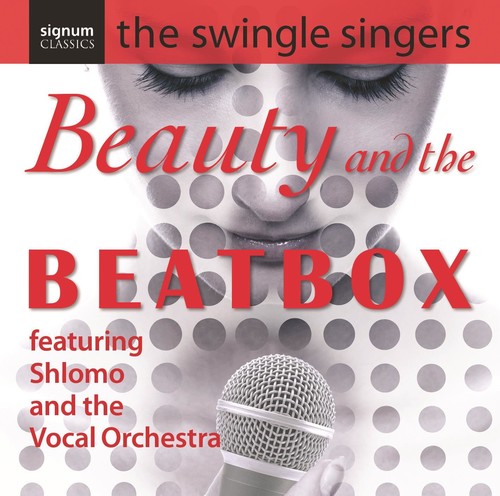
The Swingle Singers : Beauty and the Beatbox After 44 years of performing in concert and recording, the 2007 version of the Swingles are often asked how the group has changed. The answer is, slowly and naturally they have begun to add vocal percussion, which has made an exciting and indispensable impact on their live shows - and now on "Beauty and the Beatbox," the first Swingles disc where every track contains vocal percussion or human beatboxing. Shlomo, awe-inspiring beatboxer and a great friend of the group who was invited to join the group for an appearance at the London Jazz Festival in 2006, has a major and exciting presence on the album. Included in these 11 tracks are longtime Swingles favorites like "A Fifth of Beethoven, which segues into disco samples (LaBelle's "Lady Marmalade" and the BeeGees' "Stayin' Alive"), "Spain," "Adagio in G Minor," "Bolero," "Cielito Lindo," a hot cover of "Straighten Up and Fly Right" (which has some very fine faux horns), and "Piano Concerto No. 21, 2nd mvt." Besides adding a rich bass dimension to the sweet Swingles leads, Shlomo's beatboxing adds a fresh, irreverent, sassy note to this familiar material that we find very appealing-this is fun, sexy, jazzy, let-it-all-hang-out stuff. Listen to the Starsky & Hutch theme "Gotcha," Ward Swingle's arrangement of Lambert, Hendricks & Lewis's "It's Sand, Man!", and the final cut, the dynamic "Bachbeat," to get a taste of the funky, tasty new Swingles. Songlist: A Fifth of Beethoven, Spain (I Can Recall), Dido's Lament, It's Sand, Man!, Adagio in G Minor, Bolero, Cielito Lindo, Straighten Up and Fly Right, Piano Concerto No 21, 2nd mvt, Gotcha (Theme from 'Starsky & Hutch'), Bachbeat
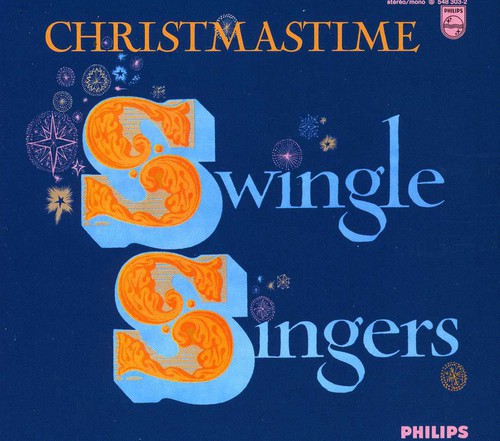
The Swingle Singers : Christmastime Well, isn't this a treat! From the beginning of "the French Swingles" 10 years was spent touring. Between tours they recorded 12 albums, moving chronologically from Bach and Handel to Telemann, Mozart, Beethoven, Chopin and some early 20th Century Spanish composers. In between, there was a Christmas album and one with the Modern Jazz Quartet. They were all done in that traditional jazz-classic mode: scatting to a light rhythmic background. What we have in our hands is a CD release of that Christmas album, "Noels Sans Passeport" which was released in America as "Christmastime" in 1968. This is an international work par excellence which features songs from America, France, Germany, Norway, Holland, Spain, Russia, Italy, and Denmark. As all of the Swingle's work in those early days, the tunes were scatted so no language lessons are required. There isn't much that hasn't been written already about the group, but if you are a Swingle's fan this is a must and if you've never been introduced, now is the time for they were, and are, one of the most important groups in the world of a cappella music. Joyeux Noel! Songlist: Jingle Bells, Il Est Ne Le Divin Enfant, Es Ist Ein Ros' Entsprungen, God Rest Ye Merry Gentlemen, The First Nowell, Go, Tell it on the Mountain, Sill Nacht, Heilige Nacht, Deck the Halls with Boughs of Holly, What Child is This?, O Jul Med Din Glede, Komt, Verwondert U Hier Mensen, Away In A Manger, Les Anges Dans Nos Campagnes, Oh Tannenbaum, Bel Astre Que J'Adore, El Noi De La Mare, Hanej, Nynej, Jezisku, Canzone Dei Zampognari, We Three Kings of Orient Are, The Holly and the Ivy, La Peregrinacion, White Christmas, Stchedrivka, Dag Visen, O Sanctissima
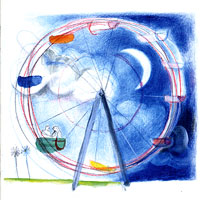
The Swingle Singers : Ferris Wheels  The Swingles, the mixed-voice world-class, multiple Grammy-winning, legendary a cappella octet from London and one of our favorite Vocal Jazz groups of all time, originally broke into the Jazz scene of 1963 because of Ward Swingle's innovation. He handed his group of session singers charts for an instrumental, Bach's "Well-Tempered Clavier," which led to their double Grammy hit album "Bach's Greatest Hits." There is this kind of innovation and artistry on "Ferris Wheels," which comes from the Joni Mitchell hit "Both Sides Now" ("Moons and Junes and Ferris Wheels, the dizzy, dancing way you feel"), the second of 12 wonderfully crafted songs on the album. The ethereal "Unravel," James Taylor's lazy-day, bluesy "On the 4th of July," the exquisite French adaption of the theme from "Summer of '42," "L'Ete 42," Nick Drake's stunning bluenote "River Man," Sting's powerful, waltzlike "Until," and a symphonic arrangement of Lennon/McCartney's "Eleanor Rigby" by group member Kevin Fox (who also sings lead on it). David Freeman and Joseph Hughs' "No More I Love Yous," Stevie Wonder's "Summer Soft," Billy Joel's "Goodnight My Angel" and Brian Wilson's "God Only Knows" are all beautifully arranged and performed. "Ferris Wheels" is a masterpiece by the Swingles that touches and satisfies on many levels. One of the best Jazz/Pop albums of the year and highly recommended! Songlist: Unravel, Both Sides Now, On the 4th of July, L'ete 42, River Man, Until (A Matter of Moments), Elanor Rigby, No More "I Love You's", Flying High/ Wake Me Up When September Ends, Summer Soft, Lullabye (Goodnight, My Angel), God Only Knows
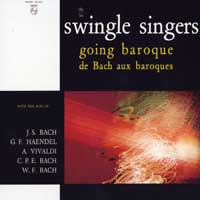
The Swingle Singers : Going Baroque Ward Swingle's Swingle Singers were formed in 1962, and stepped into the vocal jazz spotlight bigtime with the success of their first album, which was based entirely on Ward's groundbreaking vocal scat interpretations of the works of Johann Sebastian Bach. On this their second album, seven of the 12 tunes are again by Johann - but to the Swingles, their homage could only be complete if they included by works of Johann's family and friends, composers who viewed Bach as their Master. Thus we are treated to the marvelous vocal gymnastics of the Swingles on pieces by Bach's two sons, Carl and Wilhelm, Handel (spelled "Haendel" in the liner notes) and Vivaldi. We are immediately drawn into the surprising power of Bach's "Badinerie" where the voices, accompanied by light, driving jazz snare drum, dance like frantic, harmonic dragonflies over the surface of a pond for a minute and 19 seconds and then are gone. Also fun and fast-moving are Bach's "Praeambulum," and "Solfegietto in C Minor," Handel's "Allegro" and Vivaldi's "Fugue." Particularly sweet and melodic are Bach's "Largo," based on his harpsichord concerto, and Wilhelm F. Bach's "Der Fruehling." It's easy to see why the Swingles created such a sensation with their voices-as-orchestra, push-the-envelope style, which sounds as fresh and revolutionary today. We would like to imagine Bach and friends in a heavenly music room, putting on headphones and grooving on this hip homage to their music! Songlist: Badinerie - Johann Sebastian Bach, Aria And Variations: "The Harmonious Blacksmith" (Handel), Giga- Johann Sebastian Bach, Largo (Bach), Prelude No. 19 In A Major (Bach), Praeambulum (Bach), Fugue (Vivaldi), Allegro (Handel), Prelude No. 7 In E Flat Major (Bach), Solfegietto In C Minor (CPE Bach), Der Fruehling (Spring) WF Bach), Prelude No. 24 In B Minor (Bach)
The Swingle Singers : Jazz Sebastian Bach Vol II This CD is a real treat for Swingles fans, as well as those just getting turned on to them, the original French Swingle Singers, featuring Ward himself doing all the arrangements and singing with the group! For those who are new to the Swingles, these are classic Bach pieces performed incredibly, unbelievably by voices only, singing in a seamless "scat-singing" style. Since their first record these 8 singers became, if possible, even more polished and refined in the years that separated the two volumes the Swingles were voted "Best Vocal Group in the World" several times. These are some of their best-known works: from the Fugue in G Major for organ, to the Concerto in D minor for 2 violins, the Choral from the Cantata BMV 147 to the Prelude in C major. Don't be misled by the names, this is all a cappella, with the exception of almost imperceptible drums. In the liner notes we find fascinating little odds and ends about the 10 pieces and such details as an "Ave Maria" being slipped into the score here or there. But know that this is marvelously original and inventive music and that the Swingles have remained true to the spirit that Bach instilled in his works, a profoundly human fervor and a joyously optimistic faith. As we know Johan Sebastian would, enjoy! Songlist: Vivace, Prelude and Fugue No. 10 in E minor, Choral, Gavotte, Prelude and Fugue No. 1 in C major, Fugue in G major, Adagio, Prelude and Fugue No. 3 in C sharp major, Choral, Fugue No. 21 in B flat major
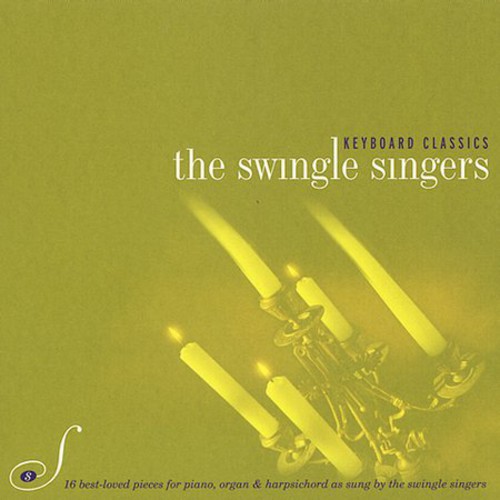
The Swingle Singers : Keyboard Classics A compilation recording featuring the best of Swingles' past and present. The Swingles are a top attraction at concert halls throughout the world, and their purely vocal arrangements of famous works from composers such as J.S. Bach, Handel, Mozart, Vivaldi, Brahms, Beethoven and Satie are a Swingles trademark. They were a sensation when the group first popularized the concept in the 1960's. Half of the arrangements on this CD are by founder Ward Swingle, including "Fugue In D Minor" and "Clair De Lune," with the remainder balanced between Ben Parry, Jonathan Rathbone, Mark Williams, Andrew Gray and current musical director, Joanna Forbes. The four male and four female voices that animate these hallmarks of European classical tradition have a modern grace and elegance, and the sound is spacious, open and fluid. These are new a cappella recorded versions of the classic repertoire. Songlist: 'C Major Praeludium', Prelude in F Minor, Largo, Three-Part Invention, Fugue in D Minor, Fugue in E Minor, 'Harmonious Blacksmith' Variations, Fugue (from the Estro Harmonico, op.3, no.11), Rondo alla Turca, 'Moonlight Sonata', Prelude (op.28, no.4 in E Minor), Etude (op.25, no.9), Hungarian Dance No. 5, Clair de Lune, Golliwog's Cake Walk, Gymnopedie No.1
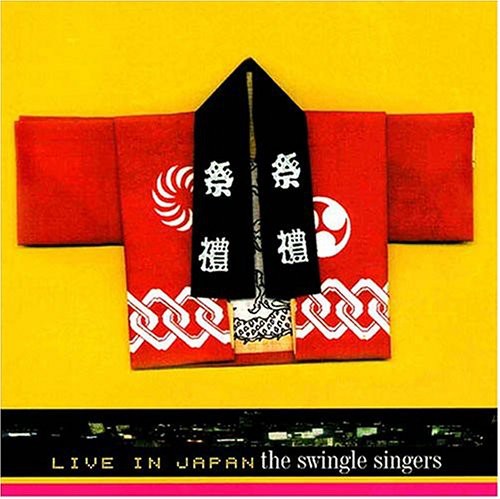
The Swingle Singers : Live In Japan The Swingle Singers, Ann De Renais, soprano 1, Joanna Forbes, soprano 2, Sarah Simmonds, Alto 1, Wendy Nieper, alto 2, Andrew Gray, Tenor 1, Richard Eteson, Tenor 2, Jeremy Sadler, Bass 1 and Patrick Ardagh-Walter, Bass 2, and this is another of their very popular live albums. We can feel ourselves in the audience in December 2000, the elusive "tingle factor" in the air, as the group takes 21 classic tunes and proceeds to nail them, as only the Swingles can, one by one: "September Song," "Alabama Song," "Mack The Knife," "Someone's Rocking My Dreamboat," "Largo," "Badinerie," "Air on the G String," "Ticket to Ride," Procul Harum's "Whiter Shade Of Pale," "Ave Maria," "The Fool on the Hill," Queen's amazing "Bohemian Rhapsody," "Little Drummer Boy," "Away in a Manger," "Christmas Medley," "Amazing Grace," "White Christmas," "Intro to 1812 Overture," "1812 Overture," "September Song," "Thank You" and "Theme from Mission Impossible." Great music, incomparable singing! Songlist: September Song (Weil - Anderson), Alabama Song (Weil - Brecht), Mack The Knife (Weil - Brecht), Largo, Badinerie (Bach), Air On The G String (Bach), Ticket To Ride, A Whiter Shade Of Pale (Procul Harum), Ave Maria (Gounod - Bach), The Fool On The Hill, Bohemian Rhapsody (Mercury), Little Drummer Boy (Davis), Away In A Manger (Traditional), Christmas Medley (Smith - Gillespie), Amazing Grace (Traditional), White Christmas, Introduction To 1812 Overture (, 1812 Overture (Tchaikovsky), Thank you, Theme From Mission Impossible (Schifrin), Someone's Rocking My Dreamboat
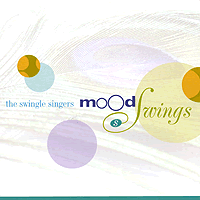
The Swingle Singers : Mood Swings The Swingles' discography boasts a stylistic diversity unmatched by any other a cappella group--from Mozart to madrigals, Bach to the Beatles, folk songs to fugues and film themes, but "Mood" focuses on their forte: jazz. These eight gifted singers have a symbiotic relationship with some of the best arrangers in the world, Ward Swingle, Bertrand Groeger, Alexander L'Estrange, Jonathan Rathbone and others. "Mood" begins with Miles Davis's "So What," which is followed by a brilliant selection of 1960s Latin jazz, "Surfboard," Jobim's "Insensatez" and "The Girl From Ipanema" (The best version we've heard), and "Milonga del Angel." Three moody jazz ballads, "A Time For Love," "The Peacocks" and "What Are You Doing the Rest of Your Life?" follow. Then three Richard Rodgers classics, "Have You Met Miss Jones?," "My Funny Valentine" and "The Lady Is A Tramp." Then come four classic 30s and 40s standards: "Just One of those Things," "My Foolish Heart," "All The Things You Are" and "It Don't Mean A Thing," finishing with Quincy Jones' 1966 hit, "Soul Bossa Nova" (from Austin Powers). Our favorite is the stunning 60s Latin Jazz section, which we hope they devote a whole CD to, but every song is a finely-crafted jewel. "Mood Swings" swings us into a jazz mood and never lets us go. Listen to the vocal trumpet solo on "The Lady Is a Tramp"--it's almost unnecessary, because the soprano voices are already doing soaring jazz trumpet riffs throughout the song. This is breathtaking proof of our contention that the Swingles are the best at whatever style they choose to sing - simply perfect! Highly recommended. Songlist: So What, Surfboard, Insensatez, The Girl From Ipanema, Milonga del Angel, A Time For Love, A Timeless Place, What Are You Doing For The Rest Of Your Life?, Have You Met Miss Jones?, My Funny Valentine, The Lady is a Tramp, Just One Of Those Things, My Foolish Heart, All The Things You Are, It Don't Mean a Thing (If It Ain't Got That Swing), Soul Bossa Nova
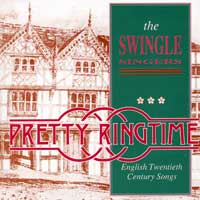
The Swingle Singers : Pretty Ring Time Pretty Ring Time is a repertoire chosen from many of the songs that the Swingle Singers knew and loved growing up. All the composers are English from the early 20th century with the exception of one song, "Sally In Our Alley," written by the group's director and second tenor, Jonathan Rathbone. Most of this music was meant to be performed by piano and voice but lends itself wonderfully well to the group's capacities. The composers are Peter Warlock, Ivor Gurney, George Butterworth, Gerald Finzi, Frank Bridge and John Ireland. The lyrics are from Shakespeare, Tennyson, Shelley, Masefield, A.E. Houseman, Thomas Hardy and other notables of English letters whom the composers had set to music. Songlist: Pretty Ring Time (Warlock), Rest, Sweet Nymphs (Warlock), Fair And True (Warlock), The First Mercy (Warlock), Twelve Oxen (Warlock), Cradle Song (Warlock), The Salley Gardens (Gurney), I Will Go With My Father A-Ploughing (Gurney), Sleep (Gurney), Love Went A-Riding (Bridge), O That It Were So (Bridge), The Lads In Their Hundreds (Butterworth), Look Not In My Eyes (Butterworth), Sally In Our Valley, Sea Fever (Ireland), If There Were Dreams To Sell (Ireland), The Heart's Desire (Ireland), Rollicum-Rorum (Finzi), Fair House Of Joy (Quilter), Now Sleeps The Crimson Petal (Quilter), Love's Philosophy (Quilter), Come Away Death (Quilter), O Mistress Mine (Quilter), Blow, Blow, Thou Winter Wind (Quilter)
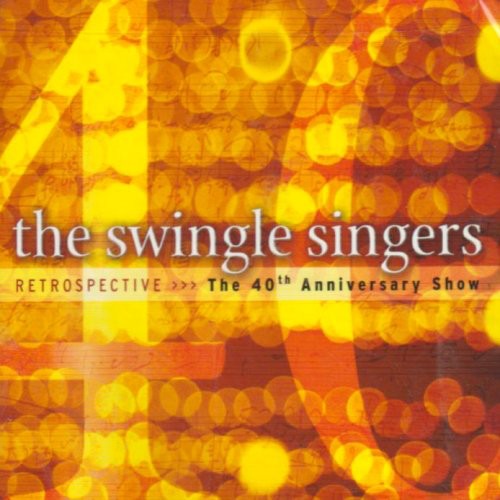
The Swingle Singers : Retrospective This recording is a celebration of forty years of arguably the world's most famous and longest-running a cappella group. The current mixed-voice octet has gone back to its roots, teaming up with a world-class jazz rhythm section for this live CD to recreate both the look and sound of the original Swingles as it performs the greatest hits of the 60s and 70s, beginning and ending, of course with the composer on whose music the group was founded, J.S. Bach. The first part of the program includes 4 Bach gems, then 4 from Mozart's "Ein Kleine Nachtmusik and 3 Spanish romantic pieces like J. Rodrigo's "En Aranjuez con tu amor." Marvelous arrangements of Cole Porter's "Just One of Those Things" and Gershwin's "Fascinating Rhythm" delight us and the crowd. We get a glimpse of the Swingle's future, "Dejeuner sur l'herbe" by Parisian composer Pascal Zavaro, who is currently writing an opera with the group. As always, breathtaking, brilliant stuff from the Swingles! Highly recommended. Songlist: Fugue in D Minor (from 'The Art of Fugue' BWV 1080 by J.S. Bach), Air (from Orchestral Suite No. 3 in D major BWV 1068 by J.S. Bach), Largo (from Harpsichord Concerto in F minor BWV 1056 by J.S. Bach), Badinerie (from Orchestral Suite No. 2 in B minor BWV 1067 by J.S. Bach), Eine Kleine Nachtmusik Op. K.525 by W.A. Mozart:, -Allegro, -Romanze, -Menuetto, -Rondo, En Aranjuez con tu amor (based on mvt. 2 of 'Concierto de Aranjuez' by J. Rodrigo), Tango in D major (No. 2 from 'Espana' Op. 165 by I. Albeniz), Romanza Espanola, Just One Of Those Things, Fascinatin' Rhythm (by G. Gershwin / B. Russo / J. Hendricks), Sinfonia (from Partita No. 2 in C minor BWV 826 by J.S. Bach), Solfeggietto (Wq. 117/2 by C.P.E. Bach), Dejeuner sur l'herbe (by Pascal Zavaro)
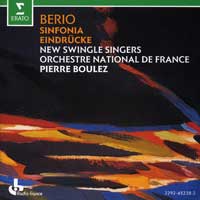
The Swingle Singers : Sinfonia NPS Eclectic, surprising composer Luciano Berio, born in 1925, wrote "Sinfonia," for eight voices and orchestra as a surreal, often dissonant interplay between voices and instruments in six parts, "I-", "II-O King," "III"-In ruhig fliessender Bewegung," "IV-", "V-" (Regis Pasquier, violin solo, New Swingle Singers, conducted by Ward Swingle, and "Eindrucke." A strange and powerful collection by the eclectic Berio, beautifully performed by the interaction of choral and instrumental giants. Songlist: I -, II - O King, III - In ruhig fliessender Bewegung, IV -, V - (Featuring New Swingle Singers; conductor: Ward Swingle), Ein Drucke
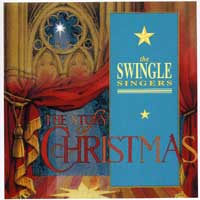
The Swingle Singers : Story Of Christmas Primarily A Cappella is proud to be re-releasing the ever-popular Swingle Singers recording of "The Story Of Christmas". Formerly out of print, the continued demand for this recording is extraordinary, and a tribute to thjis English group about which the Los Angeles Times extolled "Everything about the Swingles is flawless". They take a collection of traditional carols and hymns ("The Boar's Head Carol, And Is It True?") and mix it with some modern songs (Jester Hairston's "Mary's Boy Child") to tell the story of Christmas. This is a well thought out arrangement of songs to tell the tale that we know so well with interesting and varied songs. Songlist: Hodie Christus Natus Est (Traditional), O Come, O Come, Emmanuel (Traditional), Hymn To The Virgin (Britten), Gabriel's Message (Traditional), Mary's Boy Child (Rathbone), And Is It True? (Betjeman, Parry), Un Flambeau, Jeannette, Isabelle (Traditional), Quem Pastores (Traditional), Shepherds' Farewell (Berlioz), We Three Kings (Hopkins), Coventry Carol (Traditional), Carol Medley (Traditional), The Oxen (Rathbone), The Boars Head Carol (Traditional), Christmas Song (Torme, Wells), Jingle Bells (Traditional), I Believe In Father Christmas (Sinfeld, Lake), White Christmas, The Twelve Days Of Christmas (Traditional), Silent Night (Gruber)
The Swingle Singers : The Joy of Singing This is a remastered reissue of the 1972 release of Les 4 Seasons "Le Printemps" and is classic Swingle Singers.
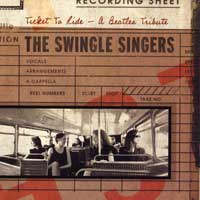
The Swingle Singers : Ticket To Ride While the Swingles first won acclaim for their arrangements of Bach fugues, they have been performing Beatles songs as part of their live concerts for many years. Though Ward is no longer part of the eight-voice mixed ensemble, he acts as musical advisor, and the group continues on, revitalized by fresh new talent. A record of all-Beatles material is surely a natural! The aural landscape designed by the Beatles, with George Martin at the helm, is ably reproduced here, entirely a cappella, of course. Some adaptations swear almost complete allegiance to the originals, but others, such as "Norwegian Wood," embellish with subtle, yet distinct tonal flavors. The tempo of "Lady Madonna" is gently suppressed, with harmonic emphasis on the seventh. "All My Loving" is a sweetly earnest ballad. "Ticket To Ride" shows the Swingle Singers ready to meet the 21st century, with a winning mix of the old and the new. Songlist: Ticket To Ride, Penny Lane, Revolution, Day Tripper, Norwegian Wood, Birthday, Lady Madonna, Yesterday, Strawberry Fields Forever, Drive My Car, Blackbird / I Will, When I'm Sixty-Four, The Fool On The Hill, All My Loving, I Am The Walrus, Goodnight
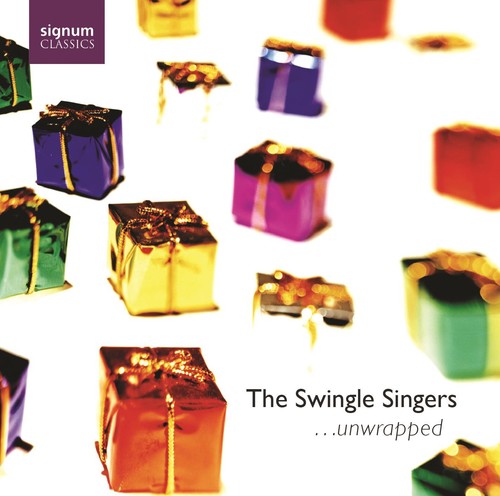
The Swingle Singers : Unwrapped The Swingle Singers are comfortable in many musical genres, particularly jazz and salsa, and "Unwrapped," their second holiday album, showcases this versatility. The free-flowing, almost scattish jazz interpretation of classical music that first made them famous is evident on Corelli's "Christmas Concerto," while Darke's "In the Bleak Midwinter" is more traditional a cappella. Different, but equally powerful interpretations are given to classic Christmas songs and carols: a sexy "Santa Baby," "Let it Snow," a slow, jazzy "Away In A Manger" and John Lennon's "Happy Christmas (War is Over)." Other beloved tunes, "Christmas Song," "River," "Walking in the Air," "Let it Snow! Let it Snow! Let it Snow!" "O Tannenbaum," "Rockin' Around the Christmas Tree," "Carol of the Drum," "Amazing Grace," "Rudolph the Red-Nosed Reindeer," "Last Christmas," and "Hotaru no Hikari" are like reaching into our stocking and finding more and more cool presents. A gift to yourself or loved ones should be "Unwrapped!" Songlist: Concerto Grosso Op. 6 No. 8, In the Bleak Midwinter, Christmas Song, River, Walking in the Air, Let it Snow! Let it Snow! Let it Snow!, O Tannenbaum, Rockin' Around the Christmas Tree, Santa Baby, Away in a Manger, Carol of the Drum, Amazing Grace, Rudolph the Red-Nosed Reindeer, Last Christmas, Happy Xmas (War Is Over), Hotaru no Hikari |




Displaying 1-11 of 11 items.
The Kikapust Choral Series offers choirs an extensive choice of close-harmony a cappella arrangements. All of our arrangers / composers - Jonathan Rathbone, Ben Parry & Mark Williams - were long-standing members ofthe Swingle Singers.
Arranger: Ben Parry Performed By: The Swingle Singers
The Kikapust Choral Series offers choirs an extensive choice of close-harmony a cappella arrangements. All of our arrangers / composers - Jonathan Rathbone, Ben Parry & Mark Williams - were long-standing members ofthe Swingle Singers.
Arranger: Ben Parry Performed By: The Swingle Singers
The Kikapust Choral Series offers choirs an extensive choice of close-harmony a cappella arrangements. All of our arrangers / composers - Jonathan Rathbone, Ben Parry & Mark Williams - were long-standing members of the Swingle Singers.
Arranger: Jonathan Rathbone Performed By: The Swingle Singers
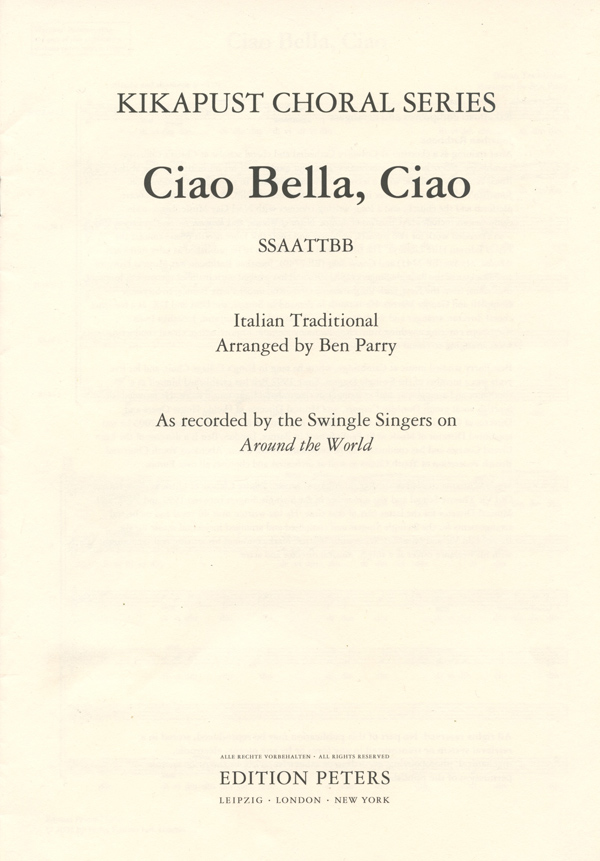
The Kikapust Choral Series offers choirs an extensive choice of close-harmony a cappella arrangements. All of our arrangers / composers - Jonathan Rathbone, Ben Parry & Mark Williams - were long-standing members of the Swingle Singers.
Arranger: Ben Parry Performed By: The Swingle Singers | Country: Italy
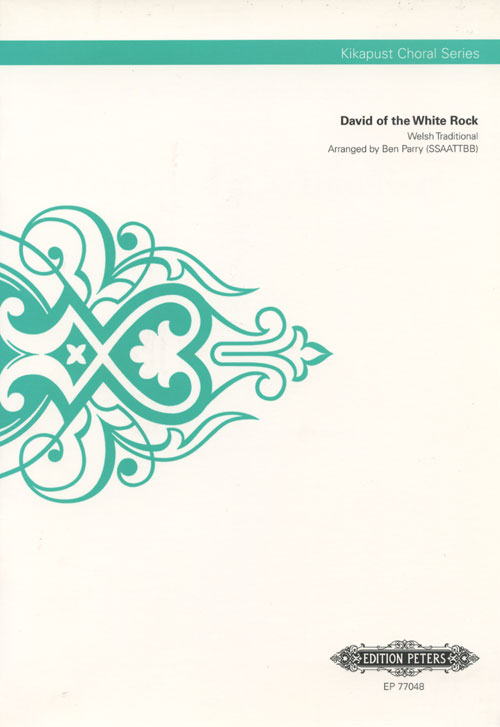
The Kikapust Choral Series offers choirs an extensive choice of close-harmony a cappella arrangements. All of our arrangers / composers - Jonathan Rathbone, Ben Parry & Mark Williams - were long-standing members of the Swingle Singers.
Arranger: Ben Parry | Composer: Traditional Performed By: The Swingle Singers | Country: Wales
The Kikapust Choral Series offers choirs an extensive choice of close-harmony a cappella arrangements. All of our arrangers / composers - Jonathan Rathbone, Ben Parry & Mark Williams - were long-standing members ofthe Swingle Singers.
Arranger: Ben Parry | Composer: James Pierpont Performed By: The Swingle Singers
The Kikapust Choral Series offers choirs an extensive choice of close-harmony a cappella arrangements. All of our arrangers / composers - Jonathan Rathbone, Ben Parry & Mark Williams - were long-standing members of the Swingle Singers.
Arranger: Jonathan Rathbone | Composer: Franz Xaver Gruber Performed By: The Swingle Singers
The Kikapust Choral Series offers choirs an extensive choice of close-harmony a cappella arrangements. All of our arrangers / composers - Jonathan Rathbone, Ben Parry & Mark Williams - were long-standing members of the Swingle Singers.
Arranger: Jonathan Rathbone Performed By: The Swingle Singers
The Kikapust Choral Series offers choirs an extensive choice of close-harmony a cappella arrangements. All of our arrangers / composers - Jonathan Rathbone, Ben Parry & Mark Williams - were long-standing members ofthe Swingle Singers.
Arranger: Mark Williams Performed By: The Swingle Singers | Country: France
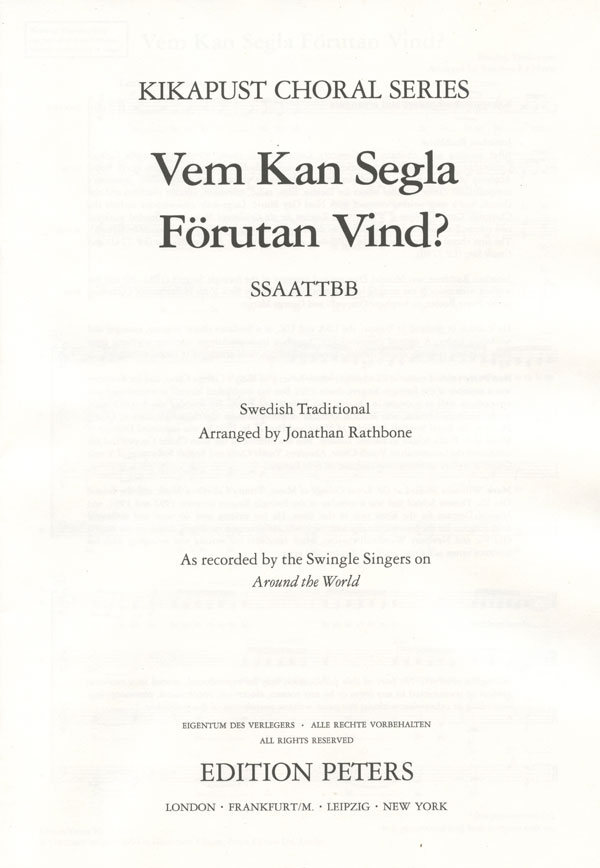
Arranger: Jonathan Rathbone Performed By: The Swingle Singers | Country: Sweden
The Kikapust Choral Series offers choirs an extensive choice of close-harmony a cappella arrangements. All of our arrangers / composers - Jonathan Rathbone, Ben Parry & Mark Williams - were long-standing members of the Swingle Singers.
Arranger: Jonathan Rathbone | Composer: John Henry Hopkins Jr | Lyricist: Jonathan Larson Performed By: The Swingle Singers
Vocal Jazz Groups | Vocal Jazz DVDs | Vocal Jazz Christmas | Vocal Jazz CDs
Vintage Jazz Groups | Vintage Jazz Male CDs | Vintage Female CDS | Vintage Mixed Voice CDs | Vintage Jazz Christmas
Female Jazz Songbooks | Male Jazz Songbooks | Vocal Jazz Groups Arrangements | Vocal Jazz Instructional
Select a Category |
Want to Sing? - Find a Chorus Near You
List of Choruses by State | List of Choruses by City