
In Celebration of the Human Voice - The Essential Musical Instrument
Home | Doo Wop | Barbershop | World | Contemporary | Christian | Vocal Jazz | Choral | Christmas | Instructional | Arrangements
Classical | Opera | Musicals | Personality | Young Singers | Disney | Videos | Songs | The Artists

Choral Composers
So much of what many of us would think of as choral music is traditional, centuries-old works, things our parent and grandparents grew up with, but that’s really not the be-all and end-all of choral works. There are many talented, genius composers of the last century and a bit, who have created some beautiful, stellar works that are being sung by choirs around the world today. Why not check out some of these brilliant men and women’s work? If you’ve never tried modern choral work, you’re in for a lovely surprise. Why not treat yourself to that surprise today?
 Composers - Early Music | Classical | 20th Century | Modern
Displaying 1 - 50 of 309 items.
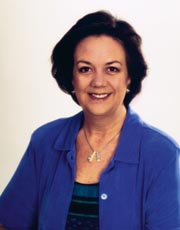
Sally K. Albrecht
Sally K. Albrecht is presently the Director of School Choral publications for Alfred Publishing Co., Inc. She is a popular choral conductor, composer and clinician, especially known for her work with choral movement. Sally is the author of two books on the subject - Choral Music In Motion, Volumes 1 & 2 distributed by Alfred.
An annual recipient of the ASCAP Special Music Award since 1987, Sally has over 140 popular choral publications in print (including The Reindeer Rap, For the Children and No Need to Knock!), six children's musicals (Crazy Carols!, Santa's Stuck in the 50's, A Small Part of the World, SuperClaus!, The Night the Reindeer Rocked and Santa's Shopping Network), four children's songbook (I Sing, you Sing, Schoolhouse Raps, Rhythm to the Rescue! and Everyday Songs), and two sacred cantatas (Night of Wonder and What a Morning). Her composition We are the Children was selected to open the 1994 MENC "World's Largest Concert", involving more than eight million singers. She also directed and staged the half-time show singers performing during the 1995 and 1996 Florida Citrus Bowls.
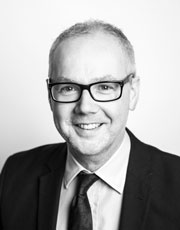
Richard Allain
Richard Allain's works encompass a wide range of styles, including music theatre, sacred choral music, song-writing and works for children. He has been commissioned to write music for BBC Radio 2, 3 and 4. He has worked with many of the country's leading choirs and musicians (including BBC Singers, King's College, Cambridge, St Paul's Cathedral, Commotio, The Bach Choir, etc). His music has appeared at the BBC Proms, and his work is regularly performed and broadcast within the UK and in countries throughout the world. Ubi Caritas has been a core item on Classic FM for nearly a decade. Cana's Guest was selected to form part of The Queen's Choir Book, a collection of contemporary choral music published to celebrate the Diamond Jubilee of Queen Elizabeth II. Choral music is at the heart of his output; he was, for many years, Composer in Association for the National Youth Choirs of Great Britain.
Deeply committed to music education, together with his brother Thomas, Allain has written several cantatas for young voices. One such collaboration, Jake and the Right Genie was commissioned by the Surrey Millennium Youth Festival. It has since been performed by over 10,000 school children and, in 2005, an entire Yorkshire village!
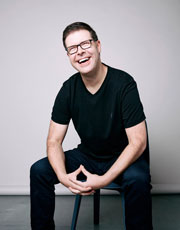
Tony Alonso
Tony Alonso is a Latin Grammy nominated composer of sacred music and a scholar whose work responds to the diverse realities of contemporary culture.
A Cuban-American Roman Catholic, Tony's compositions embrace multicultural musical expressions and reflect a commitment to strong ritual song. His music appears in compilations and hymnals across Christian denominations throughout the world. His "Mass of Joy and Peace" is one of the most widely sung Mass settings in the English-speaking world. In 2015, Tony's compositional work was recognized with an invitation to compose the responsorial psalm for the first Mass Pope Francis celebrated in the United States. In 2020, he was nominated for a Latin Grammy for his groundbreaking album "Caminemos con Jesus".
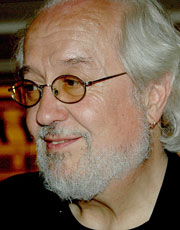
Roger Ames
Roger Ames was born in Cooperstown, New York, the son of a self-taught church organist and first-grade teacher (his free pass to play the organ as a teenager). This and undoubtedly his mother's 42 years as a teacher helped define his passionate love for creating music as well as teaching and conducting it.
He has written numerous large works, both sacred and secular. His Requiem for Our Time, using the poetry of Anne Sexton, has been performed both in the United States and abroad, and received its New England premiere by the Boston Chorus Pro Musica in November of 2007. It was recently nominated for the Pulitzer Prize in Music.
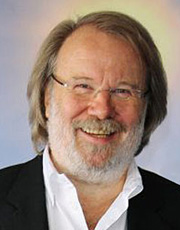
Benny Andersson
Goran Bror Benny Andersson is a Swedish musician, composer, member of the Swedish music group ABBA (1972-1982), and co-composer of the musicals Chess, Kristina från Duvemaa, and Mamma Mia!. For the 2008 film version of Mamma Mia!, he worked also as an executive producer. Since 2001, he is active with his own band Benny Anderssons orkester.
The group's breakthrough came with winning the Eurovision Song Contest for Sweden with "Waterloo" on 6 April 1974. During the next eight years, Andersson (together with Ulvaeus) wrote music for and produced eight studio albums with ABBA. The group achieved great success globally and scored a chain of No. 1 hits.
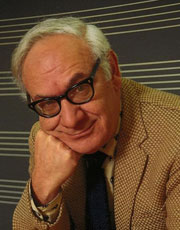
Dominick Argento
Dominick Argento is considered to be America's preeminent composer of lyric opera. At the Peabody Conservatory, where he earned his Bachelor's and Master's degrees, his teachers included Nicholas Nabokov, Henry Cowell and Hugo Weisgall. Argento received his Ph.D. from the Eastman School of Music, where he studied with Alan Hovhaness and Howard Hanson. Fulbright and Guggenheim Fellowships allowed him to study in Italy with Luigi Dallapiccola and to complete his first opera, Colonel Jonathan the Saint. Following his Fulbright, Argento became music director of Hilltop Opera in Baltimore, and taught theory and composition at the Eastman School. In 1958, he joined the faculty of the Department of Music at the University of Minnesota, where he taught until 1997. He now holds the rank of Professor Emeritus.
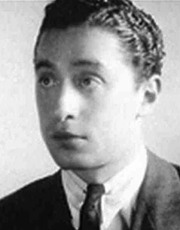
Harold Arlen
Harold Arlen was an American composer of popular music, having written over 500 songs, a number of which have become known worldwide. In addition to composing the songs for the 1939 film The Wizard of Oz (lyrics by E.Y. Harburg), including the classic "Over the Rainbow", Arlen is a highly regarded contributor to the Great American Songbook. "Over the Rainbow" was voted the twentieth century's No. 1 song by the Recording Industry Association of America (RIAA) and the National Endowment for the Arts (NEA).
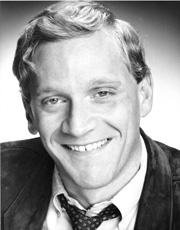
Howard Ashman
Howard Elliott Ashman was an American playwright and lyricist. He collaborated with Alan Menken on several works and is most widely known for several animated feature films for Disney, for which Ashman wrote the lyrics and Menken composed the music. Ashman and Menken began their collaboration with the musical God Bless You, Mr. Rosewater (1979), for which Ashman directed and wrote both book and lyrics. Their next musical, Little Shop of Horrors (1982) for which Ashman again directed and wrote both book and lyrics, became a long-running success and led to a 1986 feature film. The partnership's first Disney film was The Little Mermaid (1989), followed by Beauty and the Beast (1991). After his death, some of Ashman's songs were included in another Disney film, Aladdin.
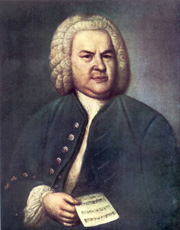
Johann Sebastian Bach
Born into a musical family, Bach received his earliest instruction from his father. After his father's death in 1695, Bach moved to Ohrdruf, where he lived and studied organ with his older brother Johann Christoph. He also received an education at schools in Eisenach, Ohrdruf, and Luneburg. Bach's first permanent positions were as organist in Arnstadt (1703-1707) and Muhlhausen (1707-1708). During these years, he performed, composed taught, and developed an interest in organ building. From 1708-1717 he was employed by Duke Wilhelm Ernst of Weimar, first as court organist, and after 1714, as concertmaster. During this period, he composed many of his best organ compositions; in his capacity as concertmaster, he was also expected to produce a cantata each month. In Weimar, Bach's style was influenced by his study of numerous Italian compositions (especially Vivaldi concertos).
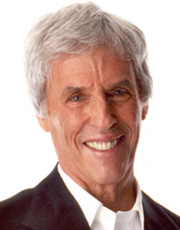
Burt Bacharach
Burt Bacharach is, quite simply, one of the most accomplished composers of the 20th Century. In the '60s and '70s, Bacharach was a dominant figure in popular music, writing a remarkable 52 Top 40 hits. In terms of musical sophistication, Bacharach's compositions differed from much of the pop music of the era. Bacharach songs typically boasted memorable melodies, unconventional and shifting time signatures, and unique chord changes. Combining elements of jazz, pop, Brazilian music and rock, Bacharach created a unique new sound that was as contemporary as it was popular. Lyricist Hal David, Bacharach's primary collaborator, infused Bacharach's music with tart, melodramatic lyrics worthy of the best Tin Pan Alley composers. David's bittersweet, unsentimental lyrics were often in striking contrast to Bacharach's soaring melodies. While in the late 1970s Bacharach's name became synonymous with elevator music (due in great part to its sheer familiarity), a closer listening suggests that his meticulously crafted, technically sophisticated compositions are anything but easy listening.
Sir Edward Bairstow
Edward Bairstow was born in Huddersfield in 1874. After a period teaching at Windsor, in 1893 he became an apprentice to Frederick Bridge at Westminster Abbey, where he stayed for six years as pupil and assistant. He also held an appointment as Organist and Choirmaster at All Saints', Norfolk Square, London until 1899, when he went to Lancashire to take up the post of Organist at Wigan Parish Church. In 1906 he moved to Leeds Parish Church and was appointed Organist of York Minster in 1913, a post he held until his death in 1946.
In York he maintained the choral services at a high level and greatly widened the repertoire. He took the Doctorate of Music examinations at the University of Durham in 1902 and became Professor of Music there in 1929. This did not necessitate a move from York to Durham, for he was only required to give one lecture each year in order to fulfil his commitment. He was knighted in 1932, and received the Degree of Hon. D.Litt. from Leeds University in 1936./
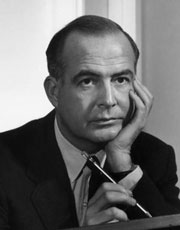
Samuel Barber
Samuel Barber's music, masterfully crafted and built on romantic structures and sensibilities, is at once lyrical, rhythmically complex, and harmonically rich. Born 9 March 1910 in West Chester, Pennsylvania, Barber wrote his first piece at age 7 and attempted his first opera at age 10. At the age of 14 he entered the Curtis Institute, where he studied voice, piano, and composition. Later, he studied conducting with Fritz Reiner.
At Curtis, Barber met Gian Carlo Menotti with whom he would form a lifelong personal and professional relationship. Menotti supplied libretti for Barber's operas Vanessa (for which Barber won the Pulitzer) and A Hand of Bridge. Barber's music was championed by a remarkable range of renowned artists, musicians, and conductors including Vladimir Horowitz, John Browning, Martha Graham, Arturo Toscanini, Dmitri Mitropoulos, Jennie Tourel, and Eleanor Steber. His Antony and Cleopatra was commissioned to open the new Metropolitan Opera House at Lincoln Center in 1966.
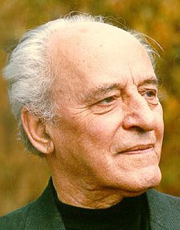
Lajos Bardos
Lajos Bardos was a composer, conductor, and professor of music at the Franz Liszt Academy of Music. Together with Zoltan Kodaly, he laid the foundations of 20th-century Hungarian choral music. From 1928 to 1967 he was a professor at the Academy, where he reformed the syllabus, emphasizing the training of choral conductors, the teaching of church music history, and instruction in music theory and prosody. In 1931 he co-founded the publishing company Magyar Korus, and served as editor of the musical periodical of that name from then until 1950, when it was banned. From 1934 he organized the "singing youth" movement, encouraging young people across Hungary to join choral groups and learn the basics of music.
Through his work as a conductor Bardos raised the standards of Hungarian choral singing to an international level within decades. He directed several choirs and encouraged the development of choral activity in remote areas of the country. His repertory was pioneering: he included choral music from before Palestrina, especially those of Josquin, and promoted new music (he introduced, for example, Stravinsky's Symphony of Psalms into Hungary). His own compositions also draw on Renaissance polyphony and Hungarian folk music, following in the tradition of Bartok and Kodaly.
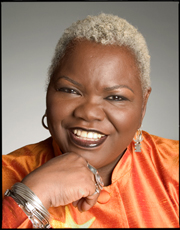
Ysaye Barnwell
Ysaye M. Barnwell was born in New York City and has lived in Washington, D.C., for over 40 years. Her life experiences have taken her down three major paths. She began in music at the age of 2, studying violin for 15 years with her father and majoring in music in high school. She sang in a choir while in junior high school and then in college. In 1976, she founded the Jubilee Singers at All Souls Unitarian Church in Washington, D.C. It was, there in 1979, that Bernice Johnson Reagon witnessed her as a singer and a Sign Language interpreter and invited her to audition for Sweet Honey In The Rock.
Barnwell is also a Speech Pathologist with the Bachelors, Masters (SUNY, Geneseo 1963-68) and Ph.D. (University of Pittsburgh 1975) degrees and was a professor in the College of Dentistry for over a decade. In 1981 she completed post-doctoral work and earned the Master of Science in Public Health
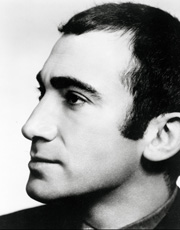
Lionel Bart
He was born Lionel Begleiter, the youngest of seven surviving children of Galician Jews, Yetta (nee Darumstundler) and Morris Begleiter, a master tailor. He grew up in Stepney; his father worked in the area as a tailor in a garden shed. He started his songwriting career in amateur theatre, first at The International Youth Centre in 1952 where he and a friend wrote a revue together called IYC Revue 52. The following year the pair auditioned for a production of the Leonard Irwin play The Wages of Eve at London's Unity Theatre. Shortly afterward Bart began composing songs for Unity Theatre productions, contributing material (including the title song) to its 1953 revue Turn It Up, and songs for its 1953 pantomime, an agitprop version of Cinderella. While at the Unity he was talent-spotted by Joan Littlewood, and so joined Theatre Workshop. He also wrote comedy songs for the Sunday lunchtime BBC radio programme The Billy Cotton Band Show.
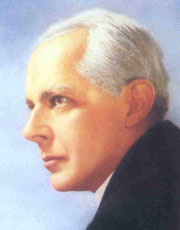
Bela Bartok
Bela Viktor Janos Bartok was a Hungarian composer, pianist and collector of Eastern European and Middle Eastern folk music. Bartok is considered one of the greatest composers of the 20th century. He was one of the founders of the field of ethnomusicology, the study and ethnography of folk music.
Bela Bartok began lessons with his mother, who brought up the family after his father's death in 1888. In 1894 they settled in Bratislava, where he attended the Gymnasium (Dohnanyi was an elder schoolfellow), studied the piano with Laszlo Erkel and Anton Hyrtl, and composed sonatas and quartets. In 1898 he was accepted by the Vienna Conservatory, but following Dohnanyi he went to the Budapest Academy (1899-1903), where he studied the piano with Franz Liszt's pupil Istvan Thoman and composition with Janos Koessler. There he deepened his acquaintance with Wagner, though it was the music of Strauss, which he met at the Budapest premiere of Also sprach Zarathustra in 1902, that had most influence. He wrote a symphonic poem, Kossuth (1903), using Strauss's methods with Hungarian elements in F. Liszt's manner.
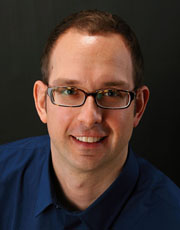
Andy Beck
Andy Beck is the Director of Choral Publications at Alfred Music. A prolific composer and arranger, he has over 450 popular choral works, vocal resources, and children's musicals currently in print, including the highly regarded method books Sing at First Sight, Foundations in Choral Sight Singing and Vocalize! 45 Vocal Warm-Ups That Teach Technique. A quick search on YouTube will confirm that Andy's music is performed by singers worldwide.
Mr. Beck is in demand as a guest conductor, choreographer, adjudicator, and clinician for music educators and students throughout the United States and beyond. In recent years, he has been a commissioned composer and/or guest conductor for honor choirs of all ages, including all-state groups throughout the Southeast.
A fine tenor, Andy enjoys performing in and directing musical theatre, singing with the North Carolina Master Chorale Chamber Choir, and has been an Alfred Music studio singer since 1992.
With a Bachelor's degree in Music Education from Ithaca College and a Masters degree in Music Education from Northwest Missouri State University, Mr. Beck is fully committed to arts education, music literacy, and choral artistry. This passion is evident, not only in his own writing, but also in the high-quality publications available through the catalog he cultivates for Alfred Music.
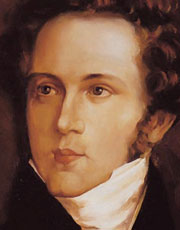
Vincenzo Bellini
Vincenzo Salvatore Carmelo Francesco Bellini was an Italian opera composer, who was known for his long-flowing melodic lines for which he was named "the Swan of Catania". Many years later, in 1898, Giuseppe Verdi "praised the broad curves of Bellini's melody: there are extremely long melodies as no-one else had ever made before."
A large amount of what is known about Bellini's life and his activities comes from surviving letters - except for a short period - which were written over his lifetime to his friend Francesco Florimo, whom he had met as a fellow student in Naples and with whom he maintained a lifelong friendship. Other sources of information come from correspondence saved by other friends and business acquaintances.
Bellini was the quintessential composer of the Italian bel canto era of the early 19th century
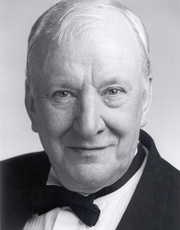
Sir Richard Rodney Bennett
English composer and pianist. He studied at the RAM (1953-7) and with Boulez in Paris (1957-9), though his public career as a composer had begun before this. At 16 he was writing 12-note music, and the period with Boulez encouraged him towards Darmstadt techniques. But in the 1960s he recovered more conventional aspects to develop a style of Bergian expressionism (e.g. in his opera The Mines of Sulphur, 1965); his opera Victory was given at Covent Garden in 1970. His subsequent output is large, including many concertos, settings of English poetry, chamber music, and, notably, big Romantic film scores. A musician of great versatility, he has worked as a jazz pianist (several of his scores of the 1960s are in a sophisticated jazz style) and has played and arranged American popular music.
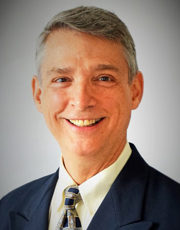
Ken Berg
For 28 years Ken served as the Director of Choirs and Fine Arts Chairman at John Carroll Catholic High School in Birmingham. The choirs at John Carroll consistently received highest ratings in district, state and national festivals under his leadership.
After retiring from teaching high school in 2005, Ken served for six years as the full-time Music Minister and Composer in Residence at Mountain Brook Baptist Church, also in Birmingham. As of the summer of 2011, after serving as the part-time Music Director for 33 years, Ken now serves as the first full-time Music Director and Resident Composer for the Birmingham Boys Choir - ken@birminghamboyschoir.com. Under his leadership the Choir has toured extensively throughout Costa Rica, Europe, Japan, and Canada and has sung for OAKE, MENC and ACDA State, Division and National conventions.
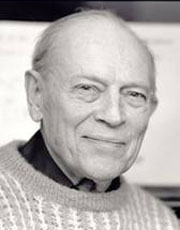
Erik Bergman
Erik (Valdemar) Bergman was an eminent Finnish composer, conductor, music critic, and pedagogue. At Helsinki University in 1931-1933, he studied musicology with the composer and ethnomusicologist Ilmari Krohn - the founder of the discipline in Finland - and literature with the critic and folklorist Yrjo Hirn; concurrently (1931-1938) he was a student at the Helsinki Conservatory - composition with the composer-pianist Erik Furuhjelm and with Bengt Carlson, who had studied under Vincent d'Indy in Paris, and piano with Ilmari Hannikainen, one of the major Finnish pianists. This was followed by further compostion studies with Heinz Tiessen at the Berlin Hochschule fur Musik (1937-1939), and the twelve-tone technique with Wladimir Vogel in Ascona, Switzerland (1942-1943).
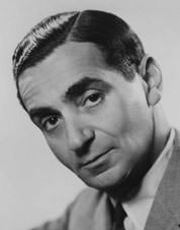
Irving Berlin
Meet the man who wrote "God Bless America". His name was Irving Berlin, one of the greatest American songwriters of his time. His life began in a foreign country, as one of eight children of Leah and Moses Baline. He grew up and greatly impacted society from the many famous songs and plays he wrote, while most of them are still very popular today. We are talking about the man who started out in a poor town in Russia, then came to the United States and made it big.
Irving Berlin was born under the name Israel Isidore Baline on May 11, 1888 in Mogilyov, Russia. He came to America with his family at age five to escape the pogroms in Russia. The family settled in New York City, where Israel and his brothers sold cheap newspapers on the street to support their family after the death of his father. Not long after, he became a singing waiter, which started him off in the singing business. Israel began composing songs. He couldn't read music, but taught himself to play piano enough so he could write his own music.
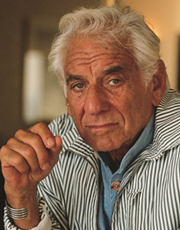
Leonard Bernstein
The prodgiously gifted American conductor, composer, pianist, and teacher, Leonard (actually, Louis) Bernstein, took piano lessons as a boy and attended the Garrison and Boston Latin Schools. At Harvard University, he studied with Walter Piston, Edward Burlingame-Hill, and A. Tillman Merritt, among others. Before graduating in 1939, he made an unofficial conducting debut with his own incidental music to The Birds, and directed and performed in Marc Blitstein's The Cradle Will Rock. Then at the Curtis Institute of Music in Philadelphia, he studied piano with Isabella Vengerova, conducting with Fritz Reiner, and orchestration with Randall Thompson. In 1940, he studied at the Boston Symphony Orchestra's newly created summer institute, Tanglewood, with the orchestra's conductor, Serge Koussevitzky. Bernstein later became Serge Koussevitzky's conducting assistant.
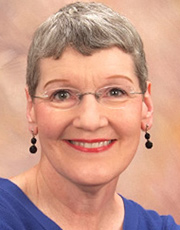
Cindy Berry
Cindy Woods Berry was born in Houston, Texas, and attended Houston Baptist University. She started taking piano lessons from her church organist when she was six years old, and started composing original songs when she was a teenager. But writing/composing was more of a hobby until God "called her" to write in 1983. Since then, she has devoted about half her writing time to choral anthems (for adults and children), and half to arranging for piano. Her anthems, musicals, and piano collections are found in the catalogs of many major publishers. She has received ASCAP Special Awards for many years, and enjoys leading "composer weekends" and conferences throughout the country. Cindy has always been active in her local church music ministry, serving as church pianist and children's choir director. Her goal in writing is to always present her music as an offering of worship and praise to God. Cindy and her husband Bruce are blessed to have three adult sons and four grandsons. They make their home in Killeen, Texas.
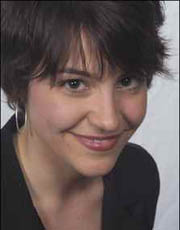
Abbie Betinis
Reviewed as "most audacious... edgy and thrilling," the music of Abbie Betinis (b. 1980) has been heard in some of the finest concert halls in the United States, and is enjoying growing acclaim abroad. Betinis has been commissioned by more than 40 music organizations including the American Suzuki Foundation, Cantus, Dale Warland Singers, and The Schubert Club. She holds degrees from St. Olaf College, the University of Minnesota, and has done post-graduate work at the European American Musical Alliance in Paris, France, where she studied harmony and counterpoint in the tradition of Nadia Boulanger. A McKnight Artist Fellow, Betinis has also received grants and awards from the American Composers Forum, ASCAP, the Jerome Foundation, and the Minnesota Music Educators Association. She has been Composer-in-Residence for The Schubert Club in Saint Paul since 2005, and has also held residencies with The Singers-Minnesota Choral Artists and The Rose Ensemble. A three-time cancer survivor, Abbie lives in Saint Paul, Minnesota.
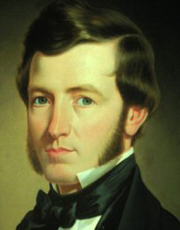
William Billings
William Billings, is considered by many to be the foremost representative of early American choral music. Billings was born in Boston on October 7, 1746. Largely self-trained in music, he was a tanner by trade and a friend of such figures of the American Revolution as Samuel Adams and Paul Revere. Billings's New England Psalm-Singer (1770), engraved by Revere, was the first collection of music entirely by an American.
Billings often wrote the lyrics for his own compositions. Like the notes, the words are occasionally awkward but always forceful and vivid. He wrote long prefaces to his works in which he explained (often in an endearingly eccentric prose style) the rudiments of music and how his work should be performed. His writings reflect his extensive experience as a singing master, and often include advice that would wisely be heeded by choral singers today.
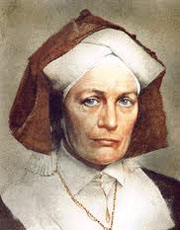
Hildegard von Bingen
Hildegard of Bingen began having visions as a child, but it wasn't until she was in her forties that her revelations in Christianity made her turn to composing. She founded convents and wrote plays, liturgies and hymns in praise of saints. Incredibly prolific, she was also considered a healer and early theologian and she was venerated in the church. Her compositions continue to be performed and recorded today.
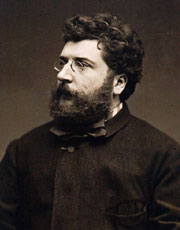
Georges Bizet
Georges Bizet was a French composer of the Romantic era. Best known for his operas in a career cut short by his early death, Bizet achieved few successes before his final work, Carmen, which has become one of the most popular and frequently performed works in the entire opera repertoire.
During a brilliant student career at the Conservatoire de Paris, Bizet won many prizes, including the prestigious Prix de Rome in 1857. He was recognised as an outstanding pianist, though he chose not to capitalise on this skill and rarely performed in public. Returning to Paris after almost three years in Italy, he found that the main Parisian opera theatres preferred the established classical repertoire to the works of newcomers. His keyboard and orchestral compositions were likewise largely ignored; as a result, his career stalled, and he earned his living mainly by arranging and transcribing the music of others. Restless for success, he began many theatrical projects during the 1860s, most of which were abandoned. Neither of his two operas that reached the stage in this time-Les pecheurs de perles and La jolie fille de Perth-were immediately successful.
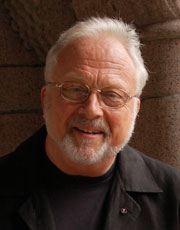
William Bolcom
National Medal of Arts, Pulitzer Prize, and Grammy Award-winner William Bolcom is an American composer of chamber, operatic, vocal, choral, cabaret, ragtime, and symphonic music.
He joined the faculty of the University of Michigan's School of Music in 1973, was named the Ross Lee Finney Distinguished University Professor of Composition in 1994, and retired in 2008 after 35 years. Bolcom won the Pulitzer Prize for music in 1988 for 12 New Etudes for Piano, and his setting of William Blake's Songs of Innocence and Songs of Experience on the Naxos label won four Grammy Awards in 2005.
As a pianist Bolcom has performed and recorded his own work frequently in collaboration with his wife and musical partner, mezzo-soprano Joan Morris. Cabaret songs, show tunes, and American popular songs of the 20th century have been their primary specialties in both concerts and recordings. Their 25th album, "Autumn Leaves," was released in 2015.
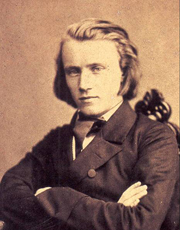
Johannes Brahms
German pianist and composer Johannes Brahms is ranked among the masters of the Romantic era. Although he showed talent at the piano at an early age, he spent much of his young life performing rather than composing. Brahms's career was given a boost by composer Robert Schumann (1810-56) and his pianist wife Clara (1819-96); his close relationship with Clara, especially after she was widowed, has been the source of much speculation ever since. The pair exchanged passionate letters and went on holiday together, but Brahms opted to leave her behind to pursue his career and a life of bachelorhood. By the end of the 1860s he'd settled in Vienna, where he lived until his death from cancer in 1897. Musically he maintained the Romantic tradition of Ludwig van Beethoven, in opposition to the rise of composers such as Richard Wagner and Brahms's friend, Franz Liszt. His most famous composition is the lullaby, "Lied Wiegenlied" ("Cradle Song"), popularly known as simply "Brahms' Lullaby." His compositions include German Requiem (1866), Violin Concerto in D (1878) and Piano Concertos in B Flat (1878-81).
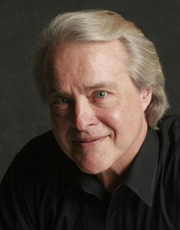
Daniel Brewbaker
Daniel M. Brewbaker was an American composer and educator. He completed undergraduate study at the Univ. of Illinois. He then earned master's and doctorate degrees from the Juilliard School of Music. Early in his career as a composer, he served as an educator on the faculties of the Juilliard School and several colleges. His first composition, Psalm 39, premiered in 1970 at the University of Illinois, beginning a body of work that grew to nearly 60 works, establishing him among contemporary American composers. His music reflected his deeply spiritual and somewhat mystical nature, communicated to the listener with powerful effect. At a time when many composers have striven for novelty, he wrote music that was unashamedly direct and movingly melodic, echoing his Midwestern roots among European influence.
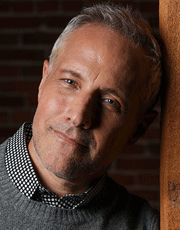
Jim Brickman
Jim Brickman's distinctive piano style and captivating live performances have revolutionized the popularity of instrumental music, making him a driving force behind modern American music.
The hit-making songwriter is the best-selling solo pianist of our time earning 21 Number One albums and 32 Top 20 Radio Singles in the industry bible, "Billboard Magazine." He's garnered two Grammy nominations, gospel music's Dove Award, two SESAC Songwriter of the Year Awards, and the Canadian Country Music Award. He also has a music scholarship named for him by his alma mater, the prestigious Cleveland Institute of Music.
"Hope," "Faith" and "Peace" are truly at the heart of Jim Brickman's passionate songwriting. "I write music to be shared - to soothe, to inspire, to celebrate, to love. To me, music is the pure and simple soundtrack to life's most memorable moments."
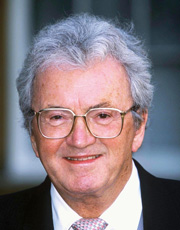
Leslie Bricusse
Bricusse was educated at University College School in London and Gonville and Caius College, Cambridge. In the 1960s and 1970s, Bricusse enjoyed a fruitful partnership with Anthony Newley. They wrote the musical Stop the World - I Want to Get Off (1961) which was successful in London and on Broadway, and was made into a (poorly received) film version in 1966. Also in collaboration with Newley, Bricusse wrote The Roar of the Greasepaint-the Smell of the Crowd (1965) and Willy Wonka & the Chocolate Factory (1971), based on the children's book by Roald Dahl, and for which they received an Academy Award nomination for Best Original Song Score. When he collaborated with Newley, the two men referred to themselves as the team of "Brickman and Newburg", with "Newburg" concentrating mainly on the music and "Brickman" on the lyrics. Ian Fraser often did their arrangements.
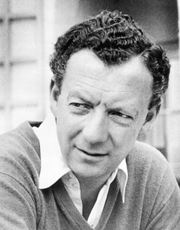
Benjamin Britten
The renowned English composer, who was also a gifted conductor and pianist, Benjamin (Edward) Britten, studied with Frank Bridge as a boy and in 1930 entered the RCM. In 1934 he heard Wozzeck and planned to study with Alban Berg, but opposition at home stopped him. The next year he began working for the GPO Film Unit, where one of his collaborators was Auden: together they worked on concert works as well, Auden's social criticism being matched by a sharply satirical and virtuoso musical style (orchestral song cycle Our Hunting Fathers 1936). Igor Stravinsky and Gustav Mahler were important influences, but Britten's effortless technique gave his early music a high personal definition, notably shown in orchestral works (Bridge Variations for strings, 1937; Piano Concerto, 1938; Violin Concerto, 1939) and songs (Les illuminations, setting Rimbaud for high voice and strings, 1939).
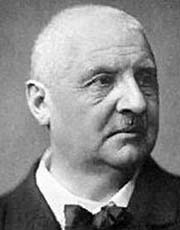
Anton Bruckner
Anton Bruckner was born in Ansfelden to a schoolmaster and organist father with whom he first studied music. He worked for a few years as a teacher's assistant, fiddling at village dances at night to supplement his income. He studied at the Augustinian monastery in St. Florian, becoming an organist there in 1851. He continued his studies to the age of 40, under Simon Sechter and Otto Kitzler, the latter introducing him to the music of Richard Wagner, which Bruckner studied extensively from 1863 onwards. He had alrady in 1861 made acquaintance with Liszt who was religious like Bruckner and who first and foremost was a harmonic innovator, initiating the new german school together with Wagner. Soon after Bruckner had ended his studies under Sechter and Kitzler, he wrote his first mature work, the Mass in D Minor. He was a very devout Roman Catholic.
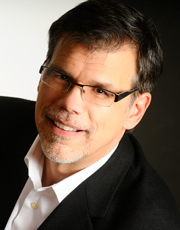
David L. Brunner
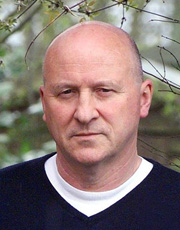
David L. Brunner is acclaimed as one today's most active and versatile conductors and composers. His wide and varied expertise embraces all ages in professional, university, public school, community, church and children's choruses. Dr. Brunner is Professor of Music and Director of Choral Activities at the University of Central Florida, where he conducts the University Chorus and Chamber Singers, teaches courses in conducting, and coaches composition students.
Gavin Bryars
Richard Gavin Bryars is an English composer and double bassist. He has been active in (or has produced works in) many varied styles of music, including jazz, free improvisation, minimalism experimental music, avant-garde, neoclassicism, and ambient.
Born in Goole, East Riding of Yorkshire, England, Bryars initially studied philosophy at Sheffield University before studying music for three years.
The first musical work for which is he remembered was his role as bassist in the trio Joseph Holbrooke, alongside guitarist Derek Bailey and drummer Tony Oxley. The trio began by playing relatively traditional jazz before moving into free improvisation. However, Bryars became dissatified with this when he saw a young bassist (later revealed to be Johnny Dyani) play in a manner which seemed to him to be artificial, and he became interested in composition instead.
Alan Bullard
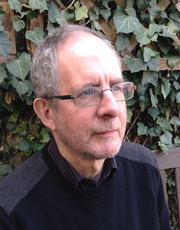
Alan Bullard's music is widely performed in Great Britain and many other countries, broadcast on television and radio, and appears on a number of CDs. The variety of commissions that he has undertaken - including music for a number of professional soloists and ensembles, many amateur choral societies and children's choirs, a semi-professional chamber orchestra, wind band and recorder festivals, a professional chamber choir, a festival for massed school choirs and instrumentalists, the anniversary celebrations of a church and a school, music for examination syllabuses and educational albums, and for a television programme about the Suffolk landscape - are some indication of the wide appeal of the music of this versatile composer to many different types of musicians and audiences.
Richard Burchard
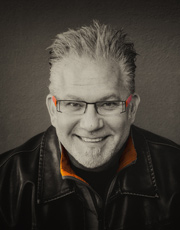
A college music educator of more than thirty years, Richard Burchard has taught a variety of courses including Composition and Arranging, Music Technology, Music Theory and World Music as well as courses in study abroad programs in Salzburg, Austria and South Africa. A native of Meadville, PA, he attended Edinboro University of Pennsylvania and received both a BM and MM degree from the University of Louisville.
Burchard was named the Kentucky Music Teachers Association 2008 Commissioned Composer and have served as composer-in-residence for a number of organizations, including: The Louisville Vocal Project; Voces Novae, Louisville, KY; St. Martin of Tours Catholic Church, Louisville, KY; The Cathedral of the Assumption, Louisville KY; The American Cathedral in Paris, France; two years with The University of Kentucky Choral Department, Lexington, KY; and four years as Executive Composer-in-Residence at Bellarmine University in Louisville, KY.
Harry Burleigh
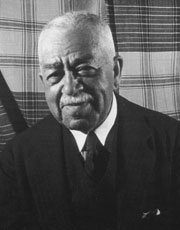
Henry Thacker ("Harry") Burleigh was an American classical composer, arranger, and professional singer known for his baritone voice. The first black composer who was instrumental in developing characteristically American music, Burleigh made black music available to classically trained artists both by introducing them to spirituals and by arranging spirituals in a more classical form. Burleigh also introduced Antonín Dvorak to Black American music, which influenced some of Dvorak's most famous compositions and led him to say that Black music would be the basis of an American classical music.
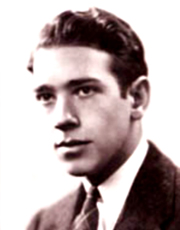
Alfred Burt
Alfred Burt (born April 22, 1920) was an American jazz musician who composed fifteen now famous Christmas carols between 1942 and 1954. Burt studied music at the University of Michigan in Ann Arbor, and served as an officer in the United States Army during World War II. After the war, he traveled to California, developing a career as trumpeter and arranger, and eventually joined the Alvino Rey Orchestra. His most famous carol, "Caroling Caroling", is often heard during the Christmas season, and many others have been recorded by dozens of artists. John Williams wrote two medleys of his works for the Boston Pops Orchestra. Burt wrote his carols for "publication" on the back of his Christmas cards each year. They are among the few modern carols to address serious spiritual themes. A heavy smoker, he died of lung cancer in 1954 at the age of 33. In 2003 Burt's niece, the composer Abbie Betinis, revived the traditional of sending Christmas cards with an original carol each holiday season.
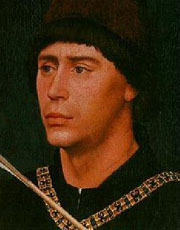
Antoine Busnoys
French composer. Nothing certain is known about his origins or early training. By 1461 he was resident in Tours as a chaplain at the cathedral. In 1465 he was in charge of the choristers first at the collegiate church of St Martin in Tours (where his senior colleagues included Johannes Ockeghem ), then at St Hilaire-le-Grand in Poitiers. By 1467 he had moved into the service of the Burgundian court, and he became an official member of the chapel staff in 1470 . This position involved extensive travel in northern France and the Low Countries, both in peacetime and during military campaigns. The last payments to him occur in 1483 , after which his biography is again obscure.
Busnois is famous above all for his many polyphonic chansons, sophisticated works that reflect not only the Burgundian milieu but also the French royal court circle in which he moved during his years at Tours. Some of their poetic texts are almost certainly his own work. Fewer sacred works by him survive, but they are of high quality and often ingenious construction. One motet, Anthoni usque limina, is composed round a tenor line that invokes the tolling of a bell; another, the non-religious In hydraulis ( c. 1467 ), pays tribute to Ockeghem in both words and music. Busnois was among the first in a long line of composers to write a mass based on L'Homme arme, a melody thought to have had symbolic meaning to the Burgundian dukes.
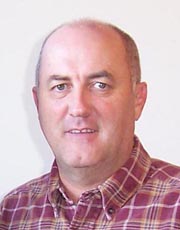
Javier Busto
Busto graduated as a medical doctor from Valladolid University. In 1995 he created and founded the women's choir Kanta Cantemus Korua. Known internationally as a composer of music and as a choral conductor, he has presented his compositions at the Fourth World Symposium on Choral Music in Sydney, Australia in 1996, and was guest conductor of the Tokyo Cantat in 2000. His choirs have won first place awards in France, Italy, Austria, and Germany. Busto has served on the jury of composition and choral competitions in Spain, France, Italy and Japan.
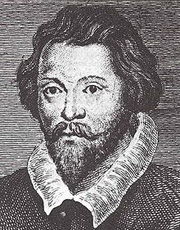
William Byrd
William Byrd (1540? - July 4, 1623) was the most celebrated of early English composers. His entire life was marked by contradictions; as a true Renaissance man, he did not fit easily into categories. He lived well into the seventeenth century without writing songs in the new Baroque fashion, but his superbly constructed keyboard works marked the beginning of the Baroque organ and harpsichord style. Although he was nominally an Anglican court composer for much of his life, he spent his last years composing for the Roman liturgy, and died in relative obscurity. In the anti-Catholic frenzy following the 1605 Gunpowder Plot, some of his music was banned in England under penalty of imprisonment; some of it-such as the Short Service-has been sung in English cathedrals uninterrupted for the past four centuries.
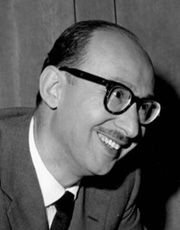
Sammy Cahn
Sammy Cahn was an American lyricist, songwriter and musician. He is best known for his romantic lyrics to films and Broadway songs, as well as stand-alone songs premiered by recording companies in the Greater Los Angeles Area. He and his collaborators had a series of hit recordings with Frank Sinatra during the singer's tenure at Capitol Records, but also enjoyed hits with Dean Martin, Doris Day and many others. He played the piano and violin. He won the Academy Award four times for his songs, including the popular song "Three Coins in the Fountain".
Among his most enduring songs is "Let It Snow! Let It Snow! Let It Snow!", cowritten with Jule Styne in 1945.
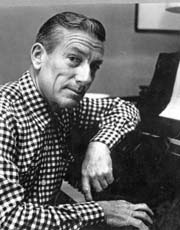
Hoagy Carmichael
"I wore my hat on the back of my head and no tie, with a cigarette drooping from my lips, and I lazied through the entire performance," Hoagy said, describing his historic, record-breaking performance at the London Palladium in 1951. That was the image Hoagy created and the world embraced. Behind it, invisible, was someone else--the passionate and poetic young man he'd once been, the poor kid from Indiana with a fierce ache to succeed.
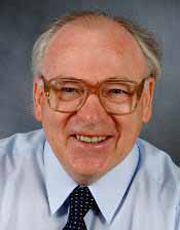
Andrew Carter
Andrew Carter was born at Wigston Magna, Leicestershire, in 1939. He studied music at Leeds University before settling in York, where he joined the York Minster Choir as a bass. In 1965 he founded the Chapter House Choir at York Minster Cathedral, a mixed voice ensemble, which continued under his direction for seventeen years and achieved national renown. He wrote much of his early published arrangements for this choir.
Andrew was Director of Music at the Bar Convent Grammar School, where he achieved his first successes as a choir trainer. (The Bar Convent School closed in 1985 becoming All Saints Roman Catholic School, just down the road, but the original building is still in use as conference rooms etc.)
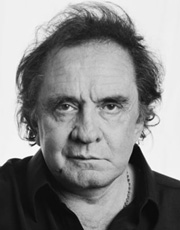
Johnny Cash
John R. Cash was an American singer-songwriter, guitarist, actor, and author. He is widely considered one of the most influential popular musicians of the 20th century and is one of the best-selling music artists of all time, having sold more than 90 million records worldwide. Although primarily remembered as a country music icon, his genre-spanning songs and sound embraced rock and roll, rockabilly, blues, folk, and gospel. This crossover appeal won Cash the rare honor of multiple inductions in the Country Music, Rock and Roll, and Gospel Music Halls of Fame.
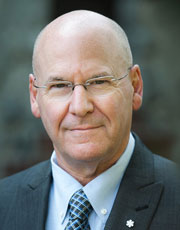
Stephen Chatman
Stephen Chatman C.M., D.M.A., one of Canada's most prominent composers, is Professor of Composition at the University of British Columbia School of Music. He has received many commissions and composition awards, including 2005, 2006 and 2010 Western Canadian Music Awards "Classical Composition of the Year", 2010 and 2012 SOCAN Jan V. Matejcek New Classical Music Award, three BMI Awards (New York), multiple JUNO nominations, Dorothy Somerset Award, Charles Ives Scholarship from the American Academy of Arts and Letters, and the 2001 BBC Masterprize short-list. In 2012, Dr. Chatman was appointed to the Order of Canada.
More than 100 of his works, published by E.C. Schirmer, Oxford University Press, Boosey & Hawkes, earthsongs, Frederick Harris, Dorn, Berandol, and T. Presser, have sold 500,000 printed copies.
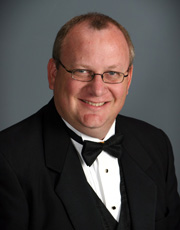
David Cherwien
David Cherwien, music director of the National Lutheran Choir, is a nationally known conductor, composer and organist. Recognized for his contributions to the field of church music and liturgy, he is in demand as a clinician and hymn festival leader across the country. David serves as editor of the National Lutheran Choir Series of choral music published by Morningstar Music Publishers. He is a founding member of the Association of Lutheran Church Musicians and has served in its leadership in a variety of capacities, including as National President from 1993 to 1997. He is a member of the American Choral Director's Association, American Guild of Organists, Chorus America and Choristers Guild.
 |  |  | | | | | |  |
Page 1 = Albrecht-Cherwien Page 2 = Chilcott-Gesualdo Page 3 = Gibb-Ligeti Page 4 = Lightfoot-O'Regan Page 5 = Ockeghem-Singh Page 6 = Sirett-Whitbourn Page 7 = Wilberg-Yi
Select a Category |
Want to Sing? - Find a Chorus Near You
List of Choruses by State | List of Choruses by City