
In Celebration of the Human Voice - The Essential Musical Instrument
Home | Doo Wop | Barbershop | World | Contemporary | Christian | Vocal Jazz | Choral | Christmas | Instructional | Arrangements
Classical | Opera | Musicals | Personality | Young Singers | Disney | Videos | Songs | The Artists

James Jordan
Director
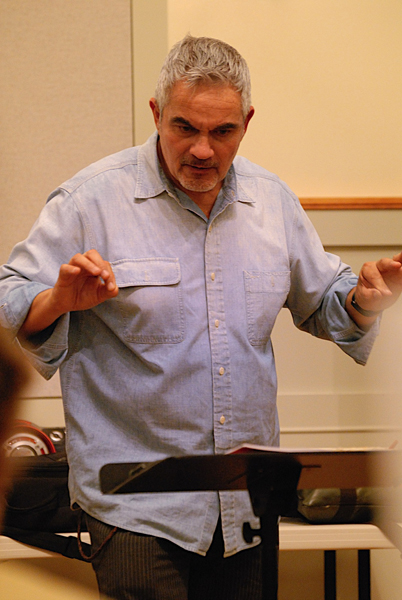
James Jordan is considered to be one of the most influential choral conductors and educators in America. His more than eighteen books covering rehearsal and teaching pedagogy, conducting technique, and the spirituality of musicing, as well as numerous DVDs and recordings, have brought about far-reaching pedagogical and philosophical changes not only in choral music but also in the worlds of orchestral conducting, wind conducting, piano, and music education. The Choral Journal has described his writings as "visionary." Renowned American composer Morten Lauridsen dedicated the third movement of his Midwinter Songs to him.
Discography
Displaying 1-20 of 20 items.
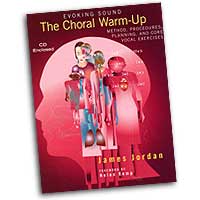
Review: The book is a comprehensive guide to teaching vocal technique through designing an efficient choral warm-up that gives the choir "tools" to sing and hear better. Among the topics presented are alignment (using Alexander Body Mapping principles), inhalation, exhalation, support, resonance, vowel colors, leaps, range extension, crescendo/decrescendo, martellato, staccato, teaching procedures for diction (plus general diction guidelines), teaching and reinforcing rhythm and consistent tempo, and strategies for teaching intonation. This is a comprehensive guide for choral directors that: - helps conductors plan and implement efficient choral warm-ups, builds healthy voices within the choral rehearsal, provides vocalises that have accompaniments complete with modulations upward and downward and categorizes vocalises according to specific vocal objectives.
Songlist: Music Aptitude and the Choral Ensemble, The Fourteen Pedagogical Cardinal Rules: A Brief Perview, Philosophy of the Choral Warm-Up: Is A Warm Up Necessary?, The Collective Mentality of the Choral Rehearsal: Abandonment of Vocal Responsibilty, Building Vocal Skill: A Pedagogical Hierarchy for Choirs, Philosophy of Teaching Techniques, Alignment and Body Awareness, Spaciousness and Proper Vocal Production through the Use of the Sigh: Relaxation of the Vocal Tract - Creating Space, Breathing: Inhalation and Exhalation, Building Resonance, Vocal Techniques "Recipes", Aural Immersion and Aural Preparation of the Choir, Blending Through Standings and Rehearsal Room Chair Arrangements, Energizing the Sound of the Choir: A Philosophical Challenge, Physical Gestures to Reinforce Choral Warm-Up Principles, An Application of the Work of Rudolph von Laban to Propel Musical Line, Strategies for Teaching Rhythm, Rehearsal Planning Template, Troubleshooting Chart, The Core Vocal Exercises

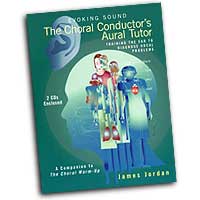
Review: In The Choral Conductor's Aural Tutor, James Jordan leads directors on a quest for aural mastery of vocal technique "error" detection through a program of guided listening using recorded examples from both a high school and a college choir. The included pretests and posttests encourage forward progress by testing the conductor's ability to hear and label problems, including too little head tone, off-the-breath singing, jowly placement, sluggish vowel movement, and more. The Core Vocal Exercises on the two CDs demonstrate good ensemble sound by showing both correct and incorrect examples-we learn what a desirable sound is by hearing what it is not. This book and two-CD resource, rooted in the principles of The Choral Warm-Up, is an essential resource for conductors of all experience levels, regardless of what age group they teach.
Songlist: Section I - Introduction And Purpose, Section 2 - Developing Analytical Listening Skills, Section 3 - How Do You Hear?, Section Four - Identifying Aspects Of Timbre, Section 5 - The Conductor's Aural Workbook, Section 6 - Pretests And Posttests, Section 7 - Snakes and Barrels
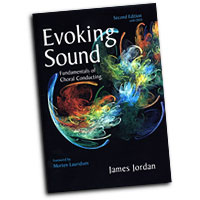
Review: Evoking Sound set new standards for its vision of the choral conductor's role when it was published in 1998. Now significantly revised and expanded, James Jordan's groundbreaking book incorporates more than ten years of new conducting insights, pedagogy, and philosophy to create a resource that is not only informative but transformative. Unique to this edition is the inclusion of a revolutionary DVD with Dr. Jordan and Eugene Migliaro Corporon of the University of North Texas. For the first time, a conducting text contains visual examples of patterns that-with the help of state-of-the-art animation and multiple camera angles-guide you to a deeper understanding of how conducting gesture influences sound. You will come away from Evoking Sound with a renewed sense of the totality of the conducting experience and also an understanding of how to better evoke honest and meaningful sounds from your choir.
Songlist: Foreword by Morten Lauridsen, Preface to the Second Edition, Preface to the First Edition (1996), Introduction, Part I: The Foundations of Conducting, Beginnings, The Role of Self for Beginning Conductors, The Essences of Gesture: To Advocate and Connect, Allignment: Creating the Inner Space for Breath, Essential Understandings: Primal Building Blocks of Conducting Technique, Consistent Tempo: A Prerequisite and Essential Skill, Part II: The Mechanics and Architecture of Conducting, The Anticipatory Process: Readiness to Receive Sound and Breath, Breathing and Dropping In: Gesture Informed by Breath, The Architecture of Conducting Patterns, Initiating Sound through the Breath Impulse Gesture: Definition and Importance of the Ictus, Understanding the Saito Conducting Method, Pattern Mechanics and Geometry, Part III: Additional Understandings to Refine Conducting Technique, Skill, and Awareness, Your Movement Potential and Conducting: An Application of the Work of Rudolf von Laben, Teaching Body Awareness to Conductors: The Use of the Swiss Ball, Adding Weight to Conducting Gesture: Experiencing Kinesthetic Transfer, Creating Integrative Conducting Technique through Core Distal Connectivity, The Morphology of Sounds: Conducting Note Attacks, Releases, and Fermatas, Listening, The Left Hand, Receiving, Listening to, and Reacting to the Sound, Initiation of the Musical Line, Music Aptitude: Realizing Your Music Potential as A Conductor, Part IV: Score Analysis And Instrumental Conducting, Preparing the Score: Allowing the Music to Speak, Preparing for the Kinesthetic of Conducting: The Principles of Laban Score Movement Analysis (LMSA), Basics for Choral Conductors Working with Instrumentalists, Facing the Orchestra: A Choral Conductor's Guide to the Orchestra, Giving Meaning to the Music through the Text, Trust and Conducting: Interpreter or Transmitter?, Part V: Supporting Materials for Conducting Study, The Anatomy of Conducting DVD: A Companion to Evoking Sound, Music For Conducting Study: A Companion to Evoking Sound, Appendix 1: String Resource Guide, Appendix 2: Music For Basic Conducting Study and Self-Evaluation, Appendix 3: Inner Game of Music - Conducting, Bibliography, List of Additional Resources, List of Quoted Persons, Index, About the Author
Review: This unique self-study guide distills the essentials of good choral vocal technique into eleven concise, accessible lessons. Prepared by acclaimed teacher James Jordan, Professor and Senior Conductor at Westminster Choir College of Rider University, Choral Singing Step by Step is a perfect guide for amateur and novice choir members who wish to improve their own singing technique and understand the singing process. With this handbook, Jordan covers the same techniques he has used to help thousands of singers through his conducting workshops and clinics around the world. Topics include: Strategies for good intonation and tuning, breathing, inhalation and exhalation, support, resonance, vowel colors, leaps, range extension, diction, and alignment (using Alexander Technique and Body Mapping principles): Use of the sigh for diagnosing vocal problems: Maintaining rhythm and consistent tempo
Songlist: Introduction, Exercise Melodies, Alignment and Lengthening, The Sigh: Learning the Cave, Inhalation and Exhalation, Singing on the Breath, Creating Sound to Sing "On", The Helper Vowels, Building Core Sound, Body Awareness as You Sing, Energizing Sound, Basics of Diction, The Art of Phrasing
Review: Created by Dr. James Jordan and accompanist/composer Marilyn Shenenberger, the exercises in this book are part of an innovative new ensemble solfege method that helps choirs improve intonation through improving aural skills. Each exercise provides a rich harmonic syntax for singers to hear, while singing in different modes. The book contains intonations in all modes, singing difficult intervals within each mode, modal tuning exercises, and a modal choral example. These exercises may be integrated into the choral warm-up. Using this unique method of choral solfege, your choir's hearing ability will improve exponentially as will their intonation and reading abilities. These exercises are appropriate for all ages and for singers at all levels of development.
Songlist: Major Ionian Mode, Harmonic Minor, Mixolydian Mode, Dorian Mode, Lydian Mode, Phrygian Mode, Aeolian Mode, Melodic Minor Mode, Locrian Mode, Octatonic Modes
Review: For the first time in a single volume, this book provides choral directors with a comprehensive guide to score analysis techniques used by the world's leading choral conductors and innovators. Together with the companion Volume I: The Choral Rehearsal-Techniques and Procedures (and DVD), this series is an essential guide to productive and musical choral rehearsals written by a leading voice in choral pedagogy. This volume deals with the preparation of both the psychological and spiritual aspects of the choral rehearsal. Designed for use by all conductors, this text is a valuable and groundbreaking resource for choral conductors at both the undergraduate and graduate levels.
Songlist: The Spiritual/Human Alchemy of the Choral Rehearsal, The Tethered Rehearsal, Encouraging the Inner Journey: Choirs on the Edge, Contextualizing the Choral Experience, Teaching Ensemble Silence, The Perceiving Choir, Selecting Literature for your Ensemble, The Rehearsal Atmosphere, The "It" of Rehearsal: Setting the Mimetic of the Room, The Willful Choir, The Rehearsal Room as a Secret Place for Musicians, The Energy Dynamic of the Rehearsal: Pacing and Energy, The Door Into Musical Style: Timbre Preferences, Breathing New Life Into Renaissance Choral Music, Determining Tempos for Performance and Rehearsal, A Voice Teacher's View of the Rehearsal, Score Preparation: A Kaleidoscopic Process, The Quantum Conductor, Begin with Aural Study: Ear Before Eye, Analysis of Tune and Text, Vocal Score Study, The Rite, Passage, and Necessity of Score Marking for Conductor and Choir, Deciphering the "code" of Renaissance Composers: Cadential Analysis and Application to the Performance of Renaissance Music, Breaking the Renaissance Code, Understanding the Journey of Texts, The Historical and Structural Analyses of Choral Works, Schenkerian Analysis as an Analytical Tool For Performance Preparation, Using the Principles of Laban Movement Score Analysis, Audiation and Imaging: The Key "Practicing" Conducting, Rehearsal Planning Checklists: Covering all steps, The Moment Prior to Rehearsal, Postscript: The Rehearsal as a Connecting Experience
Review: In This ambitious yet practical text, the author and a team of expert contributors give preactical insights drawn from many decades of experience int he rehearsal room. Just a few of the topics covered in this volume include: approaches to teaching rhythm, using recording tehnology as part of the rehearsal process, introducing your choir to IPA, incorporating Dalcroze and Laban into the rehearsal, and the count singing system of Robert Shaw. This book is destined to become a trusted companion to anyone seeking to make the most of the choral rehearsal.
Songlist: Estabilishing the Spirit of the Rehearsal, Planning and Preparing For Rehearsal, Teaching Listening, Conducting Gesture As A Rehearsal Technique, The Accompanist and the Rehearsal, Philosophy of Skill Teaching Within The Rehearsal, Teaching Rhythm In All Its Dimensions, Teaching Artistic Phrasing Through Movement, Rehearsal Accountabiity, Inward Bound
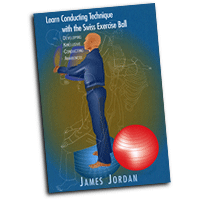
Review: Traditional conducting methods rely on how conductors look-not how they feel. James Jordan's groundbreaking 'Learn Conducting Technique with the Swiss Exercise Ball' takes the study of conducting beyond the mechanics to a higher plane. With the aid of a Swiss Exercise Ball and the Body Mapping tecniques described in this book, conductors can reach a new level of artistic expression and mastery.
Songlist: History And Philosophy, Developing Greater Kinesthetic With The Swiss Ball, Beginning Your Work On The Swiss Exercise Ball
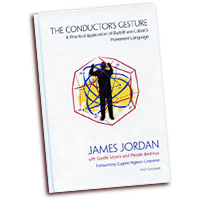
Review: The culmination of almost thirty years of research, writing, and teaching, this important book by James Jordan presents a vision of conducting gesture and technique as a movement language. In this comprehensive resource, Jordan applies the theories of movement education icon Rudolf Laban, as inspired by the pedagogical insights of Jordan's mentor and teacher Gail B. Poch. Each section is detailed through research, extensive discussion, and suggestions for study. Dr. Jordan's pioneering research and writing on this subject will make this seminal volume an indispensible resource for the development of conducting technique and the foundation of many approaches to conducting pedagogy. Also in this volume are contributions by Giselle Wyers and Meade Andrews. Dr. Wyers explores in depth the application of States and Drives, and makes direct applications to specific works in the choral literature. Dr. Andrews details a sequential curriculum for the practice and development of expressive conducting technique, all demonstrated on the DVD included with this book.
Songlist: An Examination of the Perception of Movement, Laban as a Gestural Morphology, The Consequences of Gesture, A New Pedagogy and Theory for Conducting, An Overview of Psychological Research, Behaviorism, The Importance of the Body Map, How Movement and Conducting Affects Ensembles, Explanation of Morphology, Toward an Understanding of Effort, Overview of the Importance of Breath, Dimensional Architectures of Movement, Rhythm Impulse and Conducting, Teaching Architecture of Sound, The Sound Membrane, The Impulse to Move: Harmonic Rhythm, Harmonic Progression, States and Drives, Effort Elements, Movement Signatures, Modes of Shape Change, Developing a Kinesthetic Vocabulary, Acquiring Conducting Technique Using the Principles of Laban
Review: In this provocative book, James Jordan examines why and how the breath is the "delivery system" for human and musical ideas in performance. "The breath," Dr. Jordan writes, "is the most magical and human thing we can engage as artists." This book makes a compelling case for the power of the breath and the power of submitting oneself to its miracles. The Musician's Breath is divided into two sections: The first discusses the "why" of breathing, while the second provides the "how" with practical applications for singers, instrumentalists, and conductors. Co-authors and Westminster Choir College colleagues, voice teachers Mark Moliterno and Nova Thomas, add their unique perspectives through chapters on yoga and other paradigms that reveal the power of the breath. A companion DVD (available separately) guides viewers through yoga practices that can provide access points to understanding breath, free points of tension, and "holding" in the breathing process. With The Musician's Breath, all musicians-from choral directors to solo instrumentalists-will deepen their understanding of the miracle of human expression through breath. This pioneering book is also a passionate and compelling call for the use of the breath as a pedagogical tool for performers of all ages and levels.
Songlist: The Hear The Inaudible, The Ignorance of Breath, The Clairvoyant Breath, The Moment of Silence, Intention and Revelation, The Audiational Breath, Understanding the Mechanics of Breathing, Breath Defines Our Interiority, The Idea Informs the Body, The Power Within the Rest, Breathing into the Idea, Breath as Initator, Action-Reaction, What is "In The Moment"?, Toward a Deeper Artistry, The Conductors Intimate Connection to Breath, Empathatic Constant Exhalation, The Troughed Beat, Breath and Body Movement, Inhalation, Insipration, Qigong Practice, Basic Qigond Exercise Sequence

Review: Forced to find a way to correct persistent intonation problems in his own choir, author James Jordan with the help of Matthew Mehaffey embarked on the development of a new method of choral ensemble solfege. Choral Ensemble Intonation: Method, Procedures, and Exercises presents this innovative new method, along with procedures and exercises, sure to improve the aural skills of any choir. Not just a temporary fix, this method encourages the building of intonation skills within the confines of the choral ensemble rehearsal. The method includes overall steps for reading a new work and teaches how solfege syllables can promote good intonation through good diction. In addition, the authors provide techniques for maintaining a consistent tempo, running a choral warm-up, and utilizing the accompanist to achieve better intonation. Jordan and Mehaffey also share listening techniques for the choir and discuss how the use of physical movement can assist intonation and good vocal production. Plus, conductors are given tools for modal analysis that will greatly improve the teaching and learning process.
Songlist: The Teaching of Intonation Skills, Keyality and Tonality, The Importance and Potency of Aural/Oral Teaching, The Foundation of Good Ensemble Listening, Solfege System: Fixed or Movable Do?, Chromatic Syllables/Solfege Syllable Pronunciation Guide, Chromatic Syllables, Practicing the Singing of Modes, Analysis for Aural Ensemble Teaching, On a Key vs. In a Tonality, Music with Changing Anchor Notes, Exercises for Understanding Harmonic Context, Exercises for Understanding Tonality, Musical Line and Intonation: Important Partners
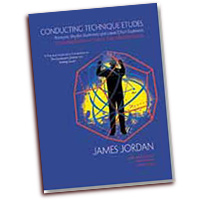
Review: In this volume of etudes for conductors, James Jordan details a ground-breaking pedagogy for the development of conducting skills. This method is based on a sequential harmonic process to inform and define conducting gesture. This book is revolutionary because it employs a process of score study to develop what Dr. Jordan calls "kinesthetic/harmonic audiation." Conductors of all skill levels will profoundly benefit from these new ideas. While instrumentalists and keyboardists for decades have had books of daily "etudes" for the development of technique, conducting pedagogy has not had the benefit of such a rigorous technical course of study. This book teaches conductors to make gestural decisions based upon harmonic rhythm and uses the gestural vocabulary of Rudolf Laban as the beginning "vocabulary" from which a conductor can make decisions. This book of etudes differs from other approaches because it views harmonic progression as the primary vehicle by which to learn conducting technique.
Songlist: Knowledge and Awareness of your Architecture, Patterning, Respond Intuitively, Breathing within the Envelope, Root Analyis, Density Analysis, Developing Harmonic / Kinesthetic Audiation, Spatial Audiation, Audiational Assimilation, Breath as an Etude, Pedagogical Path of these Etudes, Foundation of Harmonic Rhythm, Does Gesture Influence Sound?, Use and Study of the Harmonic Etudes, Body mapping, The Labian Rudiments, Practices
Review: The Choral Warm-Up contains teaching techniques and methodologies developed by James Jordan from over 25 years of experience conducting choirs at all levels. This convenient supplement (with CD), a collaborative effort, includes Marilyn Shenenberger's masterfully written accompaniments and modulations for the 25 vocalises. This book is designed to help conductors plan and implement efficient choral warm-ups build healthy voices within the choral rehearsal, provide vocalises that have accompaniments completed with modulations upward and downward and categorize vocalises according to specific vocal objectives.
Songlist: Introduction, Pedagogical Reminders, Basic Rules for Accompanists, Choral Warm-Up Exercises 1-24
Review: This new, definitive choral methods text is perfect for future practitioners and an invaluable reference for any choral conductor. The School Choral Program includes the combined experience and expertise of recognized leaders in music education and of choral teachers who work in today's classroom. With practical insights and perspectives, 18 authors - all leading choral directors, administrators, practicing teachers in the schools, or clinicians bring their unique voices to a wide range of topics. Also included with the book is a CD containing recordings of exemplary high school choral performance models. This book breaks new ground in choral music education, providing choral directors with the tools necessary to be successful in the classroom and at the podium. Michele Holt is past president of the American Choral Directors Association and Director of Choral Activities at Providence College. James Jordan is Associate Professor of Conducting and Senior Conductor at the Westminster Choir College of Rider University.
Songlist: The Lifelong Inpact Of The Choral Experience: Philosophy And Teaching Styles, The History Of Choral Music In The United States, Designing And Scheduling The School Choral Program, The Care And Feeding of The Highschool Choir: The main ingredients for an old recipe called "Continued Success", Perspective One: Criteria for Choosing Appropriate Repertoire, Perspective Two: The Search for High Quality Repertoire, Perspective Three: A Song Worth Singing Selecting Choral Literature At All Levels, The Choral Rehearsal: Planning, Evaluating, Sight- Reading, And singer Placement, The Vocally Proficient Choir: Part One Building Sequential Vocal Technique Skills through the Choral Warm-Up, The Vocally Proficient Choir: Part Two Improvisation And Choral Musicianship, The vocally Proficient Choir: Part Three Working With Male Voices, Measuring And Evaluating The School Choral Program: Standards- Based Benchmark Assessment In The School Choral Program, Choral Music Eduacators As Communicators, Establishing Aural Standards:Representative Listening Examples For Study, Building Early Choral Experiences: Part One Strategies for Directing the Childrens Choir, Building Early Choral Experiences: Part Two The Middle School Choral Program, Multicutural Considerations for the School Choral Program: Part One Teaching And Performing Ethnic Choral Music, Multicutural Considerations for the School Choral Program: Part Two A Case for Spanish Speaking Population, Multicutural Considerations for the School Choral Program: Part Three Voices From The City: Choral Programs in Urban Settings, Considering Musical Theater and Vocal Jazz as Integral Parts of the Choral Program: Part One Preparing for The High School Musical, Considering Musical Theater and Vocal Jazz as Integral Parts of the Choral Program: Part Two Developing Appropriate Vocal Jazz Style, Movement And Choral Rehearsal: Part One The Use Of Movement In The Choral Rehearsal, Movement And Choral Rehearsal: Part Two Using Dalcroze Eurhythmics in the Choral Rehearsal, Necessary Enrichment of the Choral Program: Part One How to Commission Works for Choirs, Necessary Enrichment of the Choral Program: Part Two Touring With Your Choir, Motivation: Focusing Energy for Positive Growth and Development
Review: Gain improved listening skills, ease in improvisation, and increased facility with notation with this foundational aural training method designed for individual and ensemble use. Repetition of these exercises lays the groundwork for the use of solfege in the choral ensemble rehearsal. Take the next step-sharpen your aural skills with Listen!
Songlist: Tonic Chord Inversions And Patterns, Dominant Chord Inversions And Patterns, SubDominant Chord Inversions And Patterns, Chord Progressions With Tonic, Dominant, Subdominant, Accompianiment Supplement For Use In The Choral Ensemble Setting
Review: This companion DVD to Evoking Sound: The Choral Rehearsal is a personal master class on conducting and rehearsal technique with James Jordan. Using the Pennsbury High School Chamber Choir as a model, Dr. Jordan illustrates the major points found in The Choral Rehearsal text. The DVD cross-references The Choral Rehearsal (Volumes 1 and 2), so those who study this DVD can read further about the highlighted points demonstrated in the books. James Jordan is recognized and praised from many quarters in the musical world as one of the nation's preeminent conductors, writers, and innovators in choral music. Marilyn Shenenberger, collaborative accompanist and arranger, works with James Jordan at Westminster Choir College.
Songlist: Effects of alignment on sound, Proper use of the arm to obtain the best choral sound, Conductor listening skills, Effects of breath and breathing, velocity of gesture, and hand position on sound, Obtaining internal phrasing through gesture, Effective accompaniment techniques, Approaches to teaching rhythm, Demonstrations of unique rehearsal techniques
Review: Forced to find a way to correct persistent intonation problems in his own choir, author James Jordan with the help of Matthew Mehaffey embarked on the development of a new method of choral ensemble solfege. Choral Ensemble Intonation: Method, Procedures, and Exercises presents this innovative new method, along with procedures and exercises, sure to improve the aural skills of any choir. Not just a temporary fix, this method encourages the building of intonation skills within the confines of the choral ensemble rehearsal. The method includes overall steps for reading a new work and teaches how solfege syllables can promote good intonation through good diction. In addition, the authors provide techniques for maintaining a consistent tempo, running a choral warm-up, and utilizing the accompanist to achieve better intonation. Jordan and Mehaffey also share listening techniques for the choir and discuss how the use of physical movement can assist intonation and good vocal production. Plus, conductors are given tools for modal analysis that will greatly improve the teaching and learning process.
Songlist: The Teaching of Intonation Skills, Keyality and Tonality, The Importance and Potency of Aural/Oral Teaching, The Foundation of Good Ensemble Listening, Solfege System: Fixed or Movable Do?, Chromatic Syllables/Solfege Syllable Pronunciation Guide, Chromatic Syllables, Practicing the Singing of Modes, Analysis for Aural Ensemble Teaching, On a Key vs. In a Tonality, Music with Changing Anchor Notes, Exercises for Understanding Harmonic Context, Exercises for Understanding Tonality, Musical Line and Intonation: Important Partners
Review: For the first time two of America's most respected conductors-instrumental and choral-enter into a collaboration, using cutting-edge technology to illustrate their teaching principles for learning the basics of conducting technique. Through insightful masterclass dialogue, unique multi-angle video demonstrations, and state-of-the-art motion capture animation, conductors will be able to study the gesture of both renowned conductors. Revolutionary graphics show the skeletal movement of each conductor in real-time to give conductors an in-depth and accurate picture of body mechanics and architecture. This DVD is a complete tutorial for basic conducting technique as taught and demonstrated by two of America's master teachers and conductors.
Songlist: Basic conducting patterns in legato and marcato for all basic meters, Conducting with and without a baton, Extensive demonstration of preparatory gestures, Explanation of the architecture of conducting, Body Mapping principles applied to conducting, Discussions on Sound Shaping and Sound Morphology, Unique interactive menu
Review: In response to the success of The Choral Warm-Up: Core Vocal Exercises, teachers and conductors have been requesting more exercises to expand the modal breadth of the series. Choir directors will find these exercises to be a key component in their quest to improve the musicianship and vocalism of their singers.
Songlist: Aeolian Scale, Dorian Legato, Dorian Martellato, Dorian 4, Dorian Scale, Lydian 2, Lydian 3, Lydian 4, Lydian 5, Lydian Scale, Mixolydian, Mixolydian 4, Mixolydian Scale, Phrygian 1, Phrygian 2, Phrygian 2 Round, Phrygian 4, Phrygian Scale, Aeolian Range Extension, Dorian Range Extension, Lydian Range Extension, Mixolydian Range Extension, Phrygian Range Extension
Review: This method encourages the building of intonation skills within the confines of the choral ensemble rehearsal. Choral Ensemble Intonation includes overall steps for reading a new work and teaches how solfege syllables can promote good intonation through proper diction. In addition, the authors provide techniques for maintaining a consistent tempo, running a choral warm-up, and using the accompanist to achieve better intonation.
Songlist: Modal Exercises for Choirs, Choral Ensemble Intonation Exercises
 Choral Music - Home
All Choral Groups | Choral Christmas | Composers | Choral Directors | Choral arrangements
Mixed Voice Groups | Mixed Voice CDs | Mixed Childrens Choirs | Mixed Childrens CDs | Mixed Voice Christmas CDs
Male Choral Groups | Male Choral CDs | Boyschoirs | Boyschoirs CDs | Male Choral Christmas CDs
Womens Choral Groups | Womens Choral CDs | Girls Choirs | Girls Choirs CDs | Female Choral Christmas CDs
Early Music Groups | Early Music CDs | Early Music Christmas CDs
Spirituals | Church Choirs | Madrigals | Choral DVDs | Complete choral list
Choral Development - Home | Choral Conducting | Techniques & Methods | Warm-Ups & Exercises | Rehearsal
Choral Choreography | Instructional DVDs | Children's Choir Development | Pedagogy | Singers Resources | Director Resourses
Choral music by Country - America | England | Canada | Bulgaria | Hungary | Germany | Estonia
Latvia | Russia | Denmark | Netherlands | Sweden | Africa | Latin American
All Rights Reserved All Content, page design, CGI Copyright © United Singers International
