
In Celebration of the Human Voice - The Essential Musical Instrument
Home | Doo Wop | Barbershop | World | Contemporary | Christian | Vocal Jazz | Choral | Christmas | Instructional | Arrangements
Classical | Opera | Musicals | Personality | Young Singers | Disney | Videos | Songs | The Artists

Gospel Groups
Gospel music, as it is known today, is one of those art forms that is almost uniquely American, with its origins stemming from the African-American musical traditions commonly seen in the late 19th and early 20th centuries. It is a lively, celebratory music that you just don't have to be a Christian to enjoy; if you enjoy showing joy in music, showing joy through music, feeling the joy that happy, passionate music full of love conveys, you'll enjoy the Gospel groups here.
Displaying 1 - 39 of 39 items.
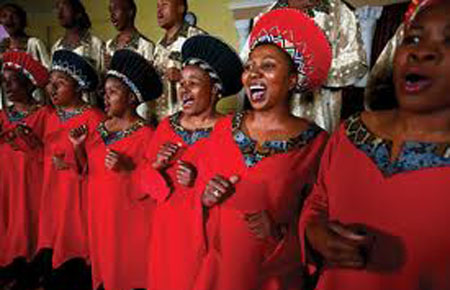
African Methodist Choir with Mara Louw
Handpick singers from a number of South African choirs, put the excellent Mara Louw out in front as the lead, take a number of hymns they all know from church, as well as the South African national anthem, and you have the ingredients for this excellent disc. Unlike so many hymns, these are performed with great, roaring joy (arranged for the most part by Louw) and recorded -- as it should be -- in a church. But unlike, say, American or Jamaican gospel, there's a sense of unity, rather than testifying; the voices embrace this music, but they sing it as it is, rather than using it as a lift-off point to testify.
The harmonies might have their written roots in Europe, but the voices singing them are ineffably African, bringing something different to the sound. There's a sense of control about it all, even when a speaking voice breaks in on "Jerusalem Ikhaya Lam," for instance, or on the rare instances some very spare percussion accompanies the a cappella voices. It's majestic, but that's the intent, a nexus between Europe and Africa, meeting in Christianity. That's even there on the by-now famous "Nkosi Sikelel'i Afrika," the country's very hymn-like national anthem, performed here as the closer, full-voiced and glorious, sung with unconcealed pride and joy. ~ Chris Nickson, All Music Guide
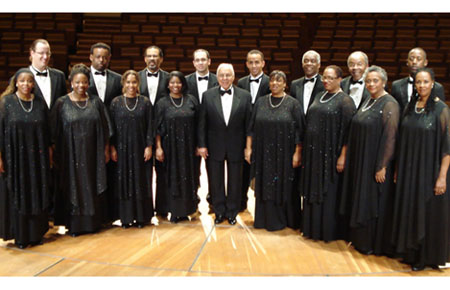
Albert McNeil Jubilee Singers
The repertory of The Albert McNeil Jubilee Singers is focused on the rich genre of African-American music known as Negro Spirituals. The arranged spiritual became known in the Winter of 1870 when an intrepid group of 11 singers -- seven women and four men -- representing the newly-established Fisk University in Nashville appeared at the Court of St. James in London. Queen Victoria's immediate acceptance helped this a cappella four-part singing by an ensemble of students to become known worldwide as a creative religious music evoking a deep sense of personal spiritual fervor.
Over 40 years ago (1968) the Singers undertook their first European tour. Today, after 18 sold-out European tours, 12 tours of the United States and Canada, tours of the Middle and Far East, Africa and South America, they are among the most honored singing ensembles in the world. They were selected three times to serve the U.S. State Department and USIS Cultural Exchange Program in areas of the world, known in those days as "behind the Iron Curtain," including East Germany, Hungary, Romania, Poland, Czechoslovakia, Yugoslavia, Iran, India, North and West Africa, Egypt, and the United Arab Emirates.
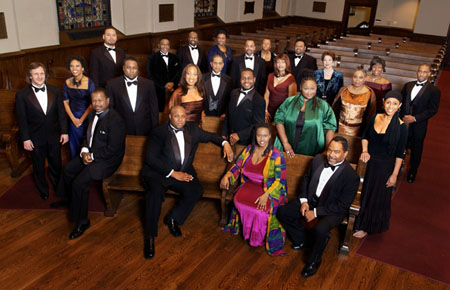
American Spiritual Ensemble
The American Spiritual Ensemble was founded by Everett McCorvey in 1995. Its members have sung in theaters and opera houses around the world, including the Metropolitan Opera, New York City Opera, Houston Grand Opera, and abroad in Italy, Germany, Britain, Scotland, Spain and Japan. The repertoire ranges from opera to spirituals to Broadway. The members of the American Spiritual Ensemble are soloists in their own right and the vocalists have thrilled audiences around the world with their dynamic renditions of classic spirituals, jazz and Broadway numbers highlighting the Black experience.
The mission of the American Spiritual Ensemble is to keep the American Negro spiritual alive. The repertoire ranges from spirituals to classical to Broadway and dance.
The American Spiritual Ensemble has presented diverse concerts throughout the United States, Europe and South America and has toured Spain seven times presenting over 80 concerts. Its founder, Everett McCorvey, is a native of Montgomery, Alabama. He received his degrees from the University of Alabama, including a Doctorate of Musical Arts.
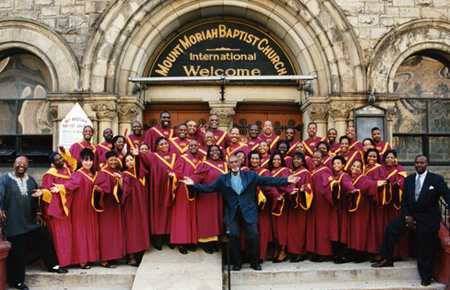
Arc Choir
The most powerful and moving a capella choir I've ever heard. Thirty-two voices strong, the Addicts Rehabilitation Center Choir is burning-with-faith gospel from Harlem. Every singer will tell you proudly that the Center pulled them up out of the gutter, out of the fires of hell. They sing to praise the Lord that they've lived to tell others. The Choir's power will wrench your soul, get your feet moving and your hands clapping-and might just blow you off the sofa. Stereophile's Larry Archibald says this is his Record To Die For: "Imagine 32 people singing in your living room...a sensational job of delivering the music..."
Birmingham Sunlights
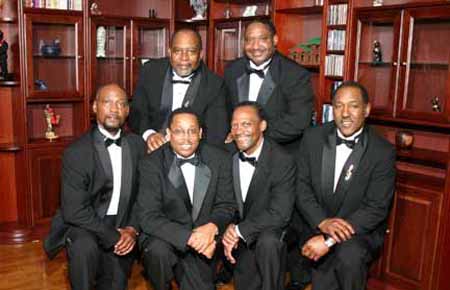
The Birmingham Sunlights developed their four-part a cappella style within the Church of Christ, where no musical instruments are permitted. Three brothers, James, Barry and Steve Taylor founded the group and are joined by Reginald Speights and Wayne Williams (replaced by current member Bill Graves) in performing well-known hymns as well as original pieces. Upon becoming aware of the rich Jefferson County gospel quartet tradition they sought training from a senior quartet, the Sterling Jubilees, to learn songs traditional to the area.
Besides appearing at numerous festivals across the nation, such as the National Folk Festival in Lowell, Massachusetts, the Sunlights have toured five countries in Africa and performed extensively in the Caribbean and Australia under the auspices of the U. S. Department of Information. Their recent dynamic performance on Garrison Keillor's American Radio Theater on National Public Radio won them many more fans across the nation. They recently performed in France as ambassadors of Alabama traditional culture.
Brazeal Dennard Chorale
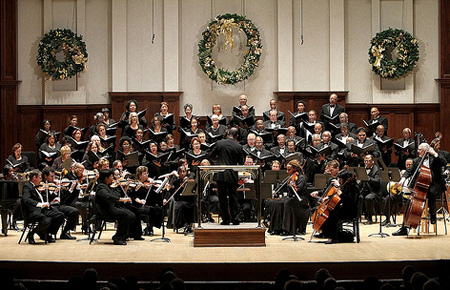
Founded in 1972 by Dr. Brazeal W. Dennard, recipient of The Maynard Klein Award in recognition of artistic excellence in the field of choral music, the Brazeal Dennard Chorale is a group of highly trained singers dedicated to developing the choral art to its highest professional level. The Chorale is deeply committed to the rediscovery and performance of significant choral works by African American composers. In 1985, Dr. Dennard subsequently organized the Brazeal Dennard Community Chorus as a community outreach program to encourage participation of members of the surrounding communities and to provide them with vocal training and professional performance opportunities. The Brazeal Dennard Youth Chorale composed of young singers between the ages of 13 and 19 was formed in 1982 to develop these students in the study of the choral art and encourage the dedication to and performance of challenging literature. Dr. Dennard celebrated 60 consecutive years of choral conducting in July 2007 and though retired, remains Artistic Director Emeritus of the Brazeal Dennard Chorale, which is now in the capable hands of artistic director, Dr. Augustus O. Hill.
Brooklyn Tabernacle Choir
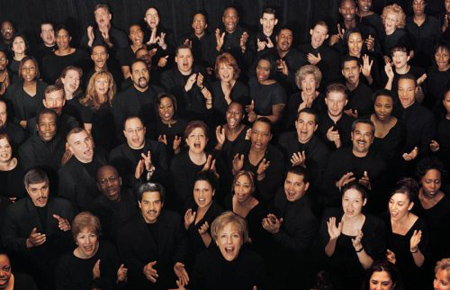
The Brooklyn Tabernacle Choir is directed by Carol Cymbala, the wife of Senior Pastor Jim Cymbala and the daughter of the church founder, the late Rev. Clair Hutchins. Although the Choir is composed of vocally untrained church members, it has been used by the Lord to present the love of God all over the world. The 285-voice choir has recorded three videos, three DVDs, and numerous albums, winning six Grammy Awards. "The choir represents all different walks of life and every kind of sin," Pastor Cymbala says. "You name it and we have someone who has been saved out of it, standing next to another one who has grown up in the church."
In the early 1980's, Carol Cymbala decided to "make a little tape for the church," and when she had trouble finding enough appropriate songs, she began writing them. Although she cannot read or write music, the Lord has given her a special gift to direct and create from the heart through the power of the Holy Spirit. After 25 years of recording and live performances, the Lord continues to use the Choir to carry the message of the Gospel around the world.
Cathedrals
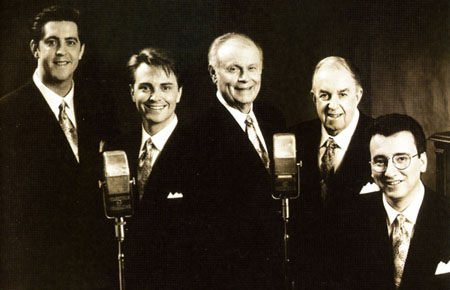
From 1964 through 1999, a group many cite as the finest example of Southern Gospel quartet singing ever toured the nation and the world. This section of SouthernGospelBlog.com's Reference section preserves the history of the Cathedral Quartet. Learn more about their members over the years, or about the groups they sang in before and after their Cathedral tenure. View a comprehensive discography, a list of the awards the group received, or group pictures. Or, find the lyrics to about 150 songs the Cathedrals recorded.
The Cathedral Trio-Bobby Clark, Glen Payne, and Danny Koker-was formed at the Cathedral for Tomorrow in Akron, Ohio in 1963. It started as an outgrowth of Earl and Lily Weatherford's ministry at Rex Humbard's Cathedral of Tomorrow. All of the original Cathedral members sang with the group at one point or another. George Younce sang with the Weatherfords in the 1950s; when he left the group along with several other other members, Earl Weatherford hired Armond Morales to replace him. Glen Payne joined the group at the same time.
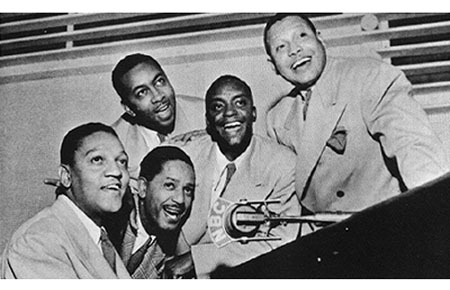
Charioteers
The origins of this long running team of harmonizers go right to 1930. Then universities both black and white found there was a mass audience for close harmony renditions of slavery-era spirituals. So university-linked choirs and small groups followed in the footsteps of the pioneering Fisk Jubilee Singers, to promote their places of education. Some black universities rebelled against what they saw as the racist undertones of the "old plantation songs" and students at Howard University went on strike in 1909 and again in 1919, refusing to sing the songs while Wilberforce University in Ohio, the oldest college for blacks in the USA, banned the "negro folk songs" outright. But by the late '20s all that was changing.
Quartet singing in colleges had become a coast-to-coast craze. Every black college boasted a dozen or more amateur singing groups and local and regional contests between what had become known as 'jubilee' groups. And so it came to pass that a professor of music at Wilberforce University, Howard Daniel, organised the Harmony Four.
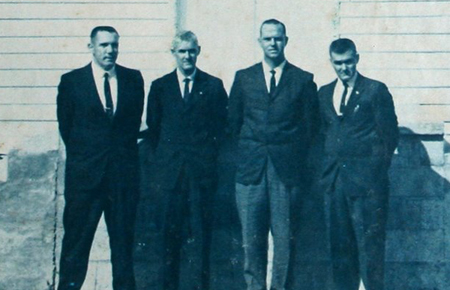
Chestnut Grove Quartet
From the Chestnut Grove Methodist Church in the mountains of southwest Virginia, this legendary (but little heard outside the region where they live) a cappella quartet has had a profound effect on gospel a cappella singing that far outstrips their local renown, influencing such local luminaries as Ralph Stanley, Doyle Lawson, and Ricky Skaggs, both in repertoire and performance style.
These selections are drawn from albums made by the group during the 60s, 70s, and 80s to capitalize on the enormous popularity of their local radio broadcasts and personal appearances in the mountainous areas of Virginia, Tennessee, Kentucky, North Carolina, and West Virginia. Stylistically, the quartet springs from the shape note singing schools of their youth and the Stamps-Baxter shape note hymnals so omnipresent in white Protestant churches of rural areas; their four part harmonies and parts singing is as old as the churches where they learned to sing.
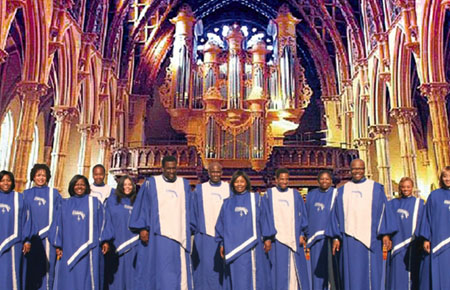
Chicago Mass Choir
With the soulful force of a traditional gospel choir and a heart filled with Praise & Worship, the Chicago Mass Choir has thrilled audiences around the globe with its penetrating vocals, dynamic musicianship, and stirring messages of hope and encouragement.
The Chicago Mass Choir has had no less than sixteen albums reach the Billboard gospel charts. It has garnered two Grammy, three Dove, and more than ten Stellar Award nominations. In 2012 and 2015, the Chicago Music Awards named it the city's Best Traditional Choir. The group has appeared on several television programs, including BET's Bobby Jones Gospel, Windy City Live and the Allstate Gospel Super Fest. In 2003, the choir sang "Pressing On" for the Grammy-nominated album, Gotta Serve Somebody: The Gospel Songs of Bob Dylan.
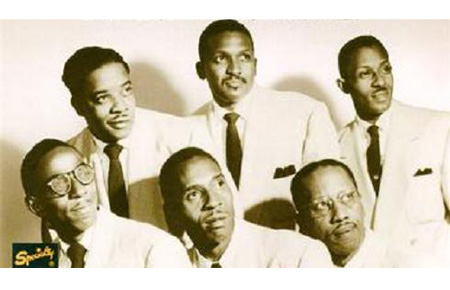
Chosen Gospel Singers
Despite notching a series of hits between the early 1950s and early '60s, the Chosen Gospel Singers remain one of the most elusive groups of gospel's golden era -- plagued by constant lineup changes, the ensemble's proper history remains sketchy at best, and even the exact involvement of their most famous alumnus, Lou Rawls, is something of a mystery. It's known that the Chosen Gospel Singers were formed in Houston in 1950, and originally consisted of J.B. Randall, Aaron Wyatt, Willie Rose, and two shadowy figures later recalled by their surnames of "Sheridan" and "Files". On the advice of manager Joe Johnson, himself a founding member of the Pilgrim Travelers, the group soon relocated to Los Angeles; upon arriving on the West Coast, the first of countless roster fluctuations struck, and in seemingly no time, Randall was the only surviving original member.
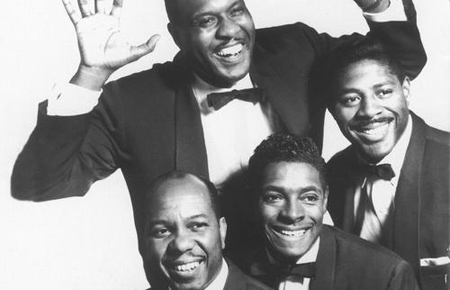
Deep River Boys
The Deep River Boys had their genesis on the campus of Hampton Institute in Virginia in the mid thirties. They found their first success in winning radio's "Amateur Hour" competition. This notoriety led to opportunities to appear on stage and in radio. During the Second World War the group did extensive touring for the USO and provided entertainment for American troops overseas. The members for most of the life of the group were Harry Douglas, Jimmy Lundy, Ed Ware, and Vernon Gardner. In the late forties the group toured with Bill "Bojangles" Robinson, and made some very early TV appearances with Ed Sullivan and Milton Berle.
The group continued to have sporadic record releases on labels such as Vik (an RCA subsidiary), Gallant, and Wand. The Deep River Boys appeared well into the 1980s, fifty years after their founding, and have left a legacy of fine performances and recordings, and have set a standard for professionalism and longevity that are to be envied by everyone.
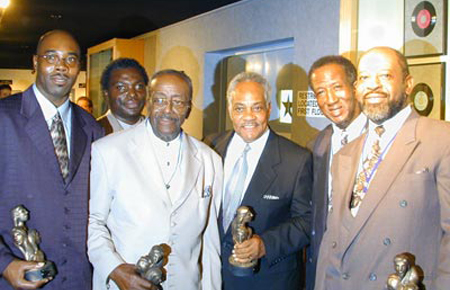
Dixie Hummingbirds
The Dixie Hummingbirds are probably the best known of the black gospel quartets, having performed for over 50 years throughout America and Europe. They became the inspiration for countless R&B and soul singers, from Jackie Wilson and Clyde McPhatter to Bobby "Blue" Bland and The Temptations.
The group was formed in Greenville, South Carolina, by James Davis in 1928, a year before the Great Depression. The members were Barney Gipson (lead), Davis (tenor), Barney Parks (baritone), and J.B. Matterson (bass). In their early teens they sang in the Bethel Church of God in the junior chorus. Soon Fred Owens became the bass and the group became the Sterling High School Quartet. Davis changed the name to the Dixie Hummingbirds.
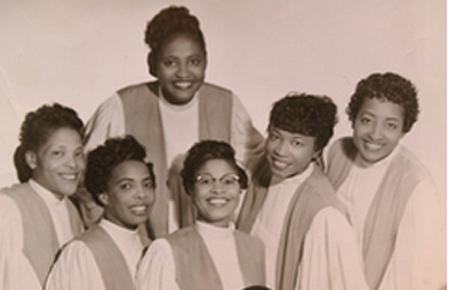
Dorothy Love Coates & The Original Gospel Harmonettes
Dorothy Love Coates was a composer ("I'm Holding", "Every Day Will Be Sunday"). She was also leading The (Original) Gospel Harmonettes, a female aggregation, who sang Gospel songs.
In fact, this group was formed in 1940, and its first members were Mildred Madison Miller, Odessa Glasgow Edwards, Vera Conner Kolls, Willie M. Brooks Newberry and their composer was Evelyn Starks.
The first recording of this group was in 1949, without Dorothy Love Coates, who started her recording with the (Original) Gospel Harmonettes in 1951.
In the middle 1950s, the group was composed of D. Love, M. Miller, W. Newberry, V. Kolls, O. Edwards, with Herbert "Pee Wee" Pickard, piano. Their records were under the labels Victor, Speciality, Nashboro, Andex and Savoy.
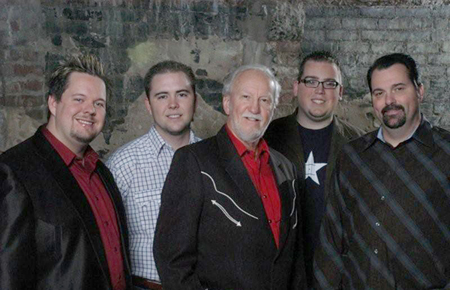
Doyle Lawson & Quicksilver
The gospel music that we record and perform on stage has always been important to me. Doyle Lawson & Quicksilver have made many more gospel recordings than secular ones. It is apparent to me that the folks who buy our music and come to our concerts feel, as I do, that there is no better message than the message of Jesus Christ. On the first Sunday of May, in 1985, I rededicated my life to our Lord Jesus. It is my fervent hope that my "musical mission" will lead others to Him.
As far back as I can remember, I loved the sound of music. Just about everyone listened to The Grand Ole Opry, and our family was no exception. Though I listened to all the stars on the Opry, the group that impressed me most was Bill Monroe and His Blue Grass Boys. His music was different, more intense. High lonesome is the term we used for it. I could hardly wait for Saturday nights to arrive so I could listen. I decided early on that I wanted to play that kind of music.
Edwin Hawkins Singers
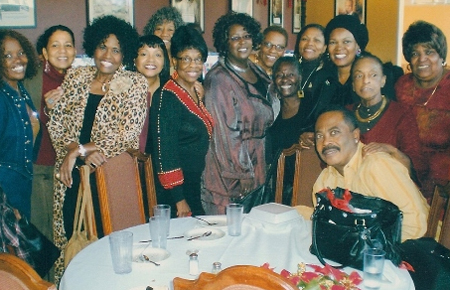
Edwin Hawkins is a musical multi-talent and since 30 years he has a reputation as ideal and reformer of gospel and R&B. But only very few people know, that Edwin Hawkins is now working since nearly 50 years on the big stages of the world.
He started his musical career as a five year old Pianist for the Hawkins Family. When he was seven, he took over full-time playing duties for many years for the Hawkins Family group in the end of the 40's. 1957 he recorded the first album with the Hawkins. 1968 he created with Oh happy day the greatest Gospelhit of all times and in-between the lines of Gospel, R&B and Soul he developed a new musical style, that became well-known in the Gospel-Scene as Contemporary Gospel Music and which is influencing Popmusic even today.
Emmanuel Quartet
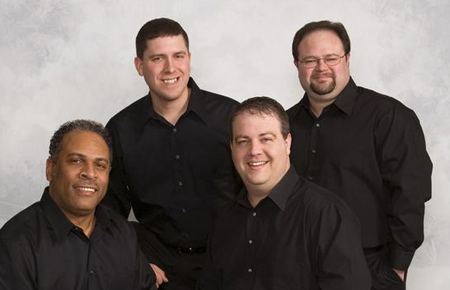
The Emmanuel Quartet is an acappella gospel group that has been singing since 1993. In 1997 the quartet won a national talent competition in Jackson, TN. The group has toured throughout the United States and in 2007 sang for 12,000 people in Jakarta, Indonesia for evangelistic meetings. In June of 2009 the quartet participated in an evangelistic effort in Silang, Cavite, Philippines. The quartet has released five albums independently and in 2010 completed our sixth project titled "Hymns - By the Book II."
From the very beginning, The Emmanuel Quartet has always kept a vision in mind of what the Lord would have us to do. God has brought four men from out of the world to minister to His people in a time when ministry has been used for personal gain and not for His glory. We feel that it is important for our group to live what we share with others. The members of the quartet are not only musicians by desire but are ministers of the gospel through music. Phillip, Joey, Tim, and Ryan are committed to spreading the news of Christ's soon return.
Fairfield Four
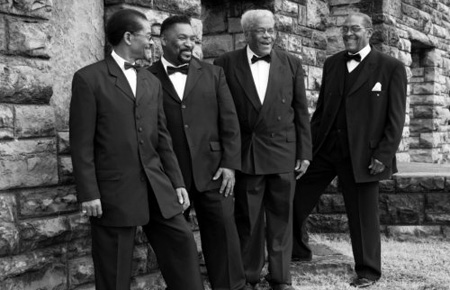
The Fairfield Four, the most distinguished proponents of traditional African American a cappella gospel singing working today, were organized in 1921 by Reverend J.R. Carrethers, assistant pastor of the Fairfield Baptist Church in Nashville, Tennessee. The group, initially a trio comprised of the Reverend's two sons, baritone Harold and bass Rufus along with tenor lead John Battle, evolved into a quartet with the addition of a second lead, Lattimer Green, later replaced by Samuel McCrary.
The quartet sang a cappella, performing traditional spirituals such as "Ezekiel Saw the Wheel" and "Dry Bones" arranged and taught to them by Reverend Carrethers. In time, the Fairfield Four became professionals with Rufus Carrethers and Samuel McCrary emerging as singers of reputation, Carrethers for his rhythmic style of bass singing, and McCrary for his exceptional clear tenor voice.

Fisk Jubilee Singers
On November 16, 1871, a group of unknown singers -- all but two of them former slaves and many of them still in their teens -- arrived at Oberlin College in Ohio to perform before a national convention of influential ministers. After a few standard ballads, the chorus began to sing spirituals -- "Steal Away" and other songs" associated with slavery and the dark past, sacred to our parents," as soprano Ella Sheppard recalled. It was one of the first public performances of the secret music African Americans had sung in fields and behind closed doors.
The Jubilees not only introduced the world to the music of black America, they championed the liberties of all Americans," says Andrew Ward, co-writer of the documentary and author of "Dark Midnight When I Rise: The Story of the Jubilee Singers." More than 125 years later, the Jubilee Singers of Fisk University continue the concert tradition begun by that courageous original chorus of former slaves.
Five Blind Boys of Alabama
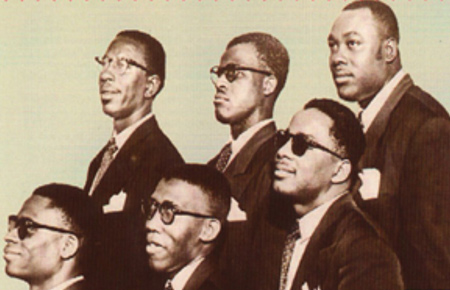
Much in the world has changed since the original version of the Blind Boys of Alabama first raised their voices together. That was in 1939, when the members were just kids at the Alabama Institute for the Negro Blind in Talladega, Ala. Today, more than 70 years later, founding member Jimmy Carter can look back on a career far beyond what he and his colleagues could imagine at that time. The group has won a long list of awards, including Lifetime Achievement honors from the Grammys and the National Endowment for the Arts, entertained around the world, been profiled on 60 Minutes, sung for two Presidents at the White House and been inducted into the Gospel Music Hall of Fame.
Though the group has recorded and performed with a few country artists, along with others as diverse as Ben Harper, Tom Petty, Peter Gabriel and Prince, they never crossed the line and committed to doing a project inspired by the country genre until now, with the release of Take The High Road on Saguaro Road Records. This landmark recording draws from modern and traditional country to enrich the group's gospel-rooted sound with fresh and illuminating insight.
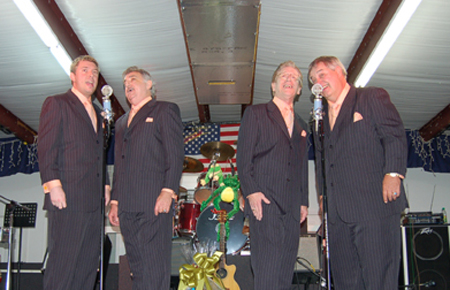
Florida Boys
For sixty years fans have flocked to see The Florida Boys, the only male quartet that was consistently prominent from the 1950's to July 2007. With No. 1 hits like "Standing On The Solid Rock", "When He Was On The Cross, I Was On His Mind", "Lead Me To The Altar" and "I Lean On You Lord" this legendary group has recorded some 100 albums and attained a following of devoted listeners.
So what is at the heart of their success? Les Beasley, who sang lead and served as manager of the group, says it's their commitment to the calling they each have. We sincerely believe we have been doing what we were put on earth to do. We wanted our audiences to have a good time but it was most important that they hear the message in each song.
The Florida Boys' national television appearances consist of "The Today Show", "TNN's Prime Time Country", "Crooke & Chase", "Gaither Homecoming Videos" and their own "Gospel Singing Jubilee" which they hosted for many years.
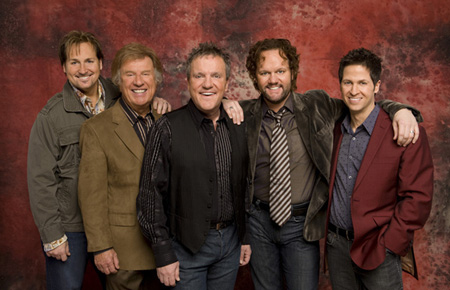
Gaither Vocal Band
The Gaither Vocal Band got its start in the early 1980s with four guys singing around a piano backstage before a Bill Gaither Trio concert. Gary McSpadden, Steve Green, Lee Young and Bill Gaither were just having fun, harmonizing on "Your First Day in Heaven" when Bill decided they should try out their new sound on a live audience that very night. The audience went wild...and that impromptu performance marked the beginning of an era.
Now, for more than a quarter century, the Gaither Vocal Band has created a legacy of award-winning excellence that has forever raised the bar for male harmony. The list of men who have comprised the Gaither Vocal Band over the years reads like a "Who's Who" among the gospel music industry's best-loved voices, including: Gary McSpadden, Steve Green, Lee Young, Jon Mohr, Larnelle Harris, Michael English, Lemuel Miller, Jim Murray, Mark Lowry, Terry Franklin, Buddy Mullins, Jonathan Pierce, David Phelps, Russ Taff, Guy Penrod, Marshall Hall and Wes Hampton.
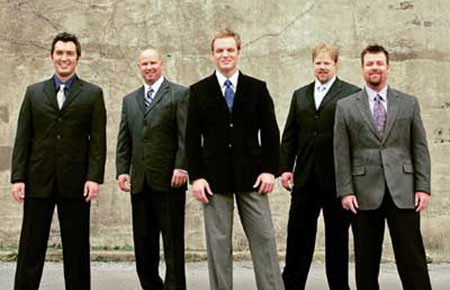
Gold City
Thirty years ago in the small historical gold rush town of Dahlonega, GA, the formation of one of the top groups in the southern gospel industry came together and started making history.
With over 49 hits songs and over 40 recordings, Gold City has earned numerous awards including Album of the Year, Song of The Year, Group of the Year and Vocalists of the Year, as well as many Dove nominations including a Dove award for There Rose A Lamb.
Traveling the United States and Canada over 200 dates a year, Gold City has an unparalleled dedication to the ministry of spreading the gospel.
As they continue to add hit songs to the list, Gold City also continues to bring glory and honor to God through the greatest music on earth.
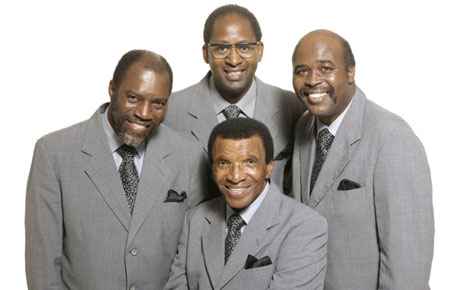
Golden Gate Quartet
From 1934 to today, from the churches of Virginia to the most prestigious international stages, the story of The Golden Gate Quartet is that of more than 60 years of golden age spiritual. An exceptionally long life due to the permanence of a style where individualisms have always given way to the importance of the quartet.
Four students from Booker T. Washington college (Virginia), Willie Johnson (baritone), William Langford (tenor), Henry Owens (second tenor) and Orlandus Wilson (bass), united by the same passion for music, create a quartet, The Golden Gate Jubilee Singers, a name chosen long before San Francisco inaugurated a bridge of the same name...Coming from very religious families, the four young men have participated from their childhood in the "junior choir" of their church and then the "glee clubs"... a musical style which they adapt and codify, harmonising in the mood of the day the scarce sentences of old traditional chants.The "Gate's Style" is thus born of the interpretation of texts reconstituting the atmosphere of the dramatic events lived by the black people.
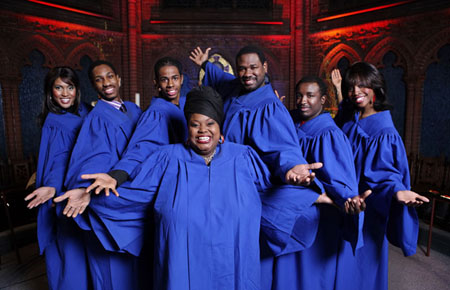
Golden Gospel Singers
The Golden Gospel Singers began to spread their joy and talent in a small country church in Northern Germany. It was 1991, and Bob Singleton, founder of GGS, had been hoping for an opportunity to take some of his most talented gospel singer friends to Europe.
When the door of opportunity was opened, GGS was ready. In the early days of GGS, all artists came from Harlem, USA. Today, how ever, touring artists represent cities all over America. They come from big cities like New York and Los Angeles, mid-size placeslike Columbus, Ohio, and small towns like Greenville, South Carolina. Sometimes formal auditions are held, and sometimes that eager young singer will perform over the telephone, trying to win that European tour opportunity.
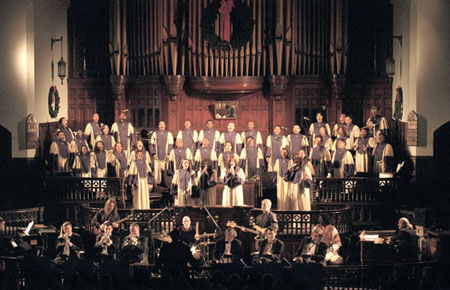
Montreal Jubilation Gospel Choir
The Montreal Jubilation Gospel Choir under the direction of Prof. Trevor W. Payne, has, in the past decade evolved into what is now considered to be one of the world's finest choirs.
It was in 1982 that Prof. Trevor W. Payne, a native of Barbados, started, with Daisy Peterson Sweeney (sister of Oscar Peterson), what is now the MJGC. It was to be a one-time event: the choir was to perform as part of the 75th Anniversary of Union United Church in Montreal. The concert featured guests Oliver Jones, Ranee Lee and Charlie Biddle. The concert was a smash, and the group, needless to say, hasn't stopped singing!.
The Montreal Jubilation Gospel Choir has performed for various heads of state, including Nelson Mandela during his 1989 visit to Canada, and Queen Elizabeth II. They have performed with, among others, Celine Dion, Foreigner, New Kids on the Block, Michael Bolton and Ray Charles.
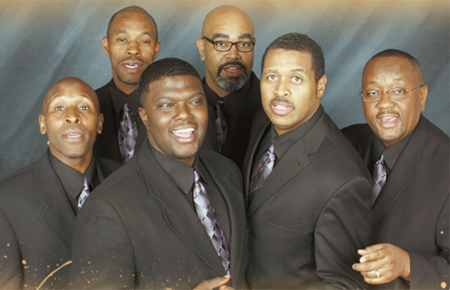
Mutual Agreement
In the fall of 1993, six young men formed and a capella sextet called Mutual Agreement, which means "A Covenant with God." Their intention is to spread the Word of God through song, bringing hope, strength and encouragement to all who will listen.
Each member brings his own individual gifts, talents and creativity to the group. The group uses the human voice as the chief instrument of their performance. Each member mutually agrees that their music ministry will not be kept confined within the traditional walls of the church, their mission field consists of ministering to the sick and shut-in, incarcerated youth and adults, hospitals, evangelistic meetings and wherever there is a need to provide encouragement through song.
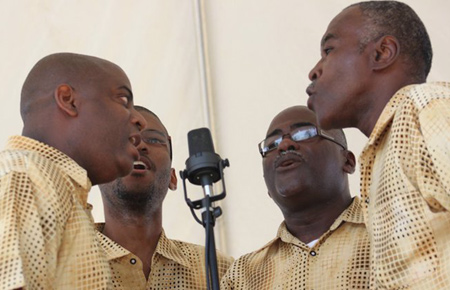
Paschall Brothers
In March 1981 in Norfolk, Virginia, Rev. Frank A. Paschall, Sr. and five of his seven sons came together to form their very own acappella gospel singing group. The Rev. Frank Paschall & the Paschall Brothers. Under the guidance and direction of their father and with the help of God, these young men have become one of the most unique and innovative singing groups in their field today.
In 1984, the group was reformed after the departure of two of the five brothers. During this turbulent time of transition, the group was blessed with the gifted voice of Renard Freeman. Also a native of Norfolk, Freeman possessed the same drive and dedication of the group that allowed God to continue to bless this ministry of song. At the time, the group consisted of Rev. Frank Sr., Frank Jr. Tarrence, William and Renard Freeman. Since their existence, this group of young men has been/ and are a blessing of encouragement to thousands upon thousands of people all over the eastern seaboard.
Pilgrim Travellers
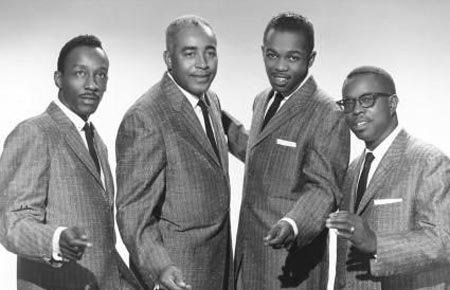
The Pilgrim Travelers were formed by Joe Johnson and the Davis brothers in Houston in the early 1930's. By 1942, the group had moved to Los Angeles and was joined by Kylo Turner and Keith Barber. In the early years they mimicked the style of the Golden Gates' jubilee and the Soul Stirrers' gospel. Eventually the excellence of their leads set them apart. In 1945, J. W. Alexander joined the group and became their manager. Under Alexander, the group became more flamboyant in their showmanship often wrecking the churches they sang in, while charming the women. In 1947 the group made some records for small L.A. labels. Later that year Art Rupe signed them to Specialty Records just after they got a new baritone, Jesse Whitaker. Rupe created one of the first companies to nurture African-American gospel music. Originally, the Pilgrim Travelers were recorded a cappella.
Eventually, the floor was miked to pick up their percussive foot tapping which was marketed as walking rhythm spirituals. The group enjoyed immense popularity as a result. Between 1947 and 1956, the Pilgrim Travelers recorded over a hundred sides on Specialty. During their reign, they influenced such singers as Ray Charles, Lou Rawls and Sam Cooke. Though the members of the group have faded from memory, their musical legacy will live on.
Reconciliation Singers Voices of Peace
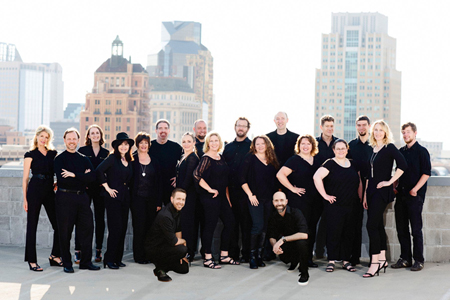
Founded in 2000 by Artistic Director Julie Adams, RSVP's mission is bringing people together through the arts and giving back to the community. RSVP nurtures the community with its highly-praised, dynamic concerts while providing concrete, financial contributions that go on making a difference long after the applause. All members of RSVP donate their time so that all proceeds from concerts can go to local organizations in need.
The versatile, skilled singers of RSVP perform everything from classical choral literature and madrigals to contemporary music, freedom songs, folk tunes, and jazz. Each creative and artistic concert is tailor-made to suit the audience and the organization being supported.
Sensational Nightingales
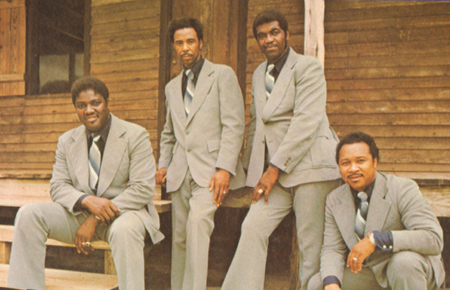
The Sensational Nightingales were assembled in the '40s. In 1957 they appeared on the Gospel Train tour with The Clara Ward Singers and five other big-name gospel acts. Members included Julius Cheeks (lead), Carl Coates (bass), JoJo Wallace (tenor), Howard Carroll (baritone), and Paul Gwens (tenor). Their noted hit was "See How They Done My Lord." One of the earliest gospel quintets, they recorded and toured throughout the 1990s. Many of their '50s and '60s sides (found on MCA reissues) feature the stunning vocals of Rev. Julius Cheeks. As with Archie Brownlee, Cheeks reaches an intensity that distorts the actual recordings, and his style has been heavily "borrowed" by Bobby Bland, Wilson Pickett, and others. The later recordings by Charles Johnson are smoother and slicker, but still top-notch. ~ Bil Carpenter & Billy C. Wirtz, All Music Guide
Singing Men
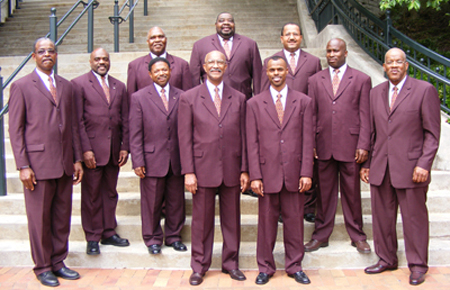
The motto for the Singing Men is "A Ministry That Makes A Difference". Our sincerest desire is to utilize the gift of music received from God to make a difference in our own lives as well as the lives of those with whom we share our ministry.
In 1977, a quartet was formed at then Oakwood College in Huntsville, Alabama comprised of Leroy Hampton, Elverton Mapp, Clinton Williams, and Douglas Bell. Providing music for the weekly Bible radio program "Your Bible Speaks", hosted by Dr. Elder Richard Tottress, they became known as "The Your Bible Speaks Men of Music".
Word of the quartet spread quickly and, within a year, other men joined and the quartet eventually grew into a male chorus. As the notoriety of the male chorus expanded, their performances became much sought after events.
Soul Stirrers
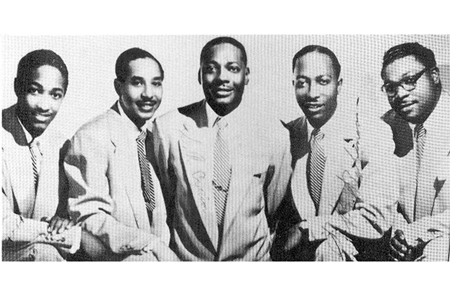
The first Soul Stirrers 78 to feature Cooke, "Jesus Gave Me Water," was a major hit, and with his good looks the young singer made an instant impact with female audiences, in the process becoming the gospel circuit's first sex symbol. The group's popularity continued to soar, but as the Soul Stirrers entered their third decade, the daily grind began to wear on its members, and soon Bruster retired; he was replaced by baritone Bob King, who also doubled as a guitarist, becoming their first-ever steady instrumentalist. In 1954, the Soul Stirrers briefly added Julius Cheeks to their roster; after lending his raspy vocals to a recording of "All Right Now," however, contractual obligations forced him to exit almost as quickly as he arrived. In 1956, Cooke finally crossed over to the pop market, and was replaced by ex-Highway QC Johnnie Taylor; while Taylor himself would also enjoy pop success in the years to follow, he failed to command the same devotion as his predecessor. Lineup changes continued regularly in the years to follow, but the Soul Stirrers forged on, with new, younger members keeping the group afloat into the 1990s.
Staple Singers
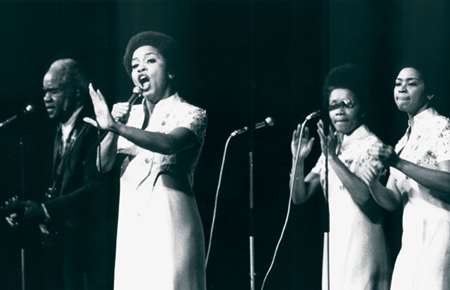
The Staple Singers were an American gospel, soul, and R&B singing group. Roebuck "Pops" Staples (1914-2000), the patriarch of the family, formed the group with his children Cleotha (b. 1934), Pervis (b. 1935), Yvonne (b. 1936), and Mavis (b. 1939). They are best known for their 1970s hits "I'll Take You There", "Respect Yourself", and "Let's Do It Again".
The family began appearing in Chicago-area churches in 1948, and signed their first professional contract in 1952.(1) During their early career they recorded in an acoustic gospel-folk style with various labels: United Records, Vee-Jay Records, Checker Records, Riverside Records, and then Epic Records in 1965. While the family surname is "Staples", the group used the singular form for its name, resulting in the group's name being "The Staple Singers".
Swan Silvertones
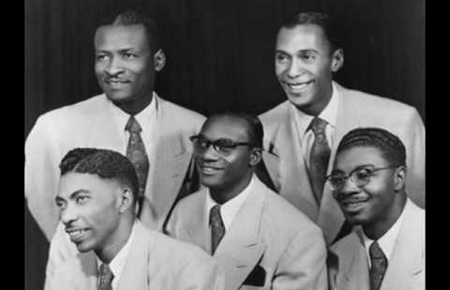
The greatness of a vocal group depends on demonstrated influence on quartets that have followed them. No where is that clearer than with the Swan Silvertones and their famous lead singer, the Reverend Claude Jeter. Jeter's use of a falsetto lead revolutionized the way we think of vocal harmony. In more than sixty years of singing, the Swan Silvertones excelled in vocal harmony and set the stage for countless groups that came after them.
Their radio show and live appearances made the Swan Silvertones one of the most popular quartets in the south. In July 1946, the Swan Silvertones were given some time off from their radio show to record for King records in Cincinnati. The group now consisted of Claude Jeter (lead), Albert Reed (tenor), Solomon Womack (baritone), John Myles (baritone) and William Johnson (bass singer and guitar). In contrast to Jeter's falsetto lead, Womack was added to the group to provide a hard, gospel lead.
Take 6
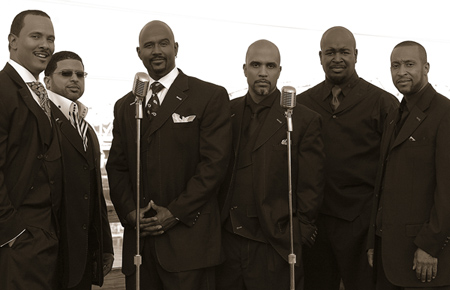
Back in 1980, Claude McKnight formed an a cappella quartet, The Gentlemen's Estate Quartet, at Oakwood College in Huntsville, Alabama, where he was a freshman. He auditioned fellow students for the hobby group. The Gentlemen were rehearsing in a campus bathroom, getting ready for a performance, when Mark Kibble walked by and heard them singing. He joined the harmonizing, adding a fifth part, and ended up singing with them onstage that very night. Mark later invited Mervyn Warren to join the group, and the sound of Take 6 was born. Although the sonic structure was now firmly in place, the name was not; the group performed under the moniker "Alliance."
The group performed in local churches and on campus over the next years, with members changing due to college's inevitable comings and goings. In 1985, the lower half of the group (bass, baritone, and second tenor) left upon graduating. At that time, Alvin Chea, Cedric Dent, and David Thomas joined.
Wings Over Jordan
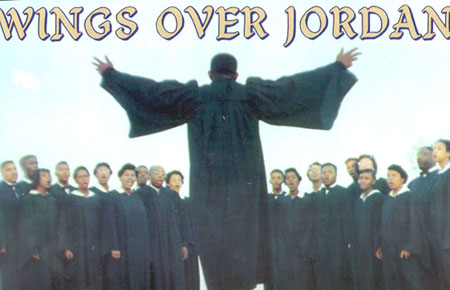
On 9 Jan. 1938 the group adopted the (Image)(Image) name Wings Over Jordan Choir and The Wings Over Jordan national broadcasting began. WOJC Choir, ca. 1940s. WRHS. performed a decade long series of weekly, sometimes daily, programs for CBS and WGAR exclusively. WOJC was the first full-time professional black choir in America. At its height, the choir performed before sold-out, non-segregated audiences in over 40 states, 5 European countries, Canada, and Mexico. During WORLD WAR II, under USO sponsorship, WOJC toured Army camps in Europe. WOJC's fame resulted in the publication of a songbook and record album, a movie contract, performances with major symphony orchestras, and an invitation to sing at the White House. The choir received numerous honors, including radio's prestigious Peabody Award.
Wiregrass Sacred Harp Singers
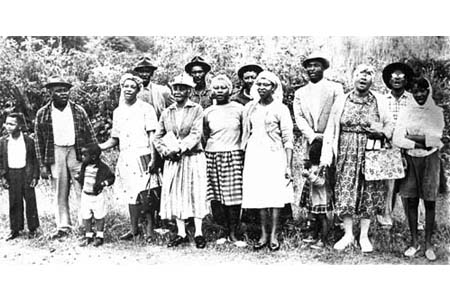
African American Sacred Harp singing conventions in southeastern Alabama began near the last third of the 19th century. While singing, for the most part, the same repertory of Sacred Harp music as their Anglo American counterparts, a vocal stylistic difference is clearly apparent.
During a typical convention singing the participants arrange themselves in a square according to voice part, the basses facing the trebles, and the tenors facing the altos. A song leader stands in the middle of the square leading the singers first through the notes to the songs and then through the lyrics, a practice emanating from the traditional singing school classes, where singers are taught to sing the notes and then the words.
Groups:- All | Vintage Harmony Groups | World Groups | Gospel Groups | Vocal Jazz Groups
Female Contemporary | Mixed Voice Contemporary | Male Contemporay | Contemporary Christian
Male Choral | Female Choirs | Mixed Voice Choirs | Early Music
Boyschoirs | Girl Choirs | Mixed Voice Childrens Choirs
Select a Category |
Want to Sing? - Find a Chorus Near You
List of Choruses by State | List of Choruses by City