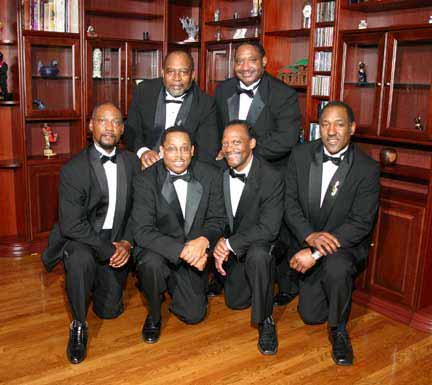
Birmingham Sunlights

Birmingham Sunlights gospel

In Jefferson County, Alabama, beginning in the first quarter of the twentieth century, there developed a tradition of African-American a cappella quartet singing that was to have such widespread influence on the recorded gospel music industry that numerous record companies applied "Birmingham" to recording artists who were not even from Alabama, hoping to take advantage of that city's reputation as the heartland of gospel quartet music. With a rich, fluid and mellow intertwining of voices, the Birmingham Sound" is a direct-line ancestor to the most popular versions of African-American harmony singing, from the Ink Spots and the Platters to the Temptations, Take Six and Boyz 2 Men.

In 1926, the Birmingham Jubilee Singers traveled from Jefferson County to record in Atlanta, after being discovered by a Columbia Records talent scout. They achieved popularity nation wide and back home through their live radio broadcasts over stations WAPI, WVRC and WJLD. In the following two decades, a number of other Jefferson County Quartets--the Famous Blue Jay Singers, the Dunham Jubilee Singers, and the Four Great Wonders--followed in the footsteps of the Birmingham Jubilees as immensely popular recording artists.

The "Birmingham Sound" was nurtured by the historical migration of African-Americans from the farm to the industrial mill and mine settlements of Jefferson County in the early twentieth century. Quartet "trainers," such as Charles Bridges, R. C. Foster, Son Dunham, and Gilbert Porterfield, products of music teachers from Tuskegee and Fisk, in turn taught legions of quartet singers, combining those traditional harmony lesson stressing timing and articulation with many of the more modern influences of jazz. The result was a dynamic new sound which emerged from Jefferson County's mining camps and mills towns and became immensely popular in urban areas across the country, from New York to Los Angeles.

The "Birmingham Sound," characterized by close harmony, a stressing of vocal attack and release, exchanging lead vocals from singer to singers, and a "pumping" rhythmic bass vocal, set the standard for gospel quartet music. While a handful of Jefferson County quartets vigorously pursued recording and touring careers, dozens of other quartets were content to remain at home performing only on weekends. According to gospel music historian Doug Seroff, "During the 1930s and 1940s practically every block in the black neighborhoods from Dolomite to Leeds boasted at least one quartet."

Those quartets who chose not to remain at home carried the "Birmingham Sound" far and wide. The Kings of Harmony, originally from Winona, are credited with introducing the New York area to gospel quartet. The Famous Blue Jay Singers of Birmingham, led by Silas Steele, moved to Dallas in the 1930s and Chicago in the 1940s. The Heavenly Gospel Singers of Birmingham relocated first to Cleveland and finally to Los Angeles. Legendary quartet trainer Gilbert Porterfield, who had, in the 1920s, performed with the Red Rose Quartet of Bessemer, took the "Birmingham Sound" to New Orleans where he was a gifted lead singer and arranger with the Four Great Wonders of New Orleans and the New Orleans Chosen Five. With the emergence of popular music and rhythm-and-blues in the 1950s, and its influence on contemporary gospel, the more traditional quartet music suffered several decades of decline. However, beginning in the early 1980s, there developed a new interest in and enthusiasm for the "Birmingham Sound."

Discography

For Old Time's Sake

Birmingham Sunlights gospel
Hallelujah
If You Miss Me
Gospel Train
Somewhere To Lay My Head
Jesus Gave Me Water
The Last Mile Of The Way
Southland Singing
Dig A Little Deeper
Roll, Jordan
Today
In The Garden
Take It To The Lord
Gotta Find My Way
It's Gonna Rain

For three-quarters of a century the tradition of black a cappella quartet singing has been associated with Jefferson County, Alabama which many view as America's capital of gospel singing. Between university musical education and the tutelage of groups such as the Sterling Jubilees, Shelby County Big Four and the Four Eagles, the Sunlights have become the inheritors of this tradition. With that unusual background however, as you might suspect, they do not limit themselves to just traditional songs but compose new material to expand the field of gospel music. You'll also notice that there are five members in this quartet. The Soul Stirrers are credited with that innovation in order to have a lead 'step out front' without losing the quartet harmonic complexity. The Birmingham Sunlights are one of this reviewers favorites.

3341 CD $14.98

For More of The Primarily A Cappella On-Line Catalog

Vocal Jazz | Doo Wop | Contemporary | Barbershop | Christian | Collegiate | World | Choral
Patriotic | The Groups | The Directors | The Vocal Coaches | Choral Development
Arrangements | Vintage Harmony | Christmas | DVDs | Instructional for Singers

The Harmony Sweepstakes A Cappella Festival

RSS - New Releases

Site Map | A Cappella News | Regional Newsgroups | RSS a cappella feeds

To find a specific song on any recording (or to find recordings by group name or CD title),
pick the search method and type the item you are searching for here:

By Song Title
By Artist Name
By Title
By Music Category


    or use our Power Search for more search options


All Rights Reserved   All Content, page design, CGI Copyright © United Singers International