Early Vocal Music Songbooks & Sheet Music

Human’s love of singing has been demonstrated from the very beginning of our history and was one of the first musical styles to be formalized with songs and written music. From Gregorian chant and mediaeval music thru the Renaissance there was great emphasis on the human voice and the songs were often sung a cappella. Although challenging this style of singing can be a lot of fun and every choir and ensemble should have some of these time-tested songs in their repertoire.

Noah Greenberg: English Medieval and Renaissance Songbook

This colleciton of pieces represent the high art and refinement of the choral song from several countries during the age of the Renaissance. The vocal chamber music in this collection was designed for entertainment in a palace chamber or the home. All of the represented forms in this collection used both the familiar style of the homophony as well as polyphony. the pieces can be perormed with multiple voices to each part or s little as one voice for each part. For the german and French songs, the original text is provided as well as an english paraphrase. For one to six voices.

9589 SONGBOOK $12.95

John Leavitt: The Renaissance Singer

What if I Never Speed, John Dowland
April Is in My Mistress' Face, Thomas Morely
Musica, die ganz lieblich Kunst (Music, Most Wondrous Lovely Art), Johann Jeep
Innsbruck, ich muss dich lassen (Innsbruck, I Now Must Leave You), Heinrich Isaac
Je le vous dirai! (Do not dare I say it!), Pierre Certon
Bonjour, mon coeur (Good Day, Sweetheart), Orlando di Lasso

This colleciton of pieces represent the high art and refinement of the choral song from several countries during the age of the Renaissance. The vocal chamber music in this collection was designed for entertainment in a palace chamber or the home. All of the represented forms in this collection used both the familiar style of the homophony as well as polyphony. the pieces can be perormed with multiple voices to each part or s little as one voice for each part. For the german and French songs, the original text is provided as well as an english paraphrase.

1552 SONGBOOK $5.95

Thomas Tallis: A Tallis Anthology

Audivi vocem de caelo
Derelinquit impius
Hear the voice and prayer
If ye love me
In ieiunio et fletu
In manus tuas
Laudate Dominum
Mihi autem nimis
O Lord, give thy Holy Spirit
O Lord, in thee is all my trust
O nata lux
O sacrum convivium
O salutaris hostia
Purge me, O Lord
Salvator mundi
Te lucis ante terminum
Verily, verily, I say unto you

This anthology comprises 17 of Tallis's shorter choral pieces, and is designed to provide choirs and students with a pratical and interesting cross-section of the composer's smaller-scale ourput. These are pratical perfoming editions, transposed where necessary, supplemented by a full critical apparatus for each peice and a general introduction to the anthology.

6605 SONGBOOK $13.95

Kings Singers: English Renaissance

All Creatures Now
As Vest Was from Latmos Hill Descending
Drop Drop Slow Tears
Fire Fire
Haec Dies
Hunting the Hare
If Ye Love Me
Round of Three Country Dances in One
The Silver Swan (Gibbons)
Sing Joyfully
The Three Ravens
Weep
O Mine Eyes

A variety of music from the great flowering of the English choral art in the king'singers' own editions. Includes a general introduction to the era and background on each work. A must for every high school and college choral library! Includes pieces by: William Byrd (Sing Joyfully, Haec Dies), Orlando Gibbons (Drop Drop Slow Tears, The Silver Swan), John Bennett (All Creatures Now, Weep O Mine Eyes), Thomas Weelkes (As Vesta Was), Thomas Morley (Fire Fire), Edward Pierce (Hunting the Hare), Thomas Ravenscroft (A Round of Three Country Dances, The Three Ravens), Thomas Tallis (If Ye Love Me).

6123 SONGBOOK $6.95

Kings Singers: European Renaissance

Au Joli Jeu
Chi Chilichi
Dindirin, Dindirin
Hark All Ye Lovely Saints
I Love Alas I Love Thee
Il Bianco E Dolce Cigno
Innsbruck, I Now Must Leave Thee (Innsbruck, Ich Muss Dich Lassen)
Je Le Vous Dirai
Otro Tal Misacantano
Parmi Di Star
Tanzen Und Springen
Triste Depart

Here are 12 of the King's Singers favorite works of the European Renaissance in their own performing editions. Includes performance notes and translations for each work. Spanish: Otro tal misacantano (Anonymous), Dindirin, dindirin (Anonymous); French: Triste depart (Nicolas Gombert), La, la, la, je ne l'ose dire (Pierre Certon), Au joli jeu du pousse avant (Clement Janequin); German: Tanzen und Springen (Hans Leo Hassler), Innsbruck, ich muss dich lassen (Heinrich Isaac); Italian: Parmi di star (Severin Cornet), Il bianco e dolce cigno (Jacques Arcadelt), Chi chilichi (Orlande de Lassus); English: Hark All Ye Lovely Saints (Thomas Weelkes), I Love, Alas, I Love Thee (Thomas Morley). Songlist

6141 SONGBOOK $6.95

Kings Singers: Book Of Rounds, Canons and Partsongs

Alleluia (Boyce)
Chistmas Is Coming
Coffee Canon
Come Follow
Come Let Us All A-Maying Go
Dona Nobis Pacem
Hava Na Shira
It Turn'd Topsy Turvy
Jubilate Deo
Mi Gallo
My Dame Hath a Lame, Tame Crane
Non Nobis Domine
Oaken Leaves
Shalom Chaverim
The Silver Swan
Summer Is A-Coming In
Tallis' Canon
Viva la Musica
When Jesus Wept
and 80 more selections...

This delightful collection of 99 rounds, canons and partsongs makes a delightful introduction to part-singing to kids from 6 to 106! The selections are arranged by categories including English Pre-1700 (Secular), Pre-1700 (Sacred), Post 1700, From Around the World and Wordless Rounds. There's also a surprise or two! Includes: Alleluia (Boyce), Christmas Is Coming, Coffee Canon, Come Follow, Come Let Us All A-Maying Go, Dona Nobis Pacem, Hava Na Shira, If Turn'd Topsy Turvy, Jubilate Deo, Mi Gallo, My Dame Hath a Lame Tame Crane, Non Nobis Domine, Oaken Leaves, Shalom Chaverim, The Silver Swan, Summer Is A-Coming In, Tallis' Canon, Viva la Musica, When Jesus Wept and 80 more.

6128 SONGBOOK $8.95


Mason Martens (editor): Laudate Dominum - Motets of the Renaissance

Laudate Dominum (O praise the Lord our God) - Giuseppe Ottavio Pitoni
Hodie nobis caelorum Rex (On this day the King of heaven) - Giovannni Bernardino Nanini
O vos omnes (O ye people) - Juan Esquivel
Crux fidelis (Faithful cross) - Felice Anerio
Surrexit Dominus (The Lord is risen) - Jacob Handl
Regina caeli (O Queen of heaven) - Lodovico Grossi da Viadana
Confirma hoc, Deus (Confirm in us, O God) - Gregor Aichinger
Te Deum Patrem (Thee, God the Father) - Luca Marenzio
O sacrum convivium (O sacred and holy feast) - Giuseppe Antonio Bernabei
Justorum animae (The souls of reighteous men) - Orlandus Lassus
Beati eritis (Yea, blessed shall ye be) - Giovannni Croce
Cantate Domino (O sing unto the Lord) - Adriano Banchieri

Here are twelve outstanding works from some of the best composers of the era. All are suitable for use in concert performance as well as being organized to provide anthems for most of the major occasions of the Church year.

9601 SONGBOOK $5.95

William Byrd: Four Motets for All Saints

Mass Of Propers For The Feast Of Old Saints
Introit
Gradual & Alleluia
Offertory
Communion

William Byrd's Mass Proper for the feast of All Saints is beautifully arranged for unaccompanied mixed voices by Sally Dunkly. SATB

9356 SONGBOOK $7.50

Knud Jeppesen: Counterpoint - Polyphonic Vocal Style of the 16th Century

Preface
Outline History of Contrapuntal Theory
Technical Features
Two-Part Counterpoint
Three-Part Counterpoint
Four-Part Counterpoint
Counterpoint in More Than Four Parts
The Canon
The Motet
The Mass

The classic introductory text focuses on the polyphonic vocal style perfected by Palestrina. Unlike many other texts, it maintains a careful balance between theoretical and practical problems, between historical and systematic methodology. The result is an exceptional useful resource, ideal for classroom use in teaching modal counterpoint. The first part of the book explores the beginning of contrapuntal theory from the ninth to the fourteenth century. This is followed by separate discussions of each succeeding century, the styles of Palestrina and Bach and ends with a section illuminating coverage of notation, the ecclesiastical modes, melody and harmony. The second part of the book contains an extended treatment of “species” counterpoint in two, three and four parts and specific discussions of the cannon, the motet and the Mass.

6574 BOOK $15.95

John Sheppard: Missa Cantate

Missa Cantate

This practical performing edition is based on the single extant manuscript preserved at the Bodleian Library. The beautiful and well-written Missa Cantate (Gloria, Credo, Sanctus, and Agnus Dei) follows the well-established technique of drawing some material, usually the cantus firmus, from a pre-existing work.

9634 SONGBOOK $19.95

Philippe de Monte and William Byrd: Super flumina Babylonis and Quomodo Cantabimus

Super flumina Babylonis
Quomodo Cantabimus

Phillipe de Monte wrote Super flumina Babylonis (By the streams of Babylon, there we sat and wept) and sent it to William Byrd who responded by setting the subsequent verses of the psalm text Quomodo Cantabimus (How shall we sing the Lord's song in a foreign land). This edition allows these wonderful pieces to be sung as a unit or separately.

9635 SONGBOOK $7.95

Orlandus Lassus: Musica, Dei donum optimi

Musica, Dei donum optimi

The setting was originally published in the year of Lassus' death (1594) and comes from his mature voice. Although it is economical in expression, it is rich and sonorous in sound and brought alive by the six-part counterpoint. It truly brings the text 'Music is a gift from God' to life.

9636 SONGBOOK $3.95

William Mundy: Beatus et Sanctus, sive vigilem

Beatus et Sanctus, sive vigilem

This edition reconstructs two breathtaking motets by the English composer William Mundy. The text by St Francis of Assisi, incorporating the phrase 'we do not know the day or the hour when the Lord will come', is appropriate for the end of the Church Year and during the Season of Advent. These elegant, straightforward settings are within the abilities of most church choirs..

9637 SONGBOOK $3.95

Peter Urquhart (editor): Josquin Desprez - Missa De beata

Missa De beata
Kyrie 1
Christe
Kyrie 2
Et in terra
Qui tollis
Cum Sancto
Credo sections
Sanctus
Pleni sunt caeli
Hosanna
Benedictus
Agnus Dei 1
Agnus Dei 2
Agnus Dei 3

Missa de Beata Virgine is a musical setting of the Ordinary of the Mass, by Renaissance composer Josquin des Prez. A late work, probably composed or assembled around 1510, it was the most popular of his masses in the 16th century. The Missa de Beata Virgine is unusual among Josquin's masses in that the first two movements are for four voices, and the last three for five, with the fifth voice derived canonically. Like most musical settings of the mass Ordinary, it is in five sections, or movements. It uses different plainsong chants for each movement, and is a paraphrase mass, one in which the original chants are elaborated, broken up, passed between voices, or sung in different voices simultaneously. The movements differ in their treatment of the source plainchant. The Kyrie has the chant in all voices, imitatively and paraphrased; the Gloria treats the chant as a cantus firmus, migrating it from voice to voice. Tonally, both movements end on G, and most of their cadences are on G or D. The Credo, the first movement for five voices, ends with a surprising Phrygian cadence on E, and uses canonic techniques more prominently than in the preceding movements.

9603 SONGBOOK $18.95

Giovanni Pierluigi da Palestrina: Missa Papae Marcelli

Kyrie
Gloria
Gloria: Qui tollis
Credo
Credo: Crucifixus
Credo: Et in spiritum sanctum
Sanctus
Sanctus: Hosanna in excelsis
Sanctus: Benedictus
Agnus Dei I & II

Missa Papae Marcelli, or Pope Marcellus Mass, is Palestrina’s most well-known and most often-performed mass, and is frequently taught in university courses on music. The mass is freely composed, not based upon a cantus firmus or parody. It is a six-voice mass, though the use of the full forces is reserved for specific climactic portions in the text, and voice combinations are varied throughout the piece. It is set primarily in a homorhythmic, declamatory style, with little overlapping of text and a general preference for block chords such that the text, unlike many polyphonic masses of the 16th century, can clearly be heard in performance.

9599 SONGBOOK $9.95

Giovanni Pierluigi da Palestrina: Canticum Canticorum - 29 Motets for 5-part mixed choir

Osculetur me
Trahe me
Nigra sum, sed formosa
Vineam meam non custodivi
Si ignoras te
Pulchrae sunt genae tuae
Fasciculus myrrhae
Ecce tu pulcer es
Tota pulchra es
Vulnerasti cor meum
Sicut lilium inter spinas
Introduxit me rex
Laeva eius
Vox dilecti mei
Surge, propera amica mea
Surge, amica mea
Dilectus meus mihi, et ego illia
Surgam et circuibo civitatem
Adiuro vos
Capet eius
Dilectus meus descendit
Puchra es, amica mea
Qua est ista
Descendi in hortum nucum
Quam pulchri sunta
Duo ubera tua
Quam pulchra es
Guttur tuum
Veni, veni dilecte mi

Palestrina first published his 29 five-part motets, to words from King Soloman’s Song of Songs, in 1583-1584 in Rome. These are most rewarding and challenging pieces for ensembles looking to add to their repertoire.

9602 SONGBOOK $24.95

Ricky Manalo: Chanting On Our Behalf

Covering the Basics
Retrieving Our Voices
Treble Clefs, Bar Lines and Notes
Embracing Our Voices
Gregory's Modes
Framing The Masterpiece
Magnetic Personalities
Applying For A Tone
Mea Formula
The Heart of the Sacramentary
Putting It Together
Cadential Thoughts

Though one rarely hears an entire chanted liturgy today, any prayer the priest sings seem somehow richer, more heartfelt and efficacious. Unfortunately many of those in training for the ministry do not receive the training needed to properly sing the parts of the mass. This book can be used with advantage by individuals or in seminaries as the basis for a course in ministerial singing.  Pastors who are already ministering will find the book useful if they are concerned about their role as singing ministers.

6570 BOOK & CD $19.95

Robert M. Fowells: Chant Made Simple

Melodic Notation
Rhythm
Symbolism
Latin Pronunciations
Learning The Chants
Chants (21)

Inspired by his own love for the chant, Dr. Fowells has provided a simple guide book enabling anyone to experience the inherent beauty and intense spirituality of this ancient musical treasure. He not only teaches how to read chant notation and interpret the ancient neumes, but also provides 21 simple chants with texts that can be used in every church throughout the year.

6575 BOOK $9.95

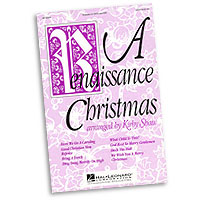
Kirby Shaw: A Renaissance Christmas

Here We Come a-Caroling
Good Christian Men Rejoice
Ding Dong, Merrily On High
What Child Is This
God Rest Ye Gentlemen
Deck The Hall
We Wish You A Merry Christmas
Bring a Torch
Rejoice

SATB a cappella

Traditional carols arranged by the highly-regarded Kirby Shaw as for a Renaissance choral performance. Fun and assessable for all choirs.

9606 SHEET MUSIC $2.95

Early Music Recordings | Early Vocal Music Groups | Early Music Christmas


Arrangements - Home | Jazz | Contemporary | Choral | Christian | Barbershop | Ethnic/World
SATB | Mixed 5 - 8 Parts | TTBB | SSAA | Treble | 3-Part | Christmas | Search for arrangements


To find a specific song on any recording (or to find recordings by group name or CD title),
pick the search method and type the item you are searching for here:

By Song Title
By Group Name
By Recording Title
By Music Category


    or use our Power Search for more search options


All Rights Reserved   All Content, page design, CGI Copyright © 2006 United Singers International