
In Celebration of the Human Voice - The Essential Musical Instrument
Home | Doo Wop | Barbershop | World | Contemporary | Christian | Vocal Jazz | Choral | Christmas | Instructional | Arrangements
Classical | Opera | Musicals | Personality | Young Singers | Disney | Videos | Songs | The Artists

Vintage Harmony Groups
In the pre- and post-WWII era, the term “popular” music took on a whole new meaning. Performing groups of that age were some of the first to have the mass commercial appeal the current generation is so accustomed to their stars having. And these vintage harmony groups deserved their status! They inspired generations of close harmony groups to emulate their sound, and current groups owe much of their history to these exquisite, talented singers who paved the way for them. Explore the history, and enjoy it, too. Consider these recordings museums on CD!
Displaying 1 - 50 of 65 items.
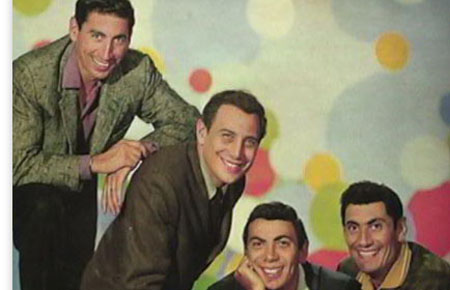
Ames Brothers
Sons of Russian Jewish immigrants from the Ukraine, the Ames Brothers were among the top selling artists of the early 1950s. Their close-harmony style had few equals, producing a chain of Top Ten hits throughout the decade. Born into a large family (five brothers and four sisters in all), the siblings were taught a love for music at an early age. Though they won several amateur singing contests during their youth they didn't turn professional until after they had finished school. All four were good students and athletes and initially chose to pursue careers other than pop stardom. Gene became a painter and a semi-pro baseball player. Vic was an actor and professional boxer. Eddie became a table tennis champ. And Joe won a full engineering scholarship to UCLA. He left after only a year, however, transferring back home to Boston College to study music. His studies eventually earned him a starring role in the Montreal Metropolitan Opera.
Hometown: Malden, MA
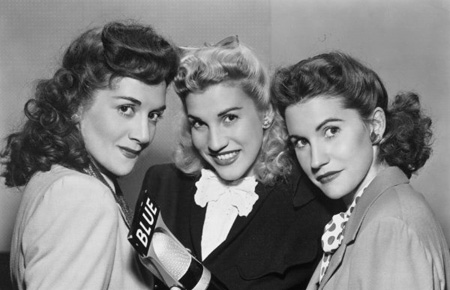
Andrews Sisters
During a time when teenagers were doing the jitterbug and Uncle Sam was asking young men to enlist, The Andrews Sisters were America's most popular female singing group. Patty, the youngest sister, was a loud and energetic blond who headed the group with her confident vocals. The middle sister was Maxene, a brunette, whose harmonic range gave the impression of four voices instead of three. Finally, completing the trio was the eldest, LaVerne, a strong willed red head with a witty sense of humor and an eye for fashion.
The Andrews Sisters versatile sound and range in genres explains their longevity in the music industry and popularity with people all over the world. They had major hits in nearly all types of music ranging from swing to country-western. This tremendous popularity did not stop in the music business. The trio could also be found performing in radio series, commercials, Hollywood movies and on Broadway.
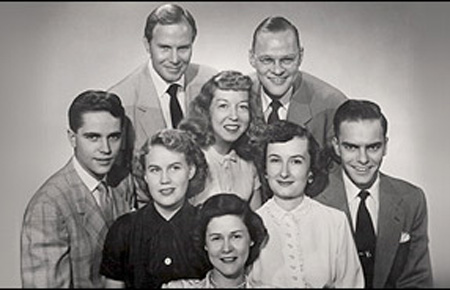
Anita Kerr Singers
In the 1950s and '60s, the Anita Kerr Singers were one of the most popular group of backup vocalists in all of country music, appearing on countless recordings by renowned Nashville artists. Kerr was the group's leader, but was joined by alto Dottie Dillard, tenor Gil Wright, and baritone Louis Nunley, as the quartet initially gained attention by performing on the NBC radio program Sunday Down South in the early '50s, which led to a contract with Decca Records. In 1956, the Anita Kerr Singers landed a spot on the New York-based Arthur Godfrey Talent Scouts TV show, which led to further broadcast appearances (although the group never let their session work for others subside). Around the same time, Chet Atkins (then the head of RCA Records' country division) took the group under his wing, which led to the quartet appearing on countless recordings by renowned artists. The Singers continued to record and tour straight through the '60s, even managing to issue several of their own albums, including Anita Kerr Singers Reflect on the Hits of Burt Bacharach & Hal David, Velvet Voices and Bold Brass, and Simon & Garfunkel Songbook, among others.
Hometown: Geneva
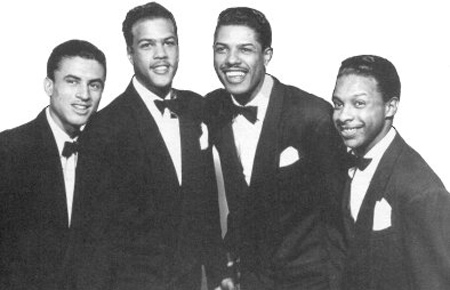
Basin Street Boys
Ormonde Wilson and The Basin Street Boys were a vocal / instrumental group from Philadelphia. Like such contemporary 1940's (pre doo wop) vocal groups as The Cats and Fiddle and Four Vagabonds they based their style, in part, on the hugely popular Ink Spots. Working swanky nightclubs they sung a mixture of pop tunes, jazz-flavored jive novelties, ballads and occasionally injecting some blues flavor. The burbling bass sounds and floating tenor style that was to mark early 50's doo wop had not yet emerged and their contemporaries specialized in tight, clean harmony singing, sometimes baked up by fine jazz musicians. The group began recording for Exclusive Records in 1946 and enjoyed their biggest hit that year with the ballad I Sold My Heart To The Junkman which enjoyed chart success.
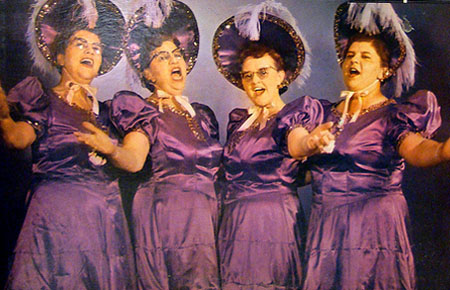
Big 4 Quartette
Billing themselves as '800 pounds of harmony,' Chillicothe, Illinois' Big Four became Sweet Adelines Quartette Champs in 1953. Fine singers and entertainers, they appeared on tv with Jack Paar, Steve Allen, Arthur Godfrey and Dave Garraway of the 'Today Show' to name just a few. This CD is a remastered album they recorded in 1958, plus several cuts gleaned from live shows. The Big Four are Bertha Bradley, bass, Sarah LeMaster, baritone, Inez 'Junior' Thompson, lead, and Lucille Miller and Mary Waters sharing the tenor duties. There are 14 studio recordings and 7 electrifying live performances here. By the pound or by any other measure, this is Entertainment!
Hometown: Chillcothe, IL
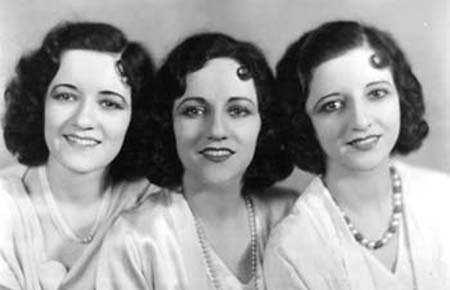
Boswell Sisters
One of the all-time greatest jazz vocal groups, the Boswell Sisters, Martha, Vet and Connee, began their career in the vaudeville houses of New Orleans. Connee, paralyzed from the waist down by a childhood accident (though her disability was often attributed to polio), always performed sitting down. Gifted musicians as well as singers, the sisters also worked at a local radio station, performing classical and semi-classical instrumentals. (Martha played piano, Vet played violin, banjo and guitar, and Connee played cello, saxophone and guitar.) Their careers took off when the radio station gave them a daily singing program.
Hometown: New Orleans, LA
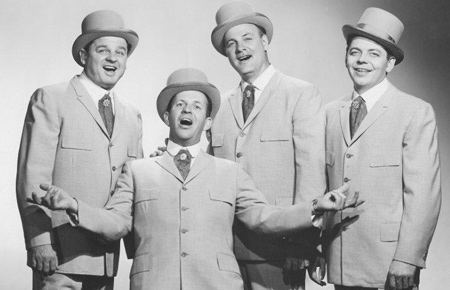
Buffalo Bills
In 1947, baritone Hershel Smith, a corporate executive, and lead singer Al Shea, a policeman, got together at Smith's home in Buffalo New York with the idea of forming a barbershop quartet. Tenor Vern Reed, an executive for a boy's club, and bass Bill Spangenberg, a truck driver for a steel company were added. The quartet competed at various competitions with modest success. Shortly afterward, Smith was promoted and transferred to Madison Wisconsin, and the quartet was disbanded. Had they not reorganized, the entire face of barbershop harmony may have been vastly different than it is today.
However, Shea and Reed insisted on continuing, and they found baritone Dick Grapes. The quartet blossomed quickly, winning a national competition in 1950, and developing quite a fan club. Over the next few years, they booked many engagements and cut some records.
Hometown: Buffalo, NY
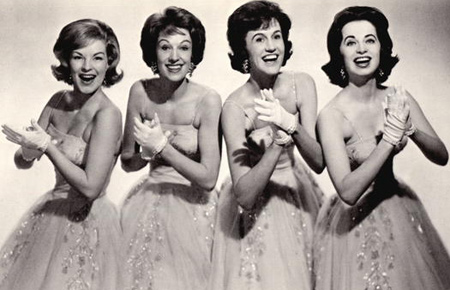
Chordettes
Formed by tenor Jinny Osborn in 1949 (whose father was national president for The Society For The Preservation And Encouragement Of Barbershop Quartet Singing In America Inc) the Chordettes - Janet Ertel, Carol Bushman and lead singer Dorothy Schwartz - got their in 1949 winning an audition for a spot on Arthur Godfrey's prestigious Talent Scouts daily TV show. Godfrey pronounced them "air worthy" and "truly radiophonic" and the girls began a four-year stint as Godfrey regulars, sticking to a traditional a cappella barbershop repertoire and even cutting some records for Columbia. Unsurprisingly they also became the new stars of the barbershop convention circuit, and when Dorothy left the Chordettes in 1951, she was replaced by barbershopper Lynn Evans from Youngstown, Ohio.
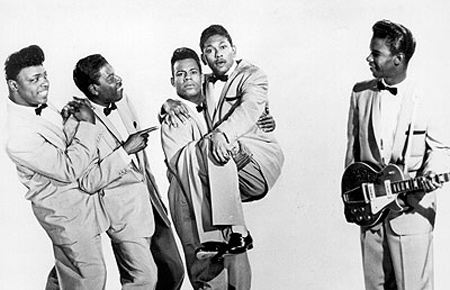
Coasters
From 1956 to 1961, the Coasters released a string of classic singles that reflected the life of the American teenager with keen wit and hot, rocking harmonies. Invariably those songs were written, produced and arranged by the duo of Jerry Leiber and Mike Stoller. The union of a black vocal group with two Jewish songwriters was one of the most propitious in rock history. Leiber and Stoller's witty, street-smart "playlets" were sung with sly, clowning humor by the Coasters and accompanied by the hot, honking "yakety sax" of King Curtis. The Coasters' parlayed their R&B roots into rock and roll hits by delivering Leiber and Stoller's serio-comic tunes in an uptempo doo-wop style. Beneath the humor the songs often made incisive points about American culture for those willing to dig a little deeper.
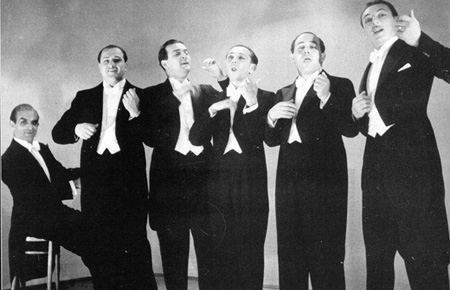
Comedian Harmonists
In some ways Comedian Harmonists might be called the first German boy group. Inspired by the American group 'The Revelers', Harry Frommermann published an ad in a local newspaper, auditioned and finally founded an ensemble consisting of 3 tenors, a baritone, a bass and a pianist.
After considerable training they met with initial success and rose to immense popularity. Sold out shows, records and movie appearances crowned their success.
However, the advent of Hitler's regime smashed their plans, as three group members were Jewish. They split and both parts tried to repeat the success with replacements - the Jewish members in the United States and the other three in Germany. Neither of them succeeded.
Hometown: Vienna, Germany
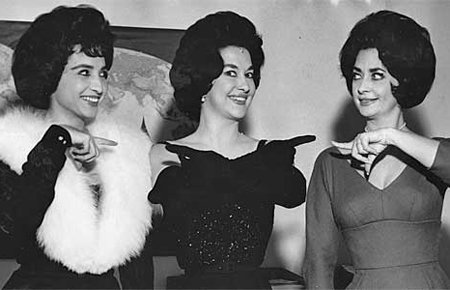
de Castro Sisters
The De Castro sisters grew up in Cuba, though each was born in a different country - Margarita Dolores, known as Peggy, was born in the Dominican Republic, Cherie - the United States, and Babette - in Cuba. They were singing and dancing by the early 40's and used several different variations of names as performers, including The Americanitas, The Marvel Sisters, The Fernando De Castro Sisters, and finally they shortened it to their family name of the De Castro Sisters. Their act included comedy, both intended and unintended, singing, dancing and apparent acting on stage. They were also the voices that sang Zip A Dee Doo Dah in Disney's 1946 film Song Of The South. Did they speed up their voices, or was it really their natural sound? They appeared in the 1947 film Copacabana, and several others including The Helen Morgan Story. Their very first recordings as the De Castro Sisters were from 1952 on the Tico label and included "I Do" and Jumbalato" with Tito Puente.
Hometown: Las Vegas , NV
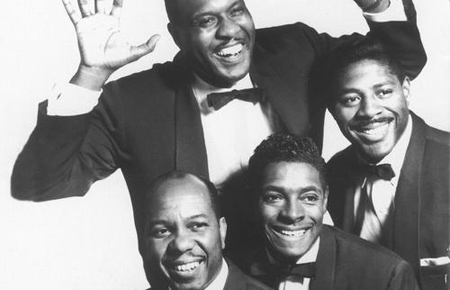
Deep River Boys
The Deep River Boys had their genesis on the campus of Hampton Institute in Virginia in the mid thirties. They found their first success in winning radio's "Amateur Hour" competition. This notoriety led to opportunities to appear on stage and in radio. During the Second World War the group did extensive touring for the USO and provided entertainment for American troops overseas. The members for most of the life of the group were Harry Douglas, Jimmy Lundy, Ed Ware, and Vernon Gardner. In the late forties the group toured with Bill "Bojangles" Robinson, and made some very early TV appearances with Ed Sullivan and Milton Berle.
The group continued to have sporadic record releases on labels such as Vik (an RCA subsidiary), Gallant, and Wand. The Deep River Boys appeared well into the 1980s, fifty years after their founding, and have left a legacy of fine performances and recordings, and have set a standard for professionalism and longevity that are to be envied by everyone.
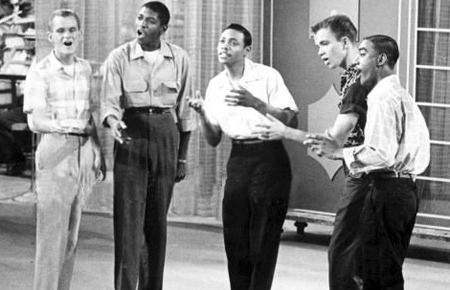
Del Vikings
The Del-Vikings were formed in 1955 by members of the United States Air Force stationed in Pittsburgh, Pennsylvania, with Clarence Quick, Kripp Johnson, Don Jackson, Samuel Paterson, and Bernard Robertson. Because all of the members were in the armed forces, the group constantly ran the risk of being disrupted by members being stationed in other places. This happened soon after the group's forming when Paterson and Robertson were sent to Germany. They were replaced by baritone David Lerchey, the group's first white member, and tenor Norman Wright. Norman Wright had started a group with Lawrence "Prince" Lloyd called The Valverteens from Amarillo Air Force Base,Texas before joining The Del-Vikings.
The origin of the band's name is unclear. Some sources say that the band members had read about Vikings with the prefix "Del" being "added to give the group name an air of mystery."(2) Another suggestion is that Clarence Quick had known of a basketball team in Brooklyn, New York, called the Vikings and had suggested the name. The name may also have originated from the popular Viking Press, publisher of paperbacks that group members liked to read.
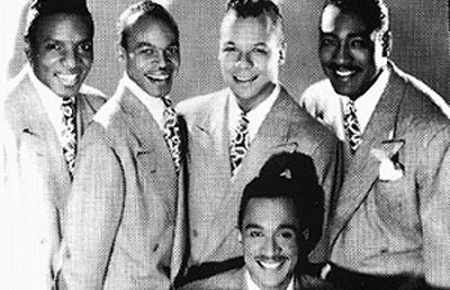
Delta Rhythm Boys
Formed in 1934 at Langston University, Oklahoma the original line-up of the group was bass Lee Gaines, baritone Kelsey Pharr, first tenor lead Carl Jones, second tenor Traverse Crawford, and pianist/arranger Rene DeKnight. The Delta Rhythm Boys exuded a classy elegance and sophistication that made them the most renowned and respected of the 40s groups who sang a blend of jubilee, pop and swing. In 1936 the group transferred to Dillard University in New Orleans, Louisiana, and began singing under the name Frederick Hall Quintet, after their mentor, the school's musical director. By 1938 the group had made it to New York and were appearing in Broadway shows such as Sing Out The News and The Hot Mikado as the Delta Rhythm Boys During 1941 they had success with two of their most memorable recordings, "Dry Bones" and "Take The 'A' Train", and also with recordings backing Mildred Bailey. The Delta Rhythm Boys also appeared in films for Universal during 1943-45. In 1945 the group were established on radio in programmes including Amos And Andy and The Joan Davis Show. In 1945 Decca teamed the Deltas with Ella Fitzgerald for some notable recordings.
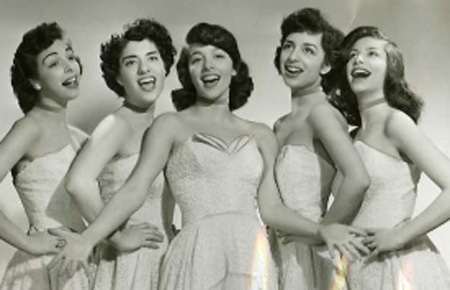
DeMarco Sisters
During the period between the 1930's and 1950's the entertainment field was filled with many talented sister vocal groups. There were the McGuire Sisters from Ohio, the King Sisters from Utah, the DeCastro Sisters all the way from Havana, Cuba, and the Andrew Sisters from Minnesota. Not to be outdone, the borough of Kings was represented in song by the Five DeMarco Sisters who began their career in the 1940's as teenagers.
The sisters got their start when their father moved the family from Rome, N.Y. to Brooklyn. Confident that they were ready for the big time he brought them in to NBC for an audition. And audition they did, right in the reception room, because Papa DeMarco had neglected to schedule an appointment. They were so good though that a producer signed them on the spot and scheduled them for the "Tent Show" Radio Program. But their career really took off after they were signed to appear on the Fred Allen radio show. For four years (1946-1949) Ann, Gene, Gloria, Maria and Arlene entered into the living rooms of America opening the show with "Mr. Al-len, Mr. Alll-llennnn." Their featured segment earned them $1000 per week enabling their family to move from their apartment in Bensonhurst to a larger home in Flatbush on East 5th Street.
Hometown: New York City, NY
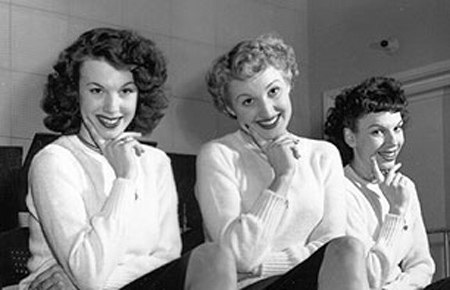
Dinning Sisters
The Dinnings were a musical family of nine children, all of whom started singing harmony in church, and then spent their Sunday afternoons singing for fun. Three of the sisters, twins Jean and Ginger and sister Lou, started to win amateur singing contests before the age of ten, and later began to perform with older brother Ace's orchestra. With little experience but a lot of ambition, the young ladies left their Oklahoma hometown and traveled to Chicago, where they auditioned for NBC radio. They were hired and remained for seven years, and ultimately became the highest paid radio act in the Windy City.
The group underwent a few lineup changes over the years (Lou was replaced in 1946 by Jayne Bundesen, who was in turn replaced by Tootsie Dinning in 1952), but their albums for Capitol sold consistently well, including their debut release Songs by the Dinning Sisters which held the top spot on the charts for 18 weeks. Marriages and children eventually demanded the act's attentions, but the family remained involved in music, from Jean Dinning writing the song "Teen Angel" to the sisters' nephew Dean playing bass for alterna-rockers Toad the Wet Sprocket. In 1988, Collectors Choice released an outstanding collection of the Dinning Sisters greatest hits, which is well worth checking out.
Hometown: Chicago, IL
Dixie Hummingbirds
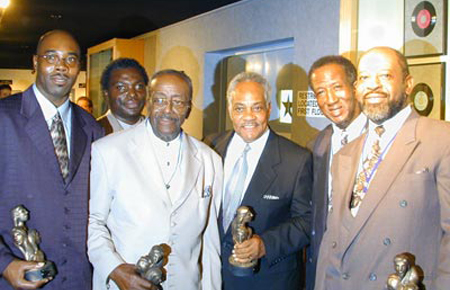
The Dixie Hummingbirds are probably the best known of the black gospel quartets, having performed for over 50 years throughout America and Europe. They became the inspiration for countless R&B and soul singers, from Jackie Wilson and Clyde McPhatter to Bobby "Blue" Bland and The Temptations.
The group was formed in Greenville, South Carolina, by James Davis in 1928, a year before the Great Depression. The members were Barney Gipson (lead), Davis (tenor), Barney Parks (baritone), and J.B. Matterson (bass). In their early teens they sang in the Bethel Church of God in the junior chorus. Soon Fred Owens became the bass and the group became the Sterling High School Quartet. Davis changed the name to the Dixie Hummingbirds.
Hometown: Greenville, SC
Drifters
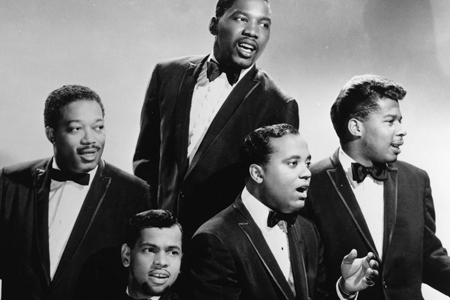
The Drifters are an American doo-wop and R&B/soul vocal group. They were originally formed as a backing group for Clyde McPhatter, formerly the lead tenor of Billy Ward and his Dominoes in 1953.
There were three golden eras of the Drifters; the early 1950s, the 1960s, and the early 1970s (post-Atlantic period). From these, the first Drifters, formed by Clyde McPhatter, was inducted into the Vocal Group Hall of Fame as "The Drifters". The second Drifters, featuring Ben E. King, was separately inducted into the Vocal Group Hall of Fame as "Ben E. King and the Drifters". In their induction, the Rock and Roll Hall of Fame selected four members from the first Drifters, two from the second Drifters, and one from the post-Atlantic Drifters.
Du Droppers
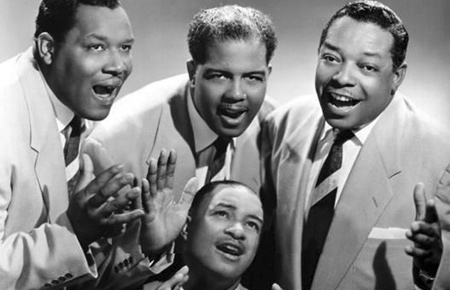
The Du Droppers, like so many of the pioneer R & B vocal groups that came to prominence in the late 40s and early 50s had their genesis in the field of gospel music. The original members of the Du Droppers were Junior Ginyard on lead, Willie and Harvey Ray on tenor and baritone, and Eddie Hashow on bass (soon replaced by Bob Kornegay). In prior years different members of the group had been part of such gospel groups as the Royal Harmony Singers, The Dixie-Aires, The Jubilaires, and the Southwest Jubilee Group. The newly named Du Droppers worked on some R & B material and soon auditioned for record producer Bobby Robinson and radio d.j. Joel Turnero owners of the Harlem based Red Robin label. The first record released by the group in December of 1952 was that special niche of the early years of Rhythm & Blues, the "answer" record. In this case the tune was "Can't Do Sixty No More" answering the Dominos massive hit of "Sixty Minute Man". The flip side of this first outing by the group was "Chain Me Baby" on Red Robin #108. Playing off the long popularity of the Dominos hit the Du Droppers got instant "name" recognition and publicity that go along with airplay and demand by the public for the record.
Hometown: Scranton, PA
Fairfield Four
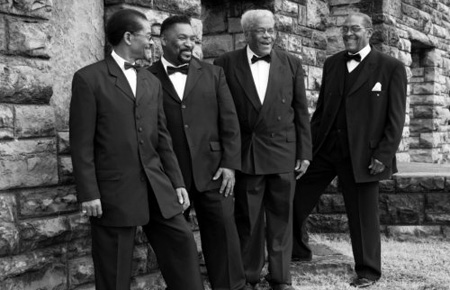
The Fairfield Four, the most distinguished proponents of traditional African American a cappella gospel singing working today, were organized in 1921 by Reverend J.R. Carrethers, assistant pastor of the Fairfield Baptist Church in Nashville, Tennessee. The group, initially a trio comprised of the Reverend's two sons, baritone Harold and bass Rufus along with tenor lead John Battle, evolved into a quartet with the addition of a second lead, Lattimer Green, later replaced by Samuel McCrary.
The quartet sang a cappella, performing traditional spirituals such as "Ezekiel Saw the Wheel" and "Dry Bones" arranged and taught to them by Reverend Carrethers. In time, the Fairfield Four became professionals with Rufus Carrethers and Samuel McCrary emerging as singers of reputation, Carrethers for his rhythmic style of bass singing, and McCrary for his exceptional clear tenor voice.
Hometown: Nashville, TN
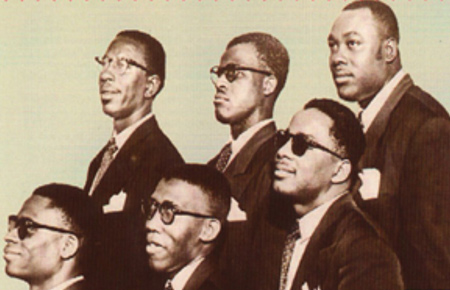
Five Blind Boys of Alabama
Much in the world has changed since the original version of the Blind Boys of Alabama first raised their voices together. That was in 1939, when the members were just kids at the Alabama Institute for the Negro Blind in Talladega, Ala. Today, more than 70 years later, founding member Jimmy Carter can look back on a career far beyond what he and his colleagues could imagine at that time. The group has won a long list of awards, including Lifetime Achievement honors from the Grammys and the National Endowment for the Arts, entertained around the world, been profiled on 60 Minutes, sung for two Presidents at the White House and been inducted into the Gospel Music Hall of Fame.
Though the group has recorded and performed with a few country artists, along with others as diverse as Ben Harper, Tom Petty, Peter Gabriel and Prince, they never crossed the line and committed to doing a project inspired by the country genre until now, with the release of Take The High Road on Saguaro Road Records. This landmark recording draws from modern and traditional country to enrich the group's gospel-rooted sound with fresh and illuminating insight.
Hometown: Atlanta, GA
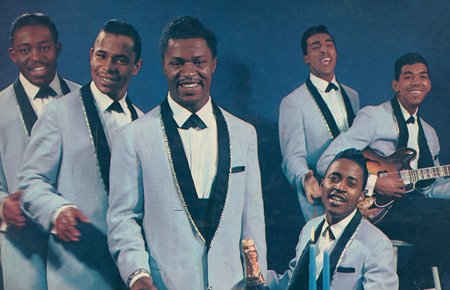
Flamingos
Cousins Jacob Carey (Jake) and Ezikial Carey (Zeke) formed the group in Chicago, Illinois, after meeting Paul David Wilson and Johnny Carter at a black Jewish church. Earl Lewis soon joined, and after a series of name changes (The Swallows, El Flamingos, The Five Flamingos) wound up being known as The Flamingos. Sollie McElroy soon replaced Lewis (who joined The Five Echoes). Their first single (for Chance Records), "If I Can't Have You", was a moderate success, and the follow-ups "That's My Desire" and "Golden Teardrops" cemented their reputation. They left Chance Records sometime after their December 1953 session and signed with DJ Al Benson's Parrot Records. Sollie McElroy was on their first Parrot session, but left the group in December 1954, to be replaced by first tenor Nate Nelson (who was on their second Parrot session; he's lead on "I'm Yours," released in January 1955). In early 1955, the Flamingos transferred over to Chess Records, to record for their Checker subsidiary. They started to have national R&B hits in 1956 ("I'll Be Home," "A Kiss From Your Lips," "The Vow," "Would I Be Crying"), but both Zeke Carey and Johnny Carter were drafted (Johnny in September). They were also part of the 1956 Alan Freed movie Rock, Rock, Rock.
Hometown: Chicago, IL
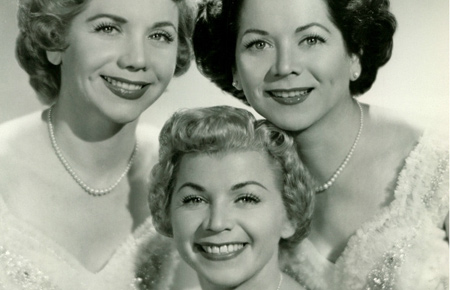
Fontane Sisters
The line-up of this close-harmony 50s US vocal group, whose initial success was achieved by making cover versions of black R&B records, comprised Marge Rosse (New Milford, New Jersey, USA; lead), Bea Rosse (b. New Milford, New Jersey, USA; low harmony) and Geri Rosse (b. New Milford, New Jersey, USA; harmony). Their mother was a choral director and organist. After leaving high school they joined an all-girl troupe and went on an eight-month tour. Later, they were joined by their brother Frank on guitar, and appeared on radio and in theatres and clubs. After Frank was killed in World War II, the girls re-formed in 1944 as a trio and worked for several years on Perry Como's radio and television shows; they also backed him on several records, including the US number 1 hits 'You're Adorable' and 'Hoop-Dee-Doo'. Signed to RCA - Victor Records in 1949, they had several minor hits in the early 50s, including 'Tennessee Waltz', 'Let Me In' (with Texas Jim Robertson) and 'Cold, Cold Heart'.
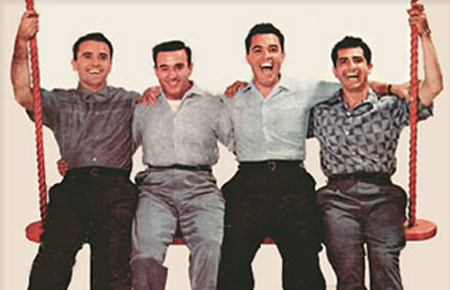
Four Aces
One of the most successful pre-rock vocal groups, the Four Aces did well during the early '50s with a narrow range of pop material but burned out before decade's end. Founded by Navy shipmates Al Alberts and Dave Mahoney, the act added Lou Silvestri and Sol Vaccaro before making a name for themselves around their native Philadelphia. After failing to find a distributor for their debut single "(It's No) Sin," Alberts founded his own Victoria label to release the single. It became a big hit in late 1951 and sold a million copies. Signed to Decca before the end of the year, their debut single for the label, "Tell Me Why," just barely missed the top of the charts and sold a million copies as well. A few Top Ten hits followed during the early '50s before the theme to Three Coins in the Fountain hit number one in 1954. Another movie theme, "Love Is a Many-Splendored Thing," spent over a month at the top during 1955.
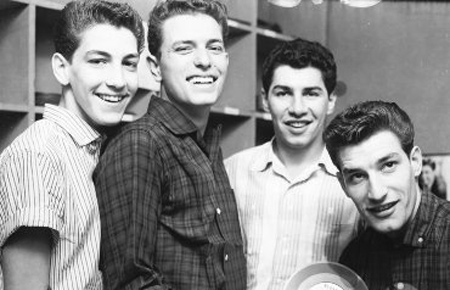
Four Coins
Formed in Canonsburg, Pennsylvania, USA, in 1952, the vocal harmony group the Four Coins consisted of George Mantalis, James Gregorakis and brothers George and Michael Mahramas. Originally the quartet were horn players in an orchestra with Bobby Vinton, who was an unknown at the time. At the end of 1952 the foursome began harmonizing together, and in January 1953 appeared on an 'amateur hour' radio programme, which they won. They left Vinton in 1953 and began a residency at a Pittsburgh club called the Blue Ridge Inn, naming themselves the Four Keys.
They recorded their first singles in November 1953 for Corona Records, which led to a contract with Epic Records, a branch of the larger Columbia Records. Taking their cue from another quartet, the Four Aces, the group changed its name to the Four Coins. The group's first Epic single, 'We'll Be Married (In The Church In The Wildwood)', sold well but it was not until 1957 that they recorded their biggest hit, 'Shangri-La', which reached number 11 in the US charts and earned a gold record. The group had charted seven times by 1959. In 1960 they changed labels to MGM Records and continued to record for Jubilee Records, Vee Jay Records and Roulette Records, undergoing personnel changes along the way. They disbanded in 1970.

Four Freshmen
The Four Freshmen were one of the top vocal groups of the 1950s, and formed the bridge between '40s ensembles like Mel-Tones and harmony-based rock & roll bands such as the Beach Boys as well as groups like Spanky & Our Gang and the Manhattan Transfer. The group's roots go back to the end of the 1940s and a barbershop quartet-influenced outfit called Hal's Harmonizers, organized at the Arthur Jordan Conservatory of Butler University in Indiana by two brothers, Ross and Don Barbour. Their repertoire centered on standards such as "Moonglow" and "The Christmas Song," and they began to show an unusually free, improvisational approach to their harmony singing. A couple of membership changes brought Bob Flanigan, a cousin, into the fold alongside Hal Kratzsch, and suddenly the Four Freshmen were assembled in all but name, and that fell into place a little later.
Hometown: Valencia, CA
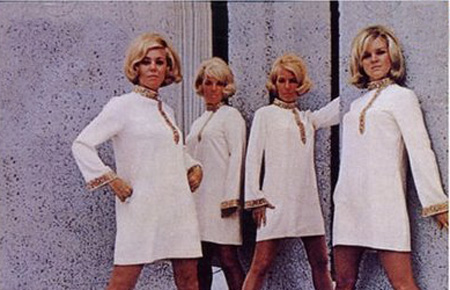
Four King Cousins
The Four King Cousins are daughters of the famous King Sisters and members of the equally famous King Family.
The four young women, all pretty blondes in their early 20s, first appeared on TV on John Davidson's "Kraft Summer Music Hall".
Then they were signed to a Capitol recording contract, appeared on top shows like Jonathan Winters and Johnny Carson, and in concert with Buddy Rich, Buddy Greco and Stan Getz.
"Introducing" was their debut album, 11 heavily-accompanied pop covers, including a pair by Burt Bacharach, a pair by Lennon/McCartney, Brian Wilson's "God Only Knows" and other pop hits. Innocent, schmaltzy, nostalgic, top-40 fun from the late 60s!
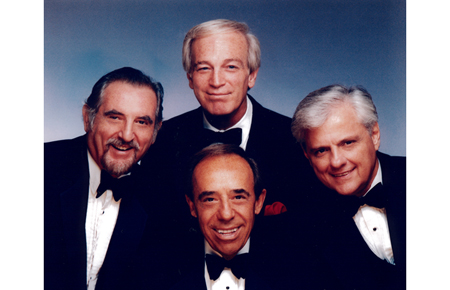
Four Lads
From college campuses to supper clubs, fairs to industrial shows, commercials to concert halls, Tokyo's Latin Quarter to New York's Copacabana, Glasgow's Empress Theatre to Notre Dame, Las Vegas' Sands Hotel to Honolulu Stadium, Okinawa's Naha Theatre to Manilla's Aranete Concert Hall... the Four Lads radio, television and live appearances reads like a veritable "who's who" of the entertainment industry. The Lads launched their professional career in 1950 singing in local clubs around Toronto. Quite a few "Ups and Downs" later, the boys had a chance for a tryout performance at New York's posh dinner club, Le Ruban Bleu. There, Mitch Miller saw them and put them on the million-selling Johnnie Ray records "Cry" and "The Little White Cloud That Cried". After that, the Lads were signed to their own recording contract, receiving their first Gold Record in 1953 for "Istanbul". Their success story includes the sale of some 50 million singles and albums to date.
Hometown: Toronto, ON, Canada
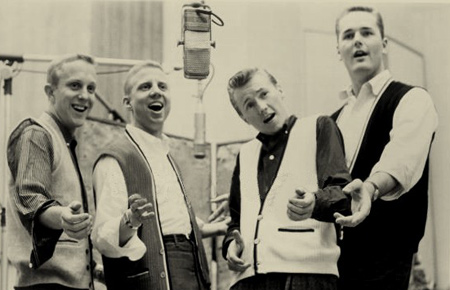
Four Preps
The clean-cut West Coast-based Four Preps are best remembered for a string of Top 100 hits during the late '50s and early '60s, including "Twenty Six Miles (Santa Catalina)," "Big Man," "Down by the Station," "Lazy Summer Night," "Got a Girl," "It Ain't Never," "Moon River," "Lollipops and Roses," "My Special Angel," and others. Ultimately, the Four Preps' biggest influence can be heard via their impact on Brian Wilson, whose harmony-driven production for the Beach Boys was a direct antecedent of the Four Preps' sound.
Hometown: Santa Catalina, CA
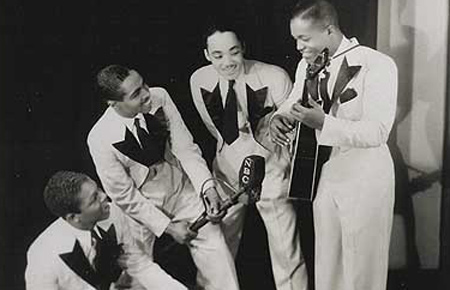
Four Vagabonds
The Four Vagabonds were radio stars of the early and mid 1940s. As 50's vocal harmony lovers will tell you, the Four Vagabonds are grandfathers of R&B harmony. Their 1946 Apollo recording sessions links them to R&B recording history. Surprisingly, many educated black music fans are completely unaware of the Vagabonds. They sang popular songs, which some blues-oriented listeners may find challenging. Regardless of the repertoire, the Four Vagabonds were expert practitioners of improvisational harmony singing. The balance of their harmony is an extraordinary thing, the evenness of the four voices. The singers' pitch is exceptionally accurate, especially lead vocalist John Jordan. The Four Vagabonds' mastery of "barbershop chord" construction is evident in many stunning touches, most particularly the "instrumental choruses," which add another dimension to the Four Vagabonds' art. Objectively, their horn imitations is impressive not because it sounds so much like a brass band, but because the Vagabonds manage to make it gorgeous beyond description.
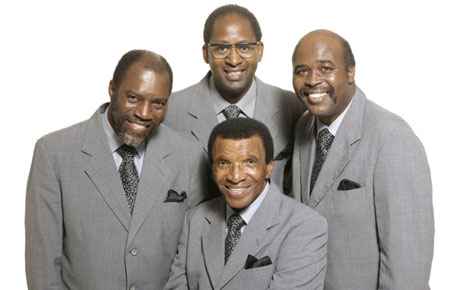
Golden Gate Quartet
From 1934 to today, from the churches of Virginia to the most prestigious international stages, the story of The Golden Gate Quartet is that of more than 60 years of golden age spiritual. An exceptionally long life due to the permanence of a style where individualisms have always given way to the importance of the quartet.
Four students from Booker T. Washington college (Virginia), Willie Johnson (baritone), William Langford (tenor), Henry Owens (second tenor) and Orlandus Wilson (bass), united by the same passion for music, create a quartet, The Golden Gate Jubilee Singers, a name chosen long before San Francisco inaugurated a bridge of the same name...Coming from very religious families, the four young men have participated from their childhood in the "junior choir" of their church and then the "glee clubs"... a musical style which they adapt and codify, harmonising in the mood of the day the scarce sentences of old traditional chants.The "Gate's Style" is thus born of the interpretation of texts reconstituting the atmosphere of the dramatic events lived by the black people.
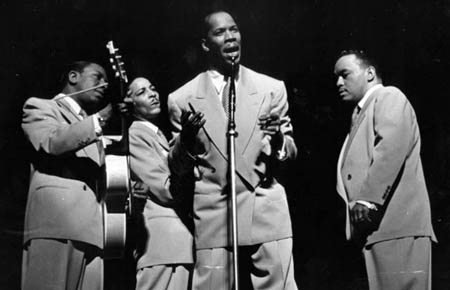
Ink Spots
The Ink Spots' story begins in Indianapolis, Indiana in 1932, when four young men - Deek Watson, Charles Fuqua, Orville "Hoppy" Jones and Jerry Daniels - formed the first version of the group. The quartet performed as the Riff Brothers and the Percolating Puppies before settling on the Ink Spots name. In search of a recording contract, the group headed to New York City, where they met up with singer Bill Kenny, who replaced Daniels as the group's lead tenor in 1936. Three years later, The Ink Spots had their first million-selling record, "If I Didn't Care'. The song, which would be their biggest hit, ultimately sold 19 million copies.
Over the years, their unique style, sound and elegant stage presence have delighted audiences worldwide. The Ink Spots continue to delight audiences with the wonderful harmonies and arrangements that have made the group a musical legend around the world.
With over 80 hit records and numerous million sellers, audiences .return again and again. Such presenters as the London Palladium, Harlem's Apollo Theater, the Houston and Atlanta Symphonies, colleges and leading venues around the world have brought the high energy and all-around professionalism of the famous Ink Spots to their stage.
Hometown: Davie, FL
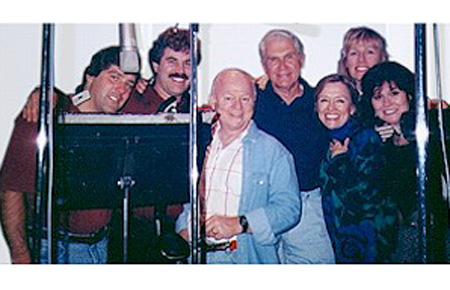
Johnny Mann Singers
Johnny Mann is best known for the forty-two albums he arranged and conducted for his Johnny Mann Singers resulting in five Grammy Award nominations and two Grammy Awards.
He is a composer, arranger, conductor, entertainer and recording star. His group of super-talented young singers appeared with him in Chevrolet's weekly syndicated series, "Stand Up And Cheer," which enjoyed a three-year run on national TV and many tours around the country.
Born August 30, 1928, in Baltimore, MD, Johnny got his start in Hollywood arranging scores for seven full-length motion pictures for Warner Brothers, Twentieth Century Fox and Columbia Studios. He then became the choral director of the "NBC Comedy Hour," which led to the formation of The Johnny Mann Singers and a record contract.
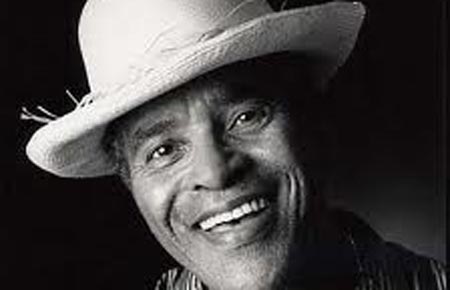
Jon Hendricks
Jon Hendricks (born September 16, 1921) is an American jazz lyricist and singer. He is considered one of the originators of vocalese, which adds lyrics to existing instrumental songs and replaces many instruments with vocalists (such as the big band arrangements of Duke Ellington and Count Basie). Furthermore, he is considered one of the best practitioners of scat singing, which involves vocal jazz soloing. For his work as a lyricist, jazz critic and historian Leonard Feather called him the "Poet Laureate of Jazz" while Time dubbed him the "James Joyce of Jive." Al Jarreau has called him "pound-for-pound the best jazz singer on the planet-maybe that's ever been".
Born in 1921 in Newark, Ohio, young Jon and his 14 siblings were moved many times, following their father's assignments as an A.M.E. pastor, before settling permanently in Toledo. As a teenager, Jon's first interest was in the drums, but before long he was singing on the radio regularly with another Toledo native, pianist Art Tatum.
Hometown: Toledo, OH
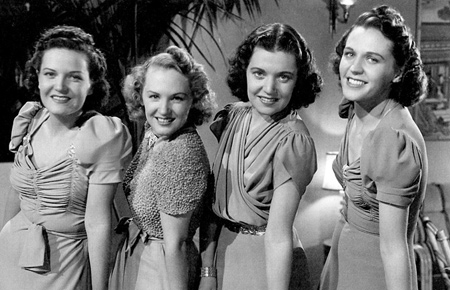
King Sisters
Originally christened "America's First Family of Song" in the 1960's, The King Family, comprised of "big band era" greats The King Sisters, guitar virtuoso Alvino Rey and the 32 sisters, brothers, husbands, wives, aunts, uncles and children that made up their extended musical family, catapulted to fame following just two dazzling appearances on ABC-TV's The Hollywood Palace to become one of the most popular and beloved television, recording and concert acts of the 1960's and 70's.
Acclaim from audiences and critics alike for their 'Palace' appearances led to their first headlining television special, The Family is King, in 1964. That special's ratings-topping popularity landed the musical group its own weekly ABC-TV showcase, The King Family Show, during 1965 and 1966. An audience favorite, the series featured the entire musical family in various groupings --The King Sisters - who'd already established themselves as one of the nation's top vocal groups, and the next generation's contingent The King Cousins, featuring Tina Cole who went on to star as "Katie Douglas" on CBS' My Three Sons, along with the irrepressible King Kiddies whose musical talent and effortless comedic timing were a staple of these tune-filled hours.
Hometown: Los Angeles, CA
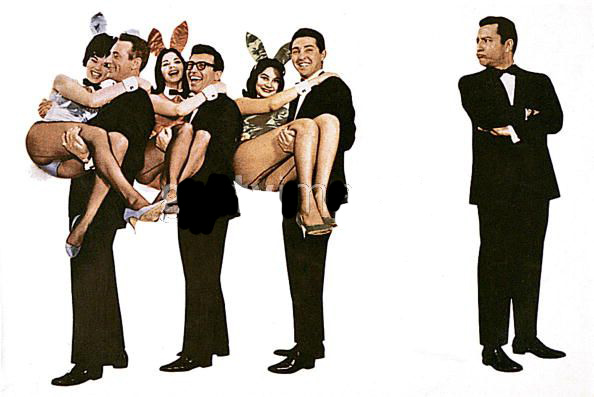
Kirby Stone Four
The Kirby Stone Four were one of those ubiquitous white vocal ensembles that seemed to pop up everywhere in the 1950s, drawing on several musical genres and melding them into an attractive pop sound -- they displayed a harder, more complex, and occasionally provocative edge than most of their rivals, which, along with their selection of repertoire, helped distinguish them from the pack. Though never as conspicuously successful as, say, the Four Freshmen, the Kirby Stone Four generated a series of singles and a small number of albums that evoke their era about as well as those of the Four Freshmen, the Lettermen, et al., with a very upbeat, swinging sound not too far removed from the music that Frank Sinatra was making around the same time -- though Sinatra would probably never have stood still for the occasional novelty-type tunes that they recorded.
Hometown: New York City, NY
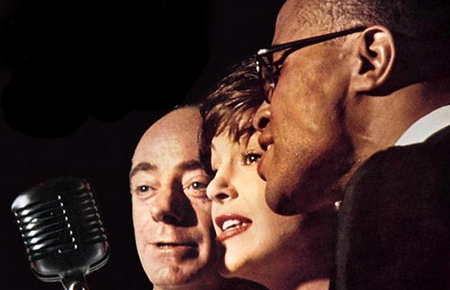
Lambert, Hendricks and Ross
In 1962 Ross, tired of touring, called it quits. Lambert and Hendricks choose Yolande Bavan for the impossible job of replacing Ross. Lambert, Hendricks & Bavan recorded three albums for RCA. None were as successful as those of the previous trio, and the group broke up in 1964. Sadly, Dave Lambert was killed in a car accident in 1966. Jon Hendricks continues to perform. Annie Ross also continued singing and working in films. Though they only graced the musical landscape for a few short years, Lambert, Hendricks & Ross left an indelible mark in the world of vocal jazz that has yet to be equaled to this day.
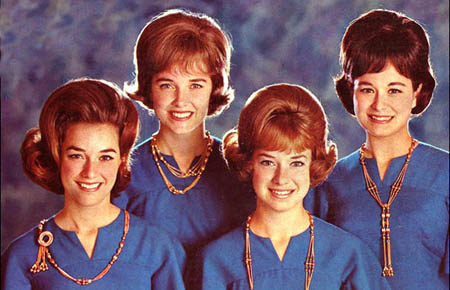
Lennon Sisters
They were a young, crisply harmonic quartet of sisters who called themselves simply The Lennon Sisters and they made their singing TV debut in 1955 on Lawrence Welk's old-fashioned variety show with sixteen-year-old Dianne (Dee Dee), fourteen-year-old Peggy, twelve-year-old Kathy, and nine-year-old Janet Lennon on board. Their a cappella version of "He" proved a scene-stealing success and America fell hard for these four attractive little innocents and their angelic blend. Welk professionally adopted the girls and The Lennon Sisters became regulars on his show every Saturday night for the next thirteen years. Dubbed "America's Sweethearts of Song," they recorded their first of many albums entitled "Let's Get Acquainted" in May of 1957. So popular were the girls that they became a merchandising factory with coloring books, lunch boxes and doll collections all doing very brisk business.
Hometown: Branson, MO
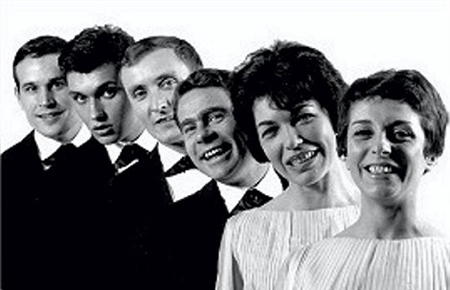
Les Double Six
The group was not long-lasting. Due to Perrin's health problems (she had contracted tuberculosis in 1949), Les Double Six dissolved in 1966. They recorded four albums between 1959 and 1964. Many members of the group went on to join the Swingle Singers, which notably reproduced the works of Bach in the jazz vocal style.
The Double Six were nominated for Best Vocal Group Performance at the 1965 Grammy Awards for their LP The Double Six of Paris Sing Ray Charles, and were beaten by The Beatles' A Hard Day's Night.
Hometown: Paris, Paris, France
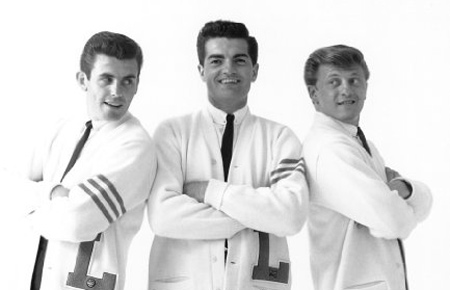
Lettermen
The most famous line-up of this very successful US close-harmony pop trio comprised Tony Butala (20 November 1940, Sharon, Pennsylvania, USA), Bob Engemann (b. 19 February 1936, Highland Park, Michigan, USA), and Jim Pike (b. 6 November 1938, St. Louis, Missouri, USA). Pike, a letterman at Utah's Brigham Young University, released an unsuccessful single on Warner Brothers Records in 1959. In 1960, he and fellow student and ex-Mormon missionary Engemann formed a trio with Los Angeles-based supper-club singer Butala, who had recorded previously on Topic and Lute and had been using the Lettermen name since 1958.
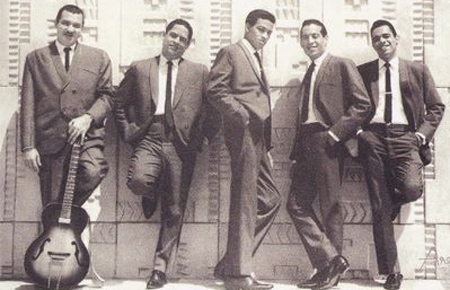
Los Zafiros
Formed in 1962, Los Zafiros were a vocal quartet augmented by the guitarist and arranger Manuel Galban. Originally inspired by American vocal groups such as the Platters and the Coasters, they soon added their own Cuban flavour to create a unique and heady mix of doo-wop, ballads and boleros, soul and samba, tumbaos and twists. They were unique among vocal groups in that they had three lead singers amongst Ignacio Elejalde and his sweet, high tenor, Eduardo Elio Hernandez, Miguel Cancio and Leoncio 'Kike' Morua. But in many ways it was Galban who was the architect of the Los Zafiros sound, as instrumentalist, composer and, with Kike, arranger of the vocal parts. "I don't know why they chose me," he says. "To play the guitar with a vocal quartet was a novelty and therefore rather difficult. But pianos were starting to disappear from a lot of venues so a guitar was a good alternative. They also needed a musical director. They were a success from the moment they appeared and my job was to support them and perfect and develope the sound."
Marcels
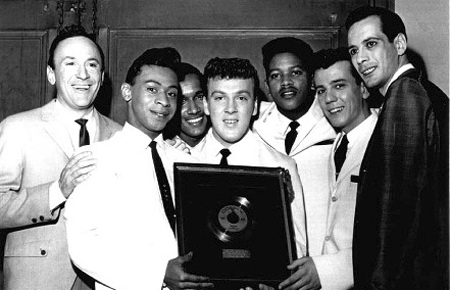
The Marcels were a doo-wop group known for turning American classical pop songs into rock and roll. The group formed in 1959 in Pittsburgh, Pennsylvania, and signed to Colpix Records, with lead Cornelius Harp, bass Fred Johnson, Gene Bricker, Ron Mundy, and Richard Knauss. The group was named by Fred Johnson's younger sister Priscilla, after a popular hair style of the day, the marcel wave. In 1961 many were surprised to hear a new version of the ballad "Blue Moon" that began with the bass singer saying, "bomp-baba-bomp" and "dip-da-dip." The record sold over one million copies, and was awarded a gold disc. It is featured in The Rock and Roll Hall of Fame's 500 Songs that Shaped Rock and Roll.
McGuire Sisters
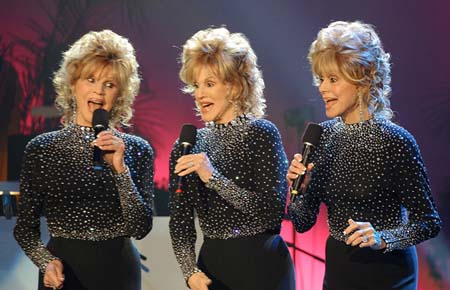
They are now back together as an act. Just as their music touched the lives of many across America and all around the world in the past, so it has now. Their sweet, nostalgic sound has longtime fans waiting in line to see them, as they are joined by new young fans. Their music has bridged the generation gap and The McGuire Sisters are a hit once again. They have recently been inducted into the Coca-Cola Hall of Fame as well as the Headliners Hall of Fame. The sisters balance active social lives with engagements around the world, from Las Vegas to Chicago's Drury Lane Theatre.
Hometown: Middletown, OH
Mel Torme & The Mel-Tones
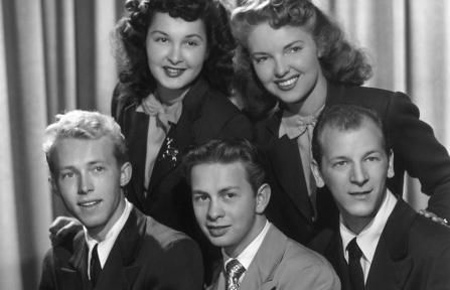
Mel Torme was a child actor and musical prodigy. He began singing at the age of three, studied piano and drums, and at 15 published his first song which was recorded by Harry James. In 1942 he joined the band of comedian Chico Marx as drummer, singer, and vocal arranger, and in 1943 he formed his own group, the Mel-Tones, and appeared in his first film, Higher and Higher, with Frank Sinatra. The Mel-Tones, a precursor of contemporary vocal jazz, were popular during WWII and enjoyed several hits on their own as well as with Artie Shaw's band.
Merry Macs
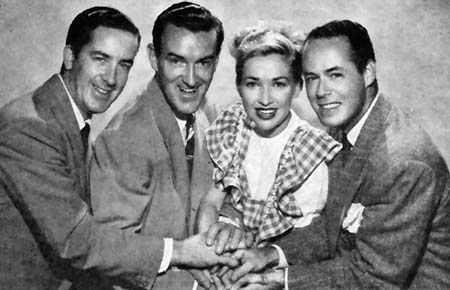
The group continued to perform worldwide. They recorded commercials with Gilda Maiken (Anderson) of The Skylarks singing melody. The group stayed with Decca until 1949, when they moved over to Capitol and later to Era. In 1954 Vern Rowe took over for Dick Baldwin. The foursome of Judd and Ted McMichael, Marjorie Garland McMichael, and Vern Rowe continued the group's activities until 1964 when the act retired. Their last American performance was a 1968 reunion at the Hollywood Bowl. One of Ted's daughters, Geri Benson, became a second-generation lead singer of the Marry Macs, keeping the group's tradition alive. Ted is the only surviving member of the group and lives in Hemet, California, with his wife Carolyn.
Hometown: Minneapolis, MN
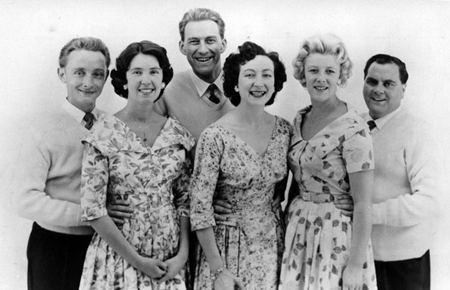
Mike Sammes Singers
Michael Sammes was born in Reigate, Surrey, and studied cello, singing, and arranging. He went to work for a music publisher and formed the Mike Sammes Singers during the mid-'50s. A vocal ensemble of varying size whose members were often divided up into smaller ensembles for session work, the Mike Sammes Singers were busy from the start, making regular appearances on the BBC, singing on the bill of variety shows at the London Palladium, doing guest appearances on television programs, and singing on recording sessions backing up various singers. The group intersected with skiffle and rock & roll surprisingly early, singing backup to the Vipers Skiffle Group. Members of the Mike Sammes Singers were also present for the first recording session by Cliff Richard & The Shadows on July 24, 1958, where they backed the band up singing "Schoolboy Crush," the original A-side of their first single (which was quickly flipped over in favor of the harder rocking Ian Samwell original "Move It").
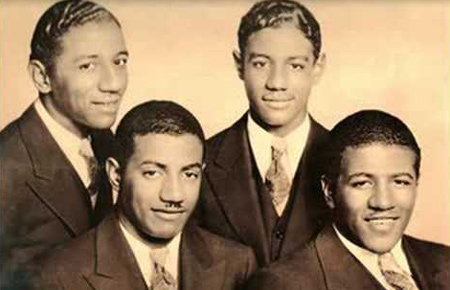
Mills Brothers
The brothers were highly successful and well liked. They were recognized nationally, then internationally. In 1934, The Mills Brothers became the first African-Americans to give a command performance before British royalty. They performed at the Regal Theatre for a special audience; King George V, Queen Mary, and the very special woman sitting in a box seat, their mother. Soon after this, while performing in England, John Jr. became ill. He was months recovering from pneumonia. Before he was completely well, the Brothers returned to England. John Jr. once again became sick, then died in the beginning of 1936.
After signing the three-year contract with William S. Paley, they became a national sensation. Their first record recorded for Brunswick, a remake of their "Tiger Rag" became a nation wide seller, the only record at that time to sell more than a million copies. Other hits quickly followed -- "Goodbye blues", their theme song, "You're Nobody's Sweetheart Now," "Ole Rockin' Chair," "Lazy River", "How'm I doin'," and others.
Hometown: Piqua, OH

Miracles
American vocal group that helped define the Motown sound of the 1960s; led by one of the most gifted, influential singer-songwriters in 20th-century popular music. In addition to Smokey Robinson, byname of William Robinson (b. Feb. 19, 1940, Detroit, Mich., U.S.), the principal members of the group were Warren Moore (b. Nov. 19, 1939, Detroit), Bobby Rogers (b. Feb. 19, 1940, Detroit), Ronnie White (b. April 5, 1939, Detroit), and Claudette Rogers (b. 1942). Whether writing for fellow artists Mary Wells, the Temptations, or Marvin Gaye or performing with the Miracles, singer-lyricist-arranger-producer Robinson created songs that were supremely balanced between the joy and pain of love. At once playful and passionate, Robinson's graceful lyrics led Bob Dylan to call him "America's greatest living poet."
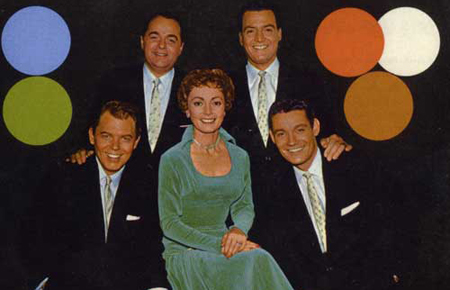
Modernaires
When one thinks or speaks of "The Modernaires", immediately you relate to their classic 1941-1942 association with "American's Number One Dance Band," Glenn Miller and his Orchestra. Yet, superb as each and every one of their Miller performances were, "The Modernaires", had already existed, performed and recorded for several years prior and would continue to do so for more than half a century after their sensational 19-month stint with that legendary leader.
Talent springs from all over, and in the early 1930's, Buffalo, New York was the wellspring for a trio of young men who liked to sing. Harold Dickinson (lead and second tenor), Bill Conway (baritone) and Chuck Goldstein (first tenor) were three Lafayette High School students from the wintry city of Buffalo. In 1935 as Glenn Miller Rehersal a trio, they called the group the "The Three Weary Willies", performing at high school functions and then on WGR local radio.
Hometown: Buffalo, NY
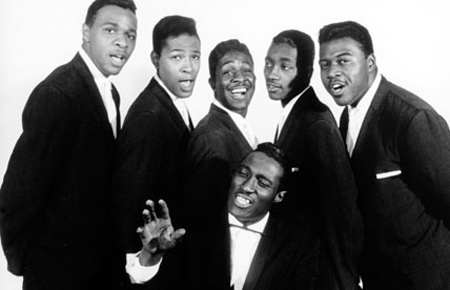
Moonglows
Among the most seminal R&B and doo wop groups of all time, the Moonglows' lineup featured some of the genre's greatest pure singers. The original lineup from Louisville included Bobby Lester, Harvey Fuqua, Alexander Graves, and Prentiss Barnes, with guitarist Billy Johnson. They were originally called the Crazy Sounds, but were renamed by disc jockey Alan Freed as the Moonglows. The group also cut some recordings as the Moonlighters. Their first major hit was the number one R&B gem "Sincerely" for Chess in 1954, which reached number 20 on the pop charts. They enjoyed five more Top Ten R&B hits on Chess from 1955 to 1958, among them "Most of All," "We Go Together," "See Saw," and "Please Send Me Someone to Love," as well as "Ten Commandments of Love." Fuqua, the nephew of Charlie Fuqua of the Ink Spots, left in 1958. He recorded "Ten Commandments of Love" as Harvey & the Moonglows with Marvin Gaye, Reese Palmner, James Knowland, and Chester Simmons before founding his own label, Tri-Phi. Fuqua created and produced the Spinners in 1961 and wrote and produced for Motown until the early '70s. The Moonglows disbanded in the '60s, then reunited in 1972 with Fuqua, Lester, Graves, Doc Williams, and Chuck Lewis. In 2000 The Moonglows were inducted into the Rock And Roll Hall Of Fame.
 |  |  |  |
Page 1 = Women's Chorus-Moonglows Page 2 = Accidental Charm-Tokens
Groups:- All | Vintage Harmony Groups | World Groups | Gospel Groups | Vocal Jazz Groups
Female Contemporary | Mixed Voice Contemporary | Male Contemporay | Contemporary Christian
Male Choral | Female Choirs | Mixed Voice Choirs | Early Music
Boyschoirs | Girl Choirs | Mixed Voice Childrens Choirs
Select a Category |
Want to Sing? - Find a Chorus Near You
List of Choruses by State | List of Choruses by City