
In Celebration of the Human Voice - The Essential Musical Instrument
Home | Doo Wop | Barbershop | World | Contemporary | Christian | Vocal Jazz | Choral | Christmas | Instructional | Arrangements
Classical | Opera | Musicals | Personality | Young Singers | Disney | Videos | Songs | The Artists

Dena Murray
Vocal Coach
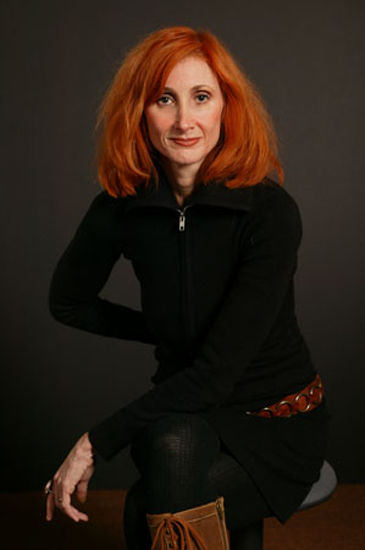
Dena Murray was born in Los Angeles, CA, where she began her singing career at the age of 12. Her performance career included musical theatre productions, television and motion picture work, and singing for radio commercials. Specializing in vocal technique instruction for over 20 years, her passion has been to help singers achieve their dreams. Dena teaches privately in home and online, working with both beginning and professional singers worldwide. Additionally, she is Patron for VIDLA (Vocal International Distance Learning Academy) and contracted to work internationally online as a master teacher and coach (www.vidla.net) She is also a key Subject Matter Expert for The Modern Vocalist, a large and growing website serving the needs of vocalists internationally.
In 1994, she joined the teaching staff at the Musicians Institute in Hollywood, CA. From 1996-2006, Dena coordinated the technique taught by all instructors and wrote the curriculum for the vocal department. Some of her students have included Holly Valentine (Hyper Crush), Sarah Hudson (Ultraviolet Sound), Jon Hensley ("As The World Turns," CBS), Michael Salerno (Gemini Syndrome), Lauren Adams, demo-and-session artists, along with talent from CBS, NBC, HBO, motion picture films, and television. Dena's first book, Vocal Technique: A Guide To Finding Your Real Voice (Hal Leonard Publications, 2002), features an introduction to the vocal mechanism and why it can be necessary to separate the head and chest registers. Her second book, co-authored by Tita Hutchison, Advanced Vocal Technique: Middle Voice, Placement, and Styles (Hal Leonard Publications, 2008) is a combination of both author's experiences teaching a unique method for proper mask placement through physical sensations, and how to practically apply this method to all styles of singing. Vocal Strength & Power: Boost Your Singing with Proper Technique and Breathing (Hal Leonard Publications 2009) contains little known secrets behind the art of breath technique, and how to use it for a much more powerful one-register sound and singing voice.
Dena graduated from Ithaca College, Ithaca, NY, with a Bachelor of Science in Speech.
 Arrangers - Vocal Jazz | Barbershop | Contemporary Christian | Gospel | Contemporary Pop | Choral
Arrangements (See list of Arrangements.)
Displaying 1-3 of 3 items.
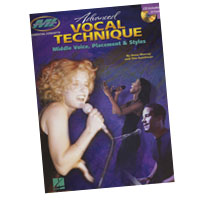
Review: A voice that sounds like one register: isn't this what most singers want? And how do you get that sound live, outside of all the engineering tools used in a studio? A follow-up to the author's highly successful Vocal Technique book & 2-CD set, Advanced Vocal Technique teaches the higher skills needed to bridge your voice and help you get the sound you desire in whichever style you choose. Includes: placement and air function; exercising the tongue and mouth; singing in the mask and bridging; use of the slide; strengthening your voice; all styles including jazz, country, R&B, pop, rock; and more. The included CD contains demonstrations, exercises, and full band demo tracks!
Chapters: How Your Voice Works, Air Function and Placement, Exercising the Tongue and Mouth, Feeling Your Voice, The Art of Practicing, Bridging the Middle, Singing in the Mask and Bridging, More Bridging and Mask Exercises, Use of the Slide, Strengthening the Voice, Jazz, Country, R & B or Rhythm and Blues, Rock, Pop Music

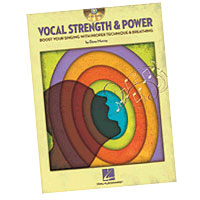
Review: Based on years of teaching and research, this book/CD pack by acclaimed vocal coach Dena Murray provides insightful methods and exercises for attaining vocal mastery. Perfect for all singers - beginners to pros - who want more power in their voice, better pitch control, and a bigger singing range. With her prior two books, this volume forms a complete set of exercises to bring the voice to its full potential.
Chapters: Introduction, Freeing the diaphragm, Engaging the Vocal Cords, Your Speaking Voice, It's All About the Inhale, Practicing the New Way, Projecting a Resonant Tone, Mask Placement Throughout the Range, Self-Diagnosis, Strengthening the Diaphragm and Related Muscles, Getting the Diaphragm, Vocal Cords, and Mask Working Together, Vocal Cord Function, Isolation Exercises for Applied Technique, Bridging the Registers, Articulating a Difficult Consonant, Phonetically Modifying Words in Song, Scalifying Difficult Words and Song Selection
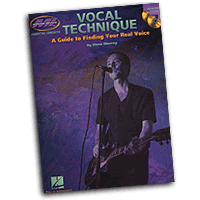
Review: Stop straining to hit those high notes! Unlock your true potential and start singing easily and effortlessly with this book/2-CD pack by Musicians Institute vocal instructor Dena Murray. She teaches how to: breathe naturally; improve your speaking voice; stop holding, pushing and squeezing; develop your natural three-octave range; place your chest and head voices; and bridge the registers to sound like one voice. Includes two CDs with demonstrations, guided exercises, and plenty of practice tracks.
Chapters: Your Voice (And How It Works), All About Breathing, Right Placement, Scales, Singing Songs, How the Body Produces Sound, Why Squeeze, Hold or Push, Pitch, Controlling the Flow of Air, The Four Breathing Rules, Resonance, Working with Vowels, Bad Habits, Placing the Voice, Keeping the Throat Open, The Pharyngeal Voice, Nodes and Your Health, Phonetics: How Words Sound
Select a Category |
Want to Sing? - Find a Chorus Near You
List of Choruses by State | List of Choruses by City